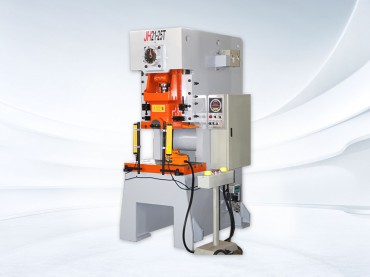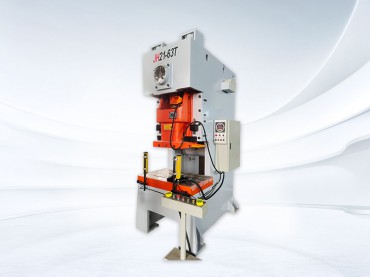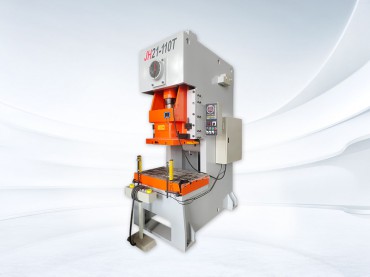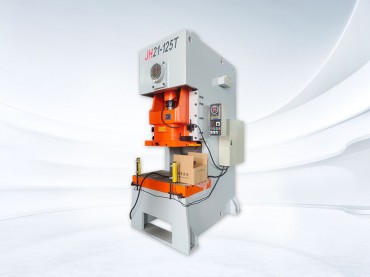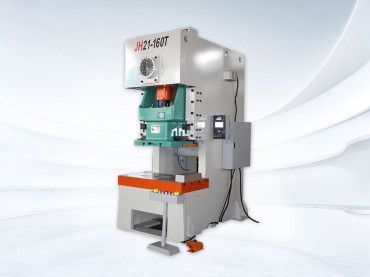
In modern metal processing manufacturing, the punching machine is an indispensable piece of equipment widely used across industries such as sheet metal fabrication, hardware, automotive, electronics, electrical appliances, home appliances, and aerospace. With its high efficiency, precision, and automation capabilities, it serves as the core machinery for performing metal stamping, forming, cutting, and drawing processes. So, how exactly does a punching machine operate? What are the underlying principles and processes? This article systematically explains the working process and key technical principles of punching machines.
The working principle of a punching machine is based on its structural design. Generally, a standard punching machine consists of the following main components:
The machine bed serves as the main structural framework, supporting and securing other components. Typically constructed from high-strength cast iron or welded steel, it requires high rigidity and excellent vibration resistance to ensure stamping precision.
The ram is the core component that performs the stamping action. Driven by a crank mechanism or hydraulic system, it moves up and down in a reciprocating motion, driving the die to apply pressure to the workpiece.
Located beneath the machine frame, the work table holds the lower die while supporting the workpiece and absorbing the stamping force.
This includes components such as the motor, flywheel, clutch, brake, and gears. It transmits power from the motor to the ram while controlling its speed and rhythm.
Modern presses are equipped with PLC or CNC systems. These enable automated feeding, pressure detection, safety protection, and die monitoring functions, enhancing overall intelligence.
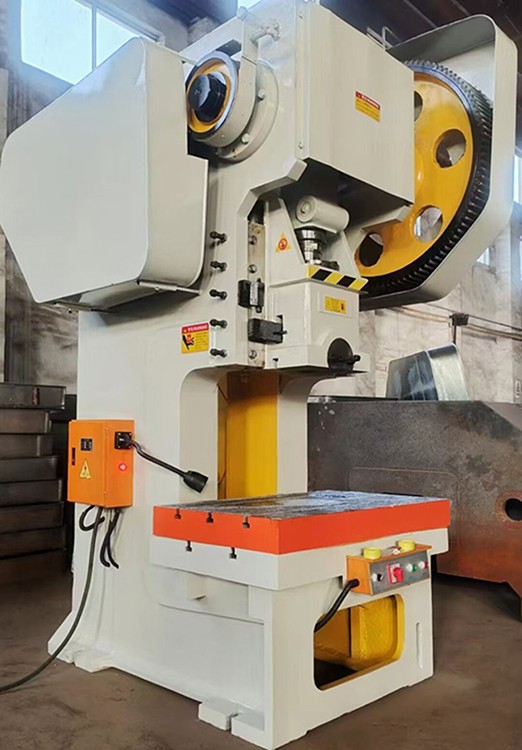
The fundamental principle involves converting mechanical or hydraulic energy into punching force. The punch and die work in concert to perform forming operations on sheet metal.
While drive mechanisms vary slightly across punching machine types (e.g., mechanical, pneumatic, hydraulic), the core process remains consistent:
The motor drives the flywheel to rotate at high speed, storing kinetic energy. The flywheel connects to the crankshaft via a clutch. When the clutch engages, power is transmitted to the ram mechanism.
The crank mechanism converts rotational motion into linear motion, causing the ram to drive the upper die downward. At this point, the upper die interacts with the lower die fixed to the worktable, applying instantaneous punching force to the metal sheet.
Under the punching force, the metal undergoes plastic deformation or fracture, completing processes such as punching, cutting, bending, or stretching. As the slide rises, the finished part or scrap is ejected.
The slide returns to its initial position, preparing for the next punching operation. During this interval, an automatic feeding mechanism can introduce new material into the die area, enabling continuous production.
The specific processing sequence of a punching machine typically encompasses the following stages:
Prior to startup, install the appropriate die according to product specifications and adjust the clearance and alignment accuracy between the upper and lower dies.
Place sheet metal or coil material onto the feeding device and position it using guides, limiters, or a CNC system.
The automatic feeder conveys the sheet into the die working zone, where the ram descends to complete a stamping operation. Stamping processes may include blanking, punching, bending, drawing, and other specialized techniques.
After stamping, scrap material is ejected through the scrap chute beneath the die, while finished parts are automatically conveyed to the collection area.
Modern presses incorporate photoelectric safety guards, overload detection, and die monitoring systems to prevent equipment damage and operator injury.
The system performs continuous stamping based on preset parameters while monitoring stamping force, die temperature, and forming accuracy to ensure product consistency.
Based on power source, presses are primarily categorized as follows:
Utilize motors, flywheels, and crank mechanisms to achieve reciprocating ram motion. Characterized by high speed and efficiency, they are suitable for mass production.
Powered by compressed air, these presses use cylinders to drive the ram. They offer simple operation and high safety, making them suitable for small-to-medium-sized parts.
Utilizing hydraulic fluid pressure to drive the piston, these presses deliver high and adjustable punching force, ideal for thick plates or complex formed parts.
punching machines complete a single stamping operation in minimal time with rapid cycle speeds, making them ideal for high-volume continuous production.
Die design determines dimensional and shape accuracy of products. Modern CNC punching machines ensure tolerances within ±0.05mm.
Integrated with feeders, robotic arms, and inspection systems, they enable unmanned production, enhancing safety and consistency.
New presses reduce idle energy consumption through servo control systems, feature low noise and minimal oil contamination, aligning with green manufacturing principles.
Efficient press operation relies on proper handling and routine maintenance:
Verify power supply, air source, and lubrication system functionality. Ensure molds are securely installed and photoelectric safety devices are responsive and effective.
Never insert hands into the mold area. Use safety tools or automatic feeders. Continuously monitor punch force and ram movement status.
Includes lubricating the system, inspecting clutches, tightening bolts, and checking pneumatic lines to prevent equipment accidents caused by wear or loosening.
Die wear directly impacts stamping precision. Regularly clean, grind, or replace dies to maintain sharpness and fit accuracy.
- Automotive Manufacturing: Stamping of body panels, brackets, and instrument panels;
- Home Appliance Industry: Production of air conditioner housings, motor end caps, and metal enclosures;
- Electronic Hardware: Stamping of connectors, fasteners, terminals, and switch plates;
- Architectural Decoration: Punching and embossing of door/window profiles and decorative components.
Though seemingly simple in principle, punching machines integrate multidisciplinary technologies including mechanics, hydraulics, and control systems. They serve not only as vital equipment for metal processing but also as critical components in automated manufacturing lines. With ongoing technological innovation, modern punching machines are driving the metal manufacturing industry toward a new era of intelligence through higher precision, faster speeds, and lower energy consumption.
 Address:Room 1202, Detaitang Building, No. 118 Huaguang Road, Zhangdian District, Zibo, Shandong
 WhatsApp:+8615653328535
 Wechat: +8615965331535
  E-mail:zs@sdsmachinery.com