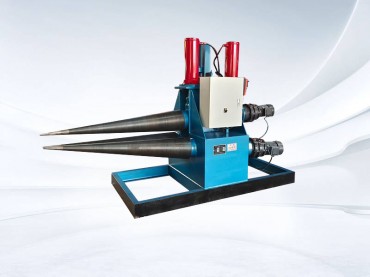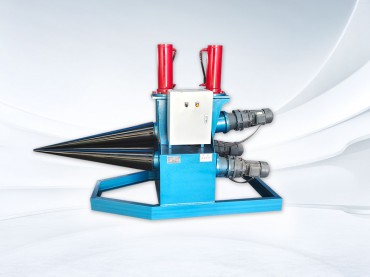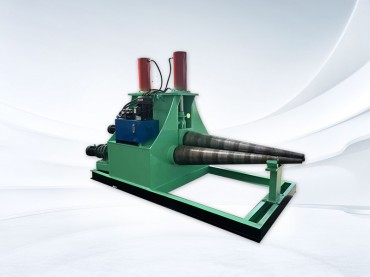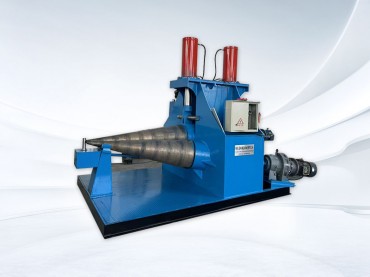
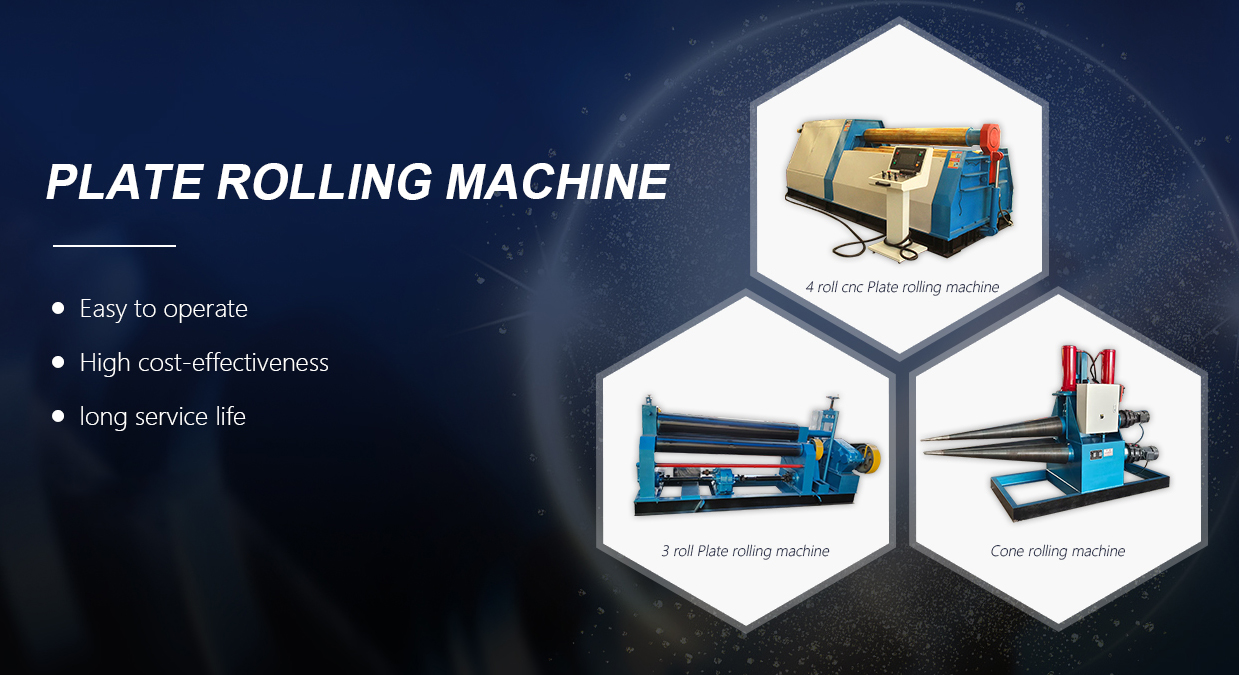
In the modern metal processing industry, cone rolling machines, as highly efficient and precise equipment for forming conical sheet metal, are widely applied in fields such as pressure vessels, ventilation ducts, chemical equipment, machinery manufacturing, wind turbine towers, and building structures. With the intelligent and automated upgrades in manufacturing, the process flow of cone rolling machines not only signifies enhanced processing efficiency but also reflects a company's comprehensive capabilities in technology and quality management.
The primary function of cone rollers is to roll metal sheets into conical cylinders or conical workpieces. Their principle involves applying compressive stress and friction through a multi-roller structure (commonly three rollers), gradually bending the sheet into a cone at varying radii. Compared to traditional manual rolling, cone rolling machines offer greater operational precision and higher taper consistency, with product tolerances controllable within ±1mm. This significantly enhances production efficiency and product quality.
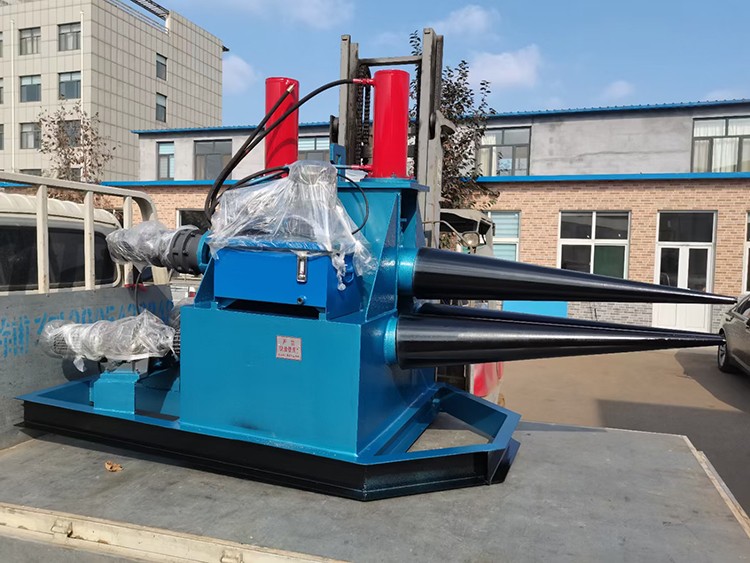
Cone rolling machines typically employ hydraulic drive systems, achieving sheet rolling through vertical adjustment of the upper roll and horizontal displacement of the lower roll. Some high-end equipment incorporates CNC systems capable of automatically calculating taper parameters, controlling rolling speed and pressure, enabling intelligent operation.
Cone forming is not a simple “rolling” operation but a systematic process flow. The entire process involves multiple steps including material preparation, layout marking, pre-bending, forming, roundness correction, and welding. Each step directly impacts the precision and appearance of the final product.
Before rolling, determine the upper and lower base diameters, height, and plate thickness based on design drawings. Select suitable metal sheets such as carbon steel, stainless steel, or aluminum. For thick plates or high-hardness materials, annealing or heat treatment is required to reduce internal stresses and enhance ductility.
Concurrently, operators must clean the plate surface to ensure freedom from oil, scale, or contaminants, preventing scratches or uneven slippage during rolling.
Layout is a critical step in cone rolling machine. Operators must calculate the sheet's developed length and angle based on the cone's developed pattern, then accurately mark reference lines on the sheet. The commonly used “generatrix development method” calculates the cone's sector-shaped developed dimensions using geometric formulas.
This step significantly impacts subsequent rolling precision, especially for large taper angles or thin sheets. Marking accuracy must be ensured, with deviations generally not exceeding ±0.5mm.
Due to structural limitations of plate rolling or cone rolling machines, “unrolled zones” often exist at both ends of the plate. To prevent “flattened edges” after forming, pre-bending treatment is required. This can be achieved using the machine's built-in pre-bending function or dedicated pre-bending dies. Pre-bending ensures the plate edges match the cone's curvature, guaranteeing closure roundness and facilitating smooth welding.
This constitutes the core process step. Operators adjust the upper roll position and inclination angle of the cone rolling machine according to design parameters. Through gradual pressure application and rolling, the plate is formed into a cone shape along varying radii. Generally, rolling can be categorized into two methods:
- Unidirectional rolling: Progressively rolled from one end, suitable for workpieces with small taper angles.
- Bidirectional rolling: Simultaneous rolling from both ends, suitable for large taper angles or thick plates, enabling better stress distribution control.
During rolling, the taper angle, outer diameter, and roundness must be continuously inspected to ensure compliance with technical specifications. Modern cone rolling machines are typically equipped with electronic measuring devices for real-time precision monitoring.
After rolling, the cone typically exhibits slight ovality or deformation. A roundness correction device is then used to restore the ideal roundness through gentle pressure and rotation, controlling the error within ±1mm.
The process proceeds to welding, where the seam is spot welded, fully welded, or automatically welded. Post-welding grinding and non-destructive testing are performed to ensure a smooth appearance and structurally sound cone.
Formed cones undergo rigorous quality control, including dimensional checks, taper verification, roundness measurement, and surface flatness assessment. Approved cones receive application-specific treatments such as painting, rustproofing, or surface polishing.
For stainless steel or aluminum cones, electrolytic polishing or passivation may be applied to enhance corrosion resistance and aesthetic appeal.
Compared to traditional plate rolling methods, the cone rolling machine offers significant advantages in efficiency and precision:
(1) High Automation: Combining hydraulic systems with CNC control enables automatic feeding, self-centering, and precise regulation.
(2) Strong Taper Adjustability: The upper roll angle can be freely adjusted to accommodate various cone dimensions.
(3) High Processing Precision: Minimal error and high roundness yield smooth, aesthetically pleasing finished products without noticeable wrinkles or dents.
(4) Wide Applicability: Capable of rolling various metal materials, suitable for processing both thin sheets and thick plates.
(5) Energy-Efficient and High-Performance: Reduces manual labor and secondary finishing, increases production cycle rates, and lowers costs.
The cone rolling machine process represents a highly representative technological step in metal forming manufacturing, integrating multidisciplinary strengths in mechanical design and hydraulic control. Through scientific process control and precise equipment operation, enterprises can efficiently produce high-quality conical workpieces, meeting modern industry's multifaceted demands for precision, aesthetics, and efficiency.
If you are interested in cone rolling machines, please contact us. We will recommend suitable equipment and provide a quotation.
 Address:Room 1202, Detaitang Building, No. 118 Huaguang Road, Zhangdian District, Zibo, Shandong
 WhatsApp:+8615653328535
 Wechat: +8615965331535
  E-mail:zs@sdsmachinery.com