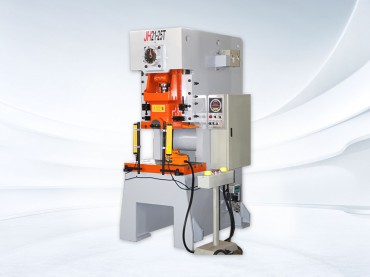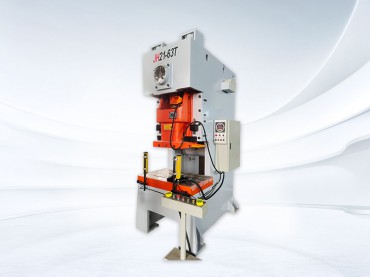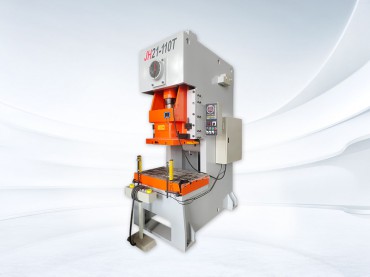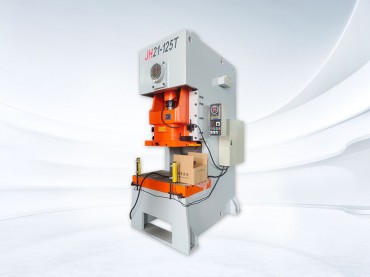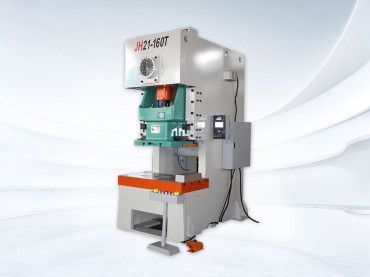
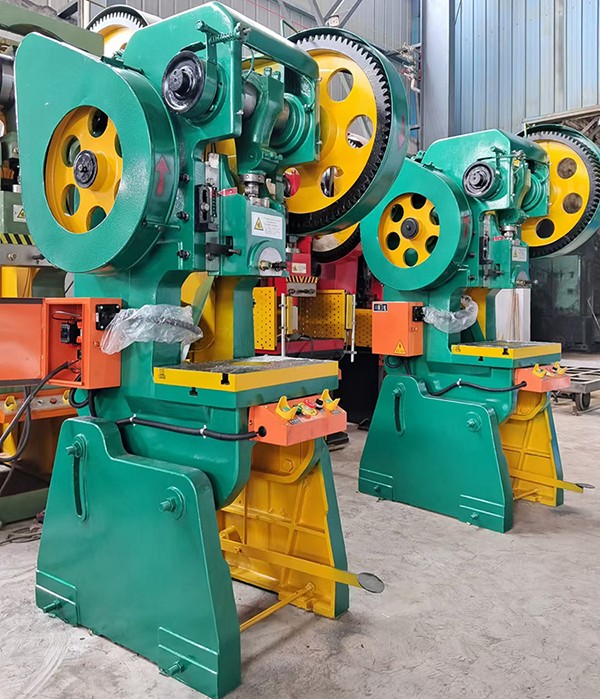
Punching machines are common pressure processing equipment in industrial production, widely used in metal forming, punching, shearing, and other processes. Through mechanical or hydraulic transmission, the ram moves reciprocally along guide rails, applying pressure to materials placed between dies to induce plastic deformation or separation. Punching machines feature high efficiency, simple operation, and good machining accuracy, making them indispensable foundational equipment in modern manufacturing.
The core principle of punching machines is based on energy conversion and transmission. An electric motor drives a flywheel to rotate via a belt and gear system, storing kinetic energy. When the clutch engages, the flywheel's energy is converted into the ram's linear motion through the crankshaft or connecting rod mechanism. As the ram moves downward, it applies pressure to the material, forming or separating it within the dies. Upon completion, the ram returns to the top dead center via a reset spring or pneumatic device, preparing for the next stroke. The entire process is coordinated by a control system to ensure precision and safety.
Punching machines can be categorized based on drive mechanisms and structural characteristics. Mechanical punching machines utilize mechanical transmission for ram movement, offering high speed and lower cost, making them suitable for high-volume production. Hydraulic punching machines utilize hydraulic cylinders to drive the ram, offering stable and adjustable pressure, making them suitable for processing thick plates or complex shapes. CNC punching machines achieve automated operation through computer control systems, enabling precision stamping and multi-step processing with high flexibility. Specialized types like eccentric presses and screw presses also exist, each tailored to distinct process requirements.
(1) High Efficiency: By rapidly punching materials through dies, presses enable high-speed production, significantly boosting manufacturing efficiency.
(2) High Precision: Modern punching machines incorporate advanced control systems and measurement technologies, achieving high-accuracy punching operations that meet the precision requirements of complex parts.
(3) Automation-Friendly: Punching machines can integrate with automated equipment to achieve fully automated production, reducing manual intervention. This enhances product quality and production efficiency while lowering manufacturing costs.
(4) Material Savings: Through optimized design and precise control, punching machines maximize material cost savings while ensuring product performance.
(5) Excellent Stability: Compared to other equipment, punching machines offer superior stability and reliability, ensuring consistent processing quality.
(6) Eco-Friendly and Energy-Efficient: Modern punching machine designs prioritize environmental protection and energy utilization, employing technologies like high-efficiency motors and energy-saving controllers to reduce consumption.
(7) Versatility: Different punching machine types suit various materials and sheet thicknesses, accommodating diverse production requirements.
(1) Telecommunications: Punching machines process small, high-precision components like phone cases, battery plates, and metal frames.
(2) Automotive: Punching machines manufacture automotive parts including hoods, doors, and headlight brackets.
(3) Home Appliance Industry: Stamping punching machines process appliance components like washing machine drums and electrical enclosures.
(4) Electronics Industry: Stamping punching machines manufacture parts for electronic products such as mobile phones and computers.
Operating stamping punching machines requires strict adherence to safety protocols to mitigate risks. Operators must undergo professional training and be thoroughly familiar with equipment performance and operating procedures. Personal protective equipment (PPE) such as gloves and safety goggles must be worn during operation to prevent injury from flying debris. Equipment must be fitted with safety devices like light curtains and two-hand control buttons to prevent injuries from accidental operation. Key components like clutches and brake systems require regular maintenance checks to ensure reliable operation. Keep the work area tidy to avoid interference from debris. These measures significantly enhance workplace safety.
Regular maintenance is crucial for ensuring long-term, stable operation of punching machines. Daily upkeep includes cleaning the machine body, lubricating moving parts, and inspecting electrical systems. Weekly or monthly detailed inspections of dies and slide rails are required, with adjustments made to clearances to prevent wear. Annual overhauls should replace wear-prone components like bearings and seals while calibrating pressure accuracy. Detailed maintenance records must be kept for tracking equipment condition. Proper maintenance not only extends equipment lifespan but also reduces downtime due to failures, thereby improving production efficiency.
 Address:Room 1202, Detaitang Building, No. 118 Huaguang Road, Zhangdian District, Zibo, Shandong
 WhatsApp:+8615653328535
 Wechat: +8615965331535
  E-mail:zs@sdsmachinery.com