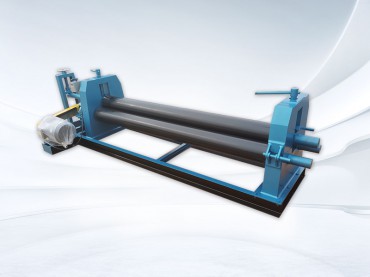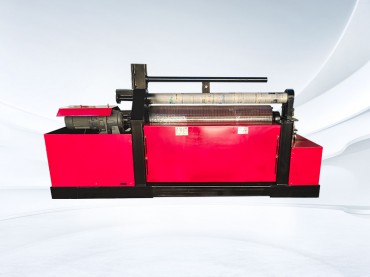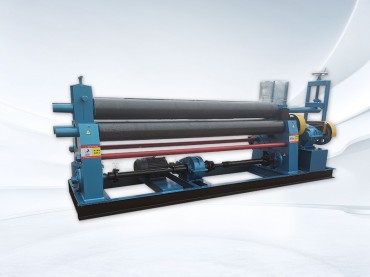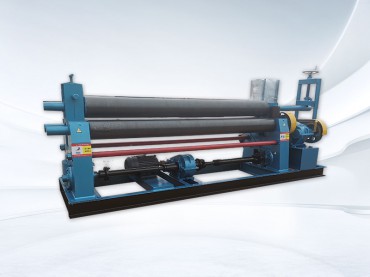
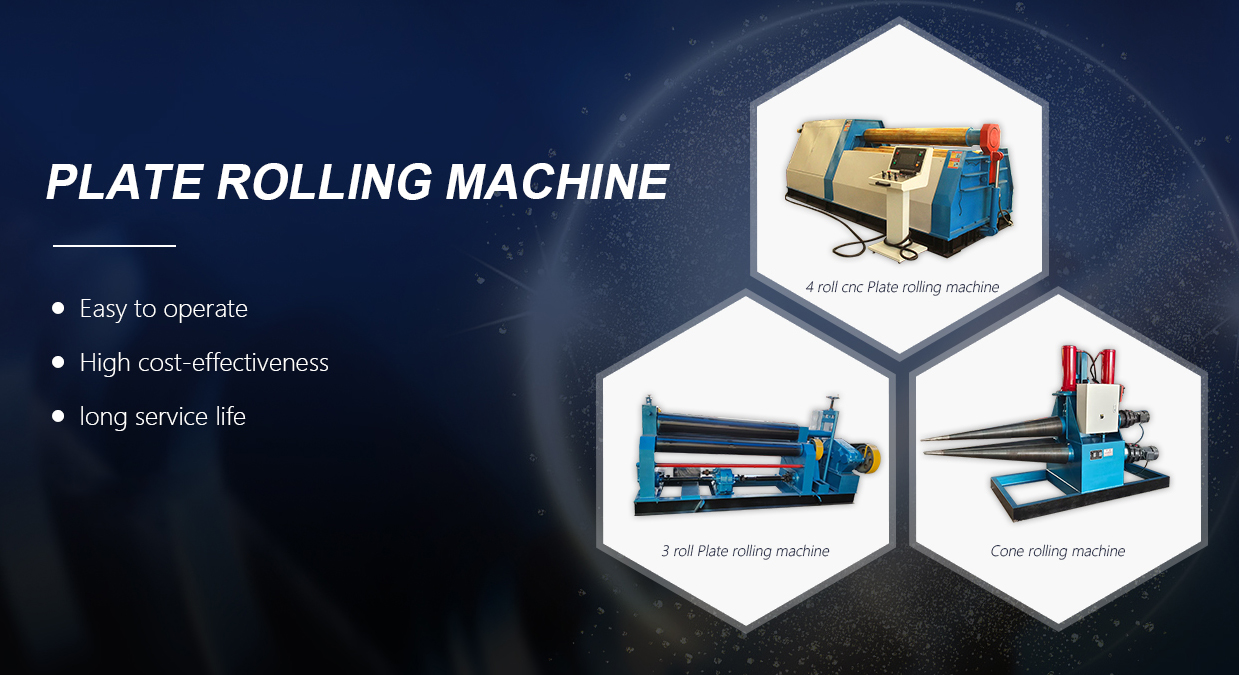
In the modern metal processing field, plate rolling machines are an extremely important piece of equipment, widely used in industries such as pressure vessels, wind power equipment, shipbuilding, and architectural steel structures. Among the many types of plate rolling machines, the three-roller plate rolling machine occupies an extremely important market position due to its advantages of rational structure, simple operation, and strong adaptability. This article provides a systematic overview of three-roll plate rolling machines, covering their working principles, classification types, primary applications, operational fields, and key considerations.
Three-roll plate rolling machines achieve plastic deformation of metal plates through the relative motion of three roll shafts. Typically, these include two lower rolls and one upper roll. During operation, the metal plate is fed between the upper and lower rolls. The downward pressure from the upper roll and the rotational motion of the lower rolls gradually bend the plate into the desired shape. The upper roll can move vertically to adjust the rolling radius, while the lower roll provides feeding and support functions. The entire process relies on the material's elastic limit and plastic deformation characteristics. By precisely controlling the position and pressure of the rollers, accurate rolling results are achieved.
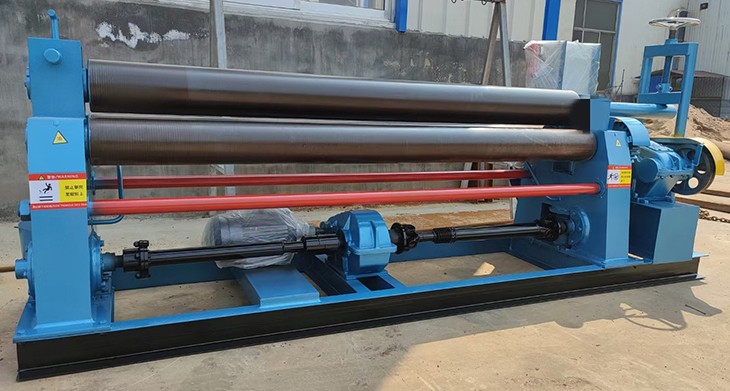
Based on structure and function, three-roll rolling machines are categorized into symmetrical and asymmetrical types. In symmetrical machines, the three roll shafts are arranged symmetrically with the upper roll at the center and two lower rolls positioned symmetrically on either side. This type suits general rolling operations with simple operation, though it may leave straight edges at the sheet ends. Asymmetric three-roll plate rolling machines reduce straight edge issues by adjusting roller positions, making them suitable for high-precision rolling requirements. They also differ in drive mechanisms: mechanical models rely on gear and motor transmission, featuring simple structure and easy maintenance; hydraulic models utilize hydraulic systems for pressure application, offering more precise control and suitability for thick plates or high-strength materials.
Plate rolling machines are widely used in the metalworking industry. They process metal plates of various thicknesses and materials, such as steel plates and aluminum sheets. Their main applications can be summarized as follows:
Three-roll plate rolling machines can precisely roll flat metal sheets into cylindrical shapes, serving as a critical process for manufacturing pressure vessels, storage tanks, reactors, ventilation ducts, and similar products. Combined with welding and rounding processes, they produce dimensionally accurate, smooth-surfaced circular components.
In industries like bridge construction, architectural curtain walls, and vehicle manufacturing, many components require metal structures with specific curvatures. Three-roll plate rolling machines precisely control rolling angles and radii according to design specifications, ensuring both structural integrity and aesthetic appeal.
Beyond new material processing, three-roll plate rolling machines are also used for repairing and remanufacturing worn equipment components. This includes correcting deformed cylinders, rectifying roundness errors, and restoring the shape of metal structural parts.
Owing to their adaptability and broad processing range, three-roll rolling machines are widely applied across various industrial manufacturing sectors:
(1) Pressure Vessel Industry: Cylindrical sections of boilers, storage tanks, heat exchangers, chemical reactors, etc., undergo preliminary forming via rolling machines.
(2) Energy and Wind Power Industry: Large-diameter structural components like wind turbine towers and pipeline supports are typically rolled from thick steel plates, where hydraulic three-roll plate rolling machines ensure precision and strength.
(3) Shipbuilding and Offshore Engineering: Used to manufacture hull plates, subsea pipelines, and curved deck structures meeting high-strength and corrosion-resistant requirements.
(4) Construction and Bridge Engineering: Curved steel plates are commonly used in architectural curtain walls, arched roofs, and steel bridge structures, where three-roll plate rolling machines provide precise forming support.
(5) Aerospace and Defense Manufacturing: Used for high-precision cylindrical components like rocket tanks and satellite structural shells, requiring exceptional forming accuracy and consistency.
(6) Ventilation and Environmental Equipment: Components like chimneys, exhaust pipes, and ventilation ducts can be efficiently produced using plate rolling machines, ensuring pipe sealing integrity and stability.
(1) Workpiece Preparation: Before rolling, plates must undergo rust removal, cleaning, and thickness inspection to ensure surface flatness and prevent compromising forming accuracy.
(2) Proper Pressure Adjustment: Set upper roll pressure appropriately based on plate material, thickness, and rolling radius to prevent equipment damage or workpiece fracture due to overload.
(3) Incremental Rolling: Feed metal plates in multiple passes and roll progressively. Avoid excessive deformation in a single operation to prevent roundness issues or cracking.
(4) Safe operation: Operators must stay clear of moving roll shaft areas. Never touch rotating parts with bare hands, and ensure emergency stop devices remain readily accessible.
(5) Post-processing inspection: After rolling, inspect workpiece roundness, ovality, and weld gap. Perform rounding or correction as necessary.
Overall, three-roll plate rolling machines play an irreplaceable role in the metalworking industry, particularly in their application for forming circular shapes. They provide a convenient and efficient method for manufacturing various industrial products. With technological advancements, the functionality and application scope of plate rolling machines continue to expand, and they will demonstrate their significant value in more fields in the future.
 Address:Room 1202, Detaitang Building, No. 118 Huaguang Road, Zhangdian District, Zibo, Shandong
 WhatsApp:+8615653328535
 Wechat: +8615965331535
  E-mail:zs@sdsmachinery.com