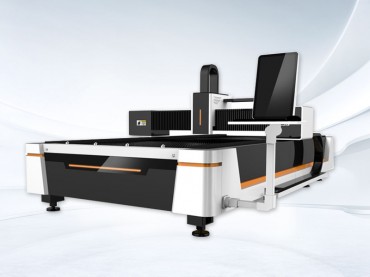
In the field of metal processing, cutting is the fundamental process of all forming, and its technological evolution directly determines the precision and efficiency ceiling of the manufacturing industry. From traditional flame cutting and plasma cutting to early carbon dioxide laser cutting, every technological iteration has brought a leap in productivity. In recent years, the rise and popularization of fiber laser cutting machines is undoubtedly the most revolutionary step. It has become an indispensable core equipment in modern high-end manufacturing, thanks to its inherent technological principles, which converge outstanding performance, astonishing economy, and unparalleled adaptability. The following will systematically analyze the numerous core advantages of fiber laser cutting machines.
This is the most intuitive and eye-catching advantage area of fiber laser cutting machine, directly reflected in the processing effect.
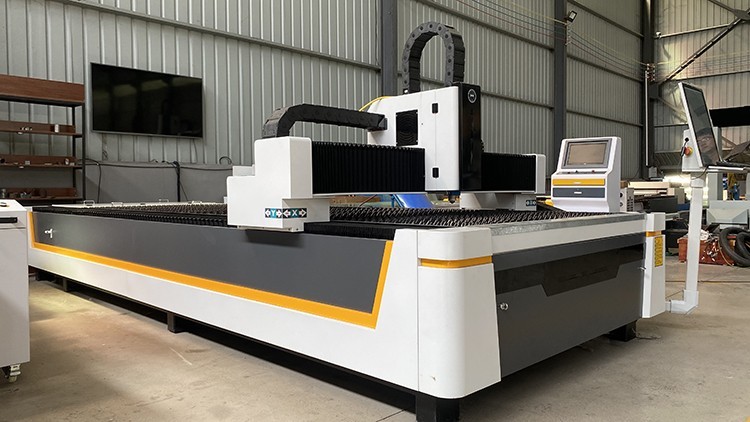
-Narrow incision and small heat affected zone: The extremely small light spot means that the cutting gap is very fine, minimizing material waste to the greatest extent possible. At the same time, due to the concentration of energy and controllable action time, the heat transferred to the material is precisely limited near the cutting area, and the heat affected zone (HAZ) is extremely small. This avoids excessive melting, deformation, or metallographic changes of materials (especially carbon steel), thereby ensuring good perpendicularity of the incision, smooth surface without burrs, and often can be used directly without secondary processing, achieving high-quality processing of "one-time molding".
When cutting plates of the same thickness and material, the speed of fiber laser cutting machines is usually much faster than traditional plasma cutting and carbon dioxide laser cutting, especially in the field of thin plates, where its speed advantage can reach several times. This is mainly due to its extremely high electro-optical conversion efficiency (see later) and excellent beam quality, which allows energy to be instantly absorbed and vaporized by the material. High speed cutting means that more processing tasks can be completed per unit time, greatly improving the overall throughput of the production line and meeting the demands of large-scale, fast-paced modern production.
-Thicker cutting potential: With the continuous increase in laser power (currently common equipment with tens of thousands of watts), the strength of fiber laser cutting machines in the field of thick plate cutting is becoming increasingly prominent. High power combined with advanced control technology enables it to challenge and surpass the cutting limits of traditional methods on extremely thick metal sheets (such as 100mm carbon steel), while still maintaining controllable cross-sectional quality.
If the improvement of performance comes at a high cost, its popularity will inevitably be limited. The strength of fiber laser cutting machines lies in their ability to provide top-notch performance while significantly optimizing operating costs.
-Indirect cooling cost reduction: Due to high conversion efficiency and less waste heat generated, the requirements for the cooling system are significantly reduced. The power and volume of supporting chillers can be smaller, which further reduces the energy consumption of auxiliary equipment.
-Low gas consumption: When cutting carbon steel, fiber laser cutting machines mainly use low-cost oxygen or air as auxiliary gases to achieve high-quality cutting. Compared to the huge gas consumption during nitrogen cutting of stainless steel, its daily consumable costs are more flexible and overall lower.
The all fiber structure not only simplifies the system, but also brings extremely high stability. Fiber lasers are much less sensitive to environmental factors such as external vibrations, dust, and temperature fluctuations than carbon dioxide lasers. Its robust all solid state design without any moving parts or vulnerable optical components ensures that the equipment can operate continuously and stably 24/7 in harsh industrial environments with extremely low failure rates.
-Intelligence and automation: Modern fiber laser cutting machines typically integrate highly automated functions such as automatic focusing, automatic edge searching, capacitive nozzle height adjustment, and a comprehensive cutting process database. The operator only needs to select the material and thickness, and the equipment can automatically call the optimal parameters for processing, greatly reducing the dependence on the operator's technical experience, simplifying the process, and ensuring the consistency of the processing results.
High energy efficiency itself means less carbon emissions. At the same time, the equipment operates with lower noise and is more environmentally friendly to the workshop environment because it does not require the treatment of harmful gases that may be generated by high-voltage gas discharge like a carbon dioxide laser.
 Address:Room 1202, Detaitang Building, No. 118 Huaguang Road, Zhangdian District, Zibo, Shandong
 WhatsApp:+8615653328535
 Wechat: +8615965331535
  E-mail:zs@sdsmachinery.com