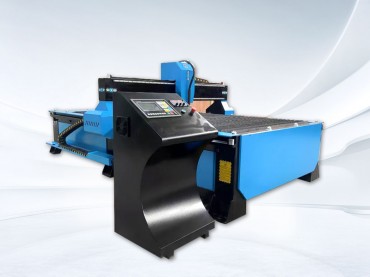
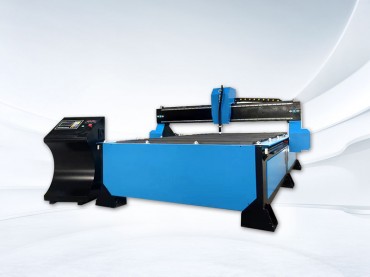
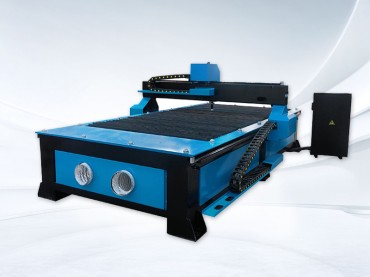
In the field of modern metal processing, plasma cutting technology plays a crucial role with its high efficiency, flexibility, and powerful cutting capabilities. One of its core advantages is its wide material adaptability. Unlike oxyacetylene cutting, which mainly targets carbon steel, and laser cutting, which has specific requirements for the optical properties of materials, plate plasma cutting machines can process almost all conductive metal materials, from common steel to various non-ferrous metals and alloys. Understanding the underlying principles, boundary limits, and best practices for different materials of this wide adaptability is the key to fully utilizing the efficiency of plate plasma cutting machines.
1. The working principle of plasma cutting and the basis of material adaptability
To understand its material adaptability, it is necessary to first understand its cutting principle. The working essence of a plate plasma cutting machine is to use high-temperature and high-speed plasma arc as a heat source to instantly melt the local part of the workpiece being cut, and use high-speed airflow to blow away the molten material, thereby forming a cut.
This process presents a fundamental and only prerequisite for the material: the material must have conductivity. Because the formation of plasma arc relies on establishing a complete conductive circuit between the electrode (cathode) of the cutting torch and the workpiece being cut (anode). When high-frequency or contact arc initiation mechanisms excite a guiding arc between the two and stabilize its transfer to the workpiece, a highly concentrated cutting arc is formed.
Therefore, theoretically speaking, any conductive metal material can be the object of plasma cutting. This is the physical basis for its material adaptability far exceeding other thermal cutting methods. However, the cutting effect, efficiency, and quality of different materials depend on the physical and chemical properties of the materials, and are closely related to the process parameter settings of the plate plasma cutting machine.
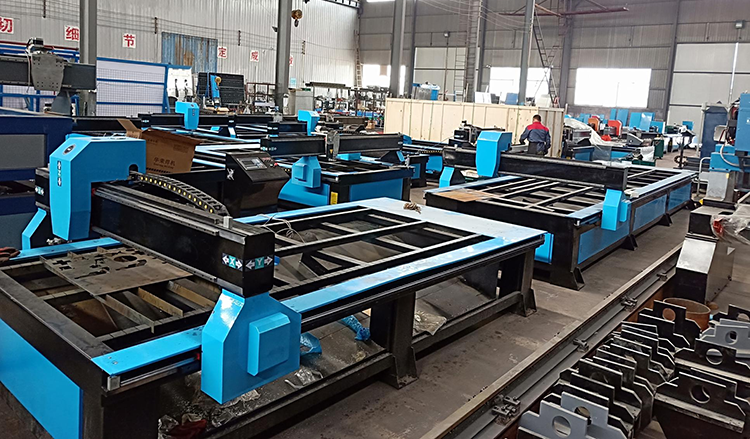
2. Analysis of cutting characteristics of plate plasma cutting machine for different types of metal materials
We can divide common cuttable metals into the following categories for detailed discussion:
1. Carbon steel and low-alloy steel
This is the most typical and widely used field of plate plasma cutting machines.
Cutting advantages: Excellent cutting effect on low carbon steel and medium carbon steel, much faster than oxyacetylene cutting, especially in the range of medium thickness (such as below 25mm), with obvious advantages. The incision is relatively vertical, smooth, with less slag hanging and easy to remove.
Process key points: Oxygen or air is usually used as plasma gas for cutting carbon steel. Oxygen participates in combustion reactions, providing additional heat, increasing cutting speed, and obtaining smoother cuts. Air is a widely used gas source with low cost, but the incision may become slightly rough due to nitrogen and oxidation, and the electrode consumption is relatively fast. For thicker plates, nitrogen gas, argon hydrogen mixture gas, etc. can be used as plasma gas to obtain higher quality cuts.
2. Stainless steel
Stainless steel contains alloying elements such as chromium and nickel, and its oxide has a high melting point and viscosity, which poses challenges for cutting. However, plate plasma cutting machines are still the main means of efficient cutting.
Cutting characteristics: Stainless steel has poor thermal conductivity and heat is easily concentrated in the cutting area. The melting point of the chromium oxide film formed on its surface is much higher than that of the base metal. If the process is improper, it is easy to cause slag to hang hard and difficult to remove, and the edge of the incision is prone to "chromium carbide precipitation" due to overheating, which affects the corrosion resistance.
Process points: When cutting stainless steel, oxygen is usually avoided and nitrogen, argon nitrogen mixture, or nitrogen water curtain are used instead. These inert or reducing gases can effectively suppress excessive oxidation, reduce slagging, and obtain relatively smooth silver or bright colored incisions. For highly demanding applications, high-pressure water jet assisted fine plasma or high-precision plasma systems can greatly improve the quality of cutting, almost eliminating the need for secondary processing.
3. Aluminum and aluminum alloys
Aluminum is a good conductor, but its unique physical properties impose specific requirements on cutting processes.
Cutting challenge: The aluminum surface has a high melting point aluminum oxide film (Al ₂ O3, melting point about 2050 ℃), while the aluminum substrate has a very low melting point (about 660 ℃). The high thermal conductivity of aluminum causes rapid heat dissipation, requiring higher energy input to initiate arcs and maintain cutting. In addition, molten aluminum has good fluidity, is not easily blown off, and is prone to forming difficult to remove slag at the bottom.
Process key points: It is recommended to use nitrogen, argon hydrogen mixture or specialized gas for cutting aluminum and aluminum alloys. These gases help to break the oxide film and reduce oxidation. Due to the strong reflectivity of aluminum, more stable arcs and higher no-load voltages are required to reliably initiate arcs and maintain cutting. Usually, higher current settings and slower cutting speeds are required to ensure thorough cutting. Water jet assisted cutting has a significant effect on aluminum materials, as it can cool the cut and suppress the risk of dust explosion.
4. Copper and copper alloys
Copper is a conductive material that is difficult to cut.
Cutting challenge: Copper has extremely high thermal conductivity and reflectivity, making it difficult to concentrate and effectively utilize the energy of plasma arc. Pure copper has a high melting point (1083 ℃), which further increases the difficulty of cutting. Brass (copper zinc alloy) has a low boiling point of zinc (907 ℃), which makes it easy for zinc to evaporate during cutting, which may produce toxic smoke and lead to poor cutting quality.
Process key points: Cutting copper requires a very high-power plate plasma cutting machine, usually requiring higher current and slower speed. Using gases with high enthalpy values such as argon hydrogen mixture helps to transfer more heat. An efficient smoke and dust purification system must be equipped during cutting, especially when dealing with brass. Generally speaking, laser cutting has more advantages for thin copper plates, while plasma cutting is still a feasible solution for thick copper plates.
5. Other metallic materials
Galvanized steel plate: can be cut, but the evaporation of zinc coating will produce a large amount of white zinc oxide smoke, requiring strong ventilation.
Titanium and titanium alloys require extremely high purity of cutting gas, and high-purity inert gases such as argon must be used to prevent severe oxidation and hydrogen embrittlement at high temperatures. It is usually carried out in a dedicated environment with a protective atmosphere.
Cast iron: can be cut, but the quality of the cut is rough and the cutting process is discontinuous due to the presence of graphite.
3. Key process parameters and system capabilities that affect cutting quality
The adaptability of plate plasma cutting machines to different materials is ultimately achieved through precise control of the following parameters:
Cutting current: a core parameter that determines cutting ability and thickness range. The thicker the material, the better its thermal conductivity, and the higher its melting point, the greater the required current.
Cutting gas type and pressure: Gas selection is the essence of adapting to different materials, which affects arc characteristics, heat composition, and cutting chemical environment. The gas pressure needs to be accurately matched with the current and velocity.
Cutting speed: If the speed is too fast, it will cause incomplete cutting and excessive dragging; If the speed is too slow, the incision will become wider, the bottom will have severe slag accumulation, and the heat affected zone will increase. Each material and thickness has its optimal cutting speed.
Torch height: Maintaining a constant distance (arc pressure) between the cutting nozzle and the workpiece is crucial for obtaining uniform cutting quality, and modern systems are equipped with automatic height adjustment devices.
System technology level: From traditional contact plasma to non-contact ordinary plasma, and then to high-precision plasma, fine plasma, and water jet plasma, the higher the technology level of the system, the more stable the output arc, the more concentrated the energy, the wider the adaptability range to materials, and the higher the cutting quality, especially when processing non-ferrous metals and pursuing fine cuts.
In summary, the material adaptability of plate plasma cutting machines is their fundamental advantage in the metal processing market. Its characteristic of being able to cut any conductive material makes it an ideal choice for handling mixed material warehouses and producing diversified products. However, this broad adaptability does not mean a simple one size fits all approach. To achieve high-quality cutting results, it is necessary to have a deep understanding of the physical and chemical properties of the target material, and based on this, finely adjust the process parameters of the plate plasma cutting machine, especially the selection of cutting gas and the control of energy input. From ordinary carbon steel to special materials such as stainless steel, aluminum, and copper, plate plasma cutting machines continue to demonstrate their irreplaceable value and powerful flexibility in modern manufacturing through the continuous evolution of technology and processes.

 Address:Room 1202, Detaitang Building, No. 118 Huaguang Road, Zhangdian District, Zibo, Shandong
 WhatsApp:+8615653328535
 Wechat: +8615965331535
  E-mail:zs@sdsmachinery.com