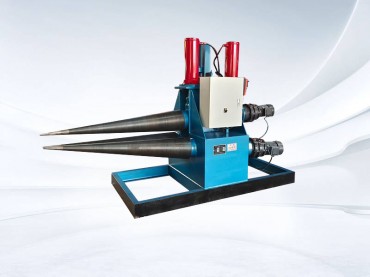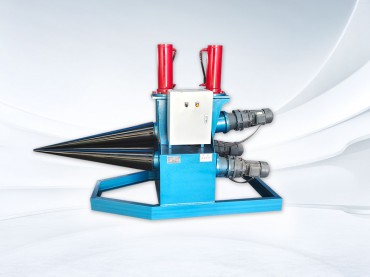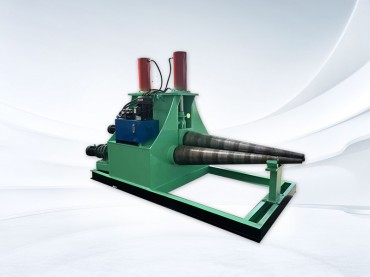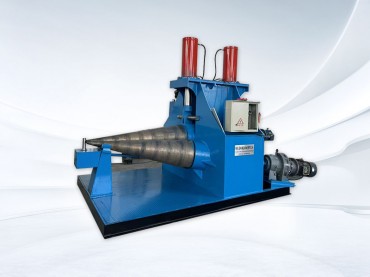
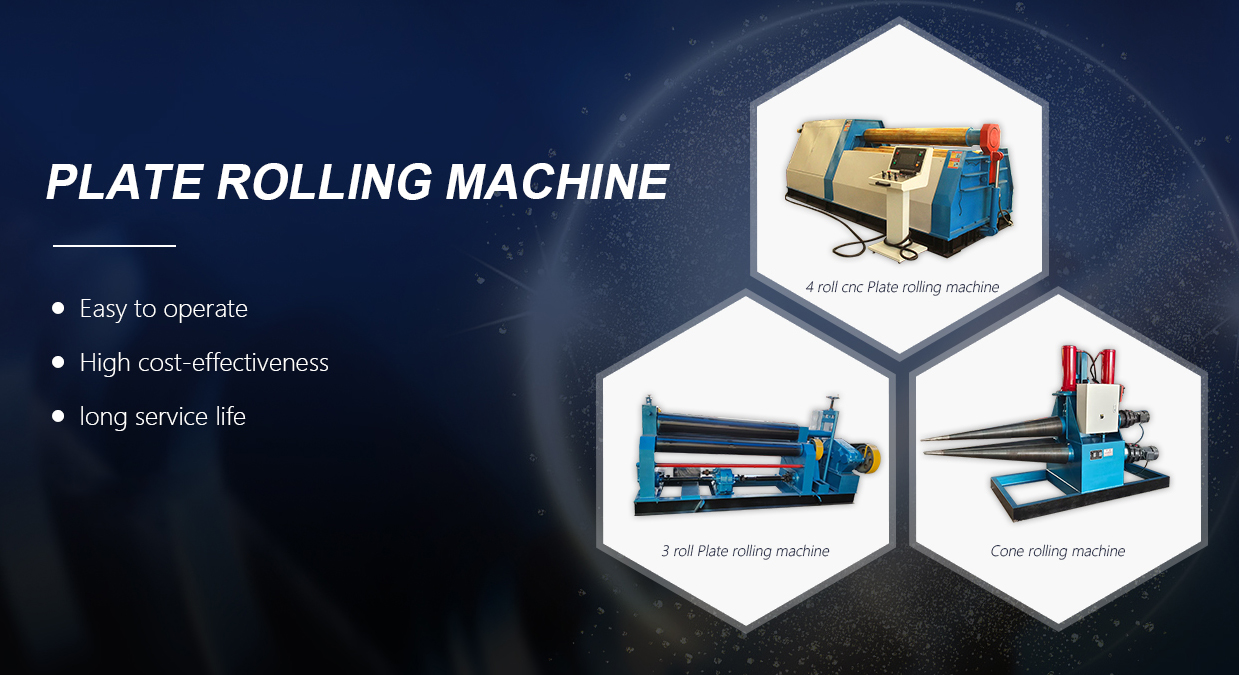
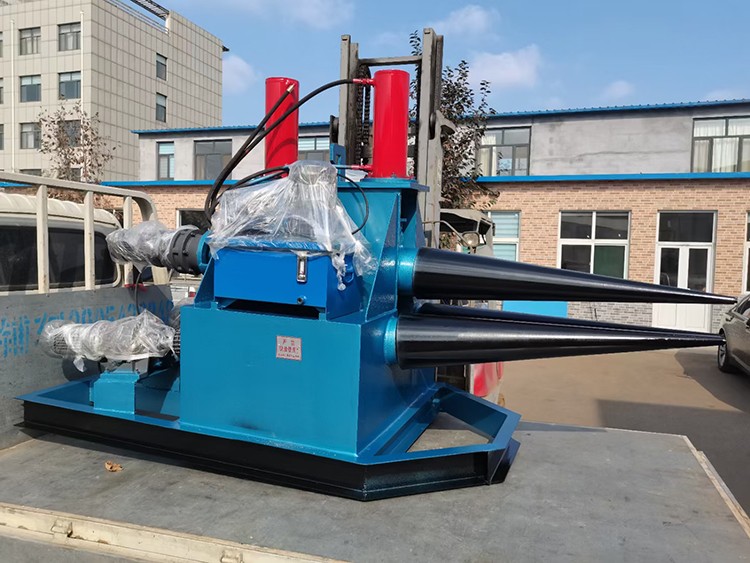
A cone rolling machine is a mechanical device used for shaping sheet metal. Its primary function is to bend flat metal plates into specific shapes such as circles, arcs, or cones through rolling processes. This type of equipment finds extensive applications in fields including pressure vessels, wind power generation, chemical equipment, and shipbuilding.
The core operating principle of the cone rolling machine is based on three-point roll bending technology. The equipment typically features three or four rollers arranged in a specific configuration. The upper roller is usually the drive roller, capable of vertical adjustment to apply pressure; the lower roller serves as the driven roller, providing support and allowing horizontal position adjustment. During operation, the metal sheet is fed between the upper and lower rolls. Pressure from the upper roll induces plastic deformation at the contact points between the rolls. As the rolls continue rotating, the sheet is progressively fed through, gradually increasing its overall curvature until the preset arc or taper is achieved. For tapered workpieces, the equipment requires additional mechanical or CNC systems to achieve more precise asymmetric control over the relative positions and motion trajectories of the rollers.
(1) Preparation: Prepare the sheet metal or metal plate to be rolled, cutting and processing it according to the cone rolling machine's specifications.
(2) Adjust the rolling machine: Set the spacing and pressure between the upper and lower rollers based on the width and thickness of the sheet metal or metal plate to be rolled.
(3) Begin rolling: Place the pre-processed sheet metal or metal plate into the rolling machine. Start rolling from one end and gradually move toward the other end until the entire rolling process is complete.
(4) Complete the Work: Remove the rolled plate metal or metal plate from the cone rolling machine and proceed with subsequent processing or use as required.
(1) Maintain the cleanliness and smoothness of the cone mold throughout the rolling process. Replace the mold immediately if scratches or wear are detected.
(2) Apply even pressure during rolling to prevent bulging or collapse.
(3) Before rolling, adjust the speed and pressure of the standard cone rolling machine based on cone size and sheet thickness to ensure quality.
(4) Prioritize safety by avoiding hand contact with rotating machinery or cone dies.
(5) After completing the cone rolling machine, clean and finish the cone surface to ensure its aesthetic appearance and quality.
(6) Do not place tools or other objects in the machine's operational area to prevent interference with the rolling process.
(7) Do not stack materials too high or in an unstable manner to avoid material tipping accidents.
- Shutdown Reporting: Immediately cease operation upon detecting abnormalities and promptly report to relevant personnel.
- Power Failure Response: During operation, if encountering a power outage or other emergencies, operators must immediately stop the machine and implement safety measures.
- Cleaning: At the end of each operating day, clean the cone rolling machine to remove dust and debris from its surface.
- Lubrication Inspection: Weekly inspection and replenishment of lubricants at designated points on the cone rolling machine.
- Electrical Inspection: Monthly inspection of the cone rolling machine's electrical system to ensure safe and reliable wiring.
- Transmission Inspection: Quarterly inspection and maintenance of the transmission system to ensure proper operation of transmission components.
Workpieces processed by cone rolling machines serve as fundamental components across numerous industries:
- Energy Equipment: Manufacturing conical sections for wind turbine towers, turbine casings, boiler drums, and pressure vessel heads for nuclear power plants.
- Petrochemical Equipment: Forming cylinders and conical heads for storage tanks, reactors, and distillation columns.
- Construction Engineering: Producing domes, curved roof beams, and decorative metal components for large-scale structures.
- Transportation: Fabricating ship hull sections, locomotive/freight car tanks, and large pipelines.
- Environmental Protection Equipment: Extensively used in dust collector housings, chimneys, ventilation ducts, and similar applications.
In summary, the cone rolling machine is indispensable sheet metal forming equipment in modern industry. Its technological development consistently focuses on enhancing precision, efficiency, automation levels, and reliability. With the emergence of new materials and processes, higher demands are placed on cone rolling machines, driving their continuous evolution toward greater intelligence.
 Address:Room 1202, Detaitang Building, No. 118 Huaguang Road, Zhangdian District, Zibo, Shandong
 WhatsApp:+8615653328535
 Wechat: +8615965331535
  E-mail:zs@sdsmachinery.com