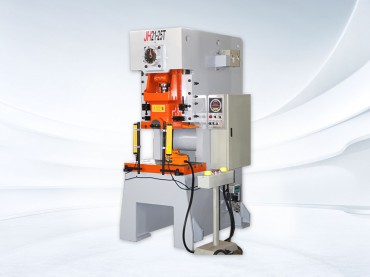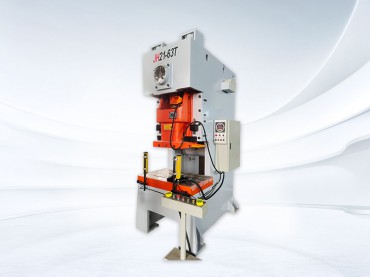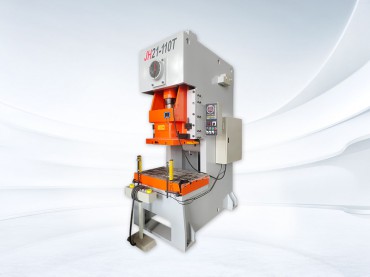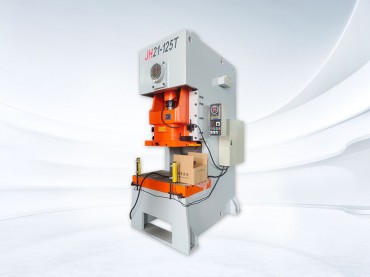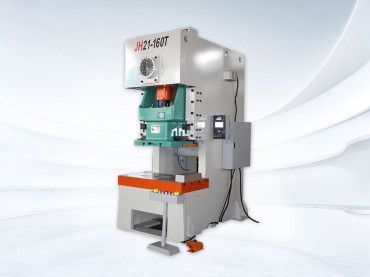
In the modern metalworking industry, punching machine as highly efficient and precise metal forming equipment, finding widespread application across automotive manufacturing, household appliance production, electronic components, and hardware products. With the diversification of market demands and continuous improvements in production efficiency, selecting a press that aligns with specific production requirements has become a critical factor influencing both output capacity and cost control. This article provides a comprehensive analysis of how to choose the appropriate press.
Punching machines can be categorised by their drive mechanisms and structural characteristics as follows:
Employing a crank-slider mechanism to drive the ram, these offer high speed, precision, and suitability for high-volume blanking and drawing operations. Their drawback lies in relatively lower safety standards, making them ideal for production workshops prioritising efficiency.
Driven by compressed air, these offer flexible operation and lower noise levels. They are suitable for small to medium batch processing and enterprises with stringent operational environment requirements.
Utilising hydraulic systems for stable pressure, these machines can perform complex processes such as deep drawing and forming. They are particularly suited for producing large-sized or high-precision components. A drawback is their slower speed (typically 20-100 strokes per minute).
The stability of a punching machine's operation directly impacts production efficiency and product quality. When purchasing, prioritise machines manufactured by reputable brands using superior craftsmanship to ensure long-term stable operation and minimise failure rates.
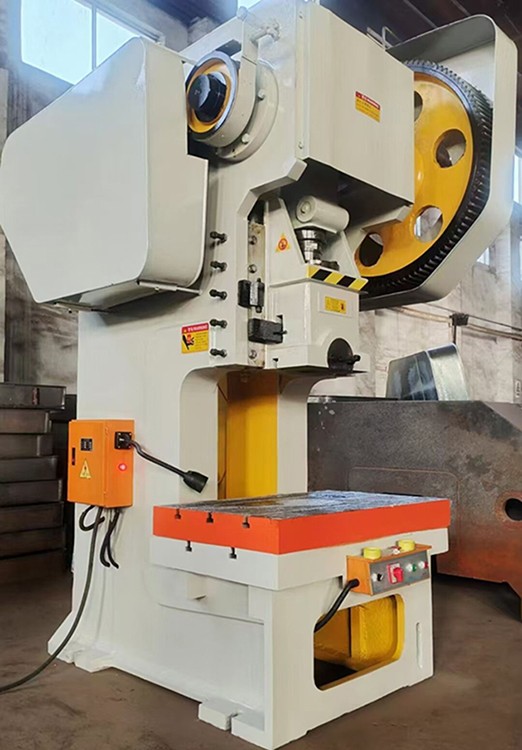
The performance parameters of a Punching machine decisively influence its effectiveness. During selection, comprehensively evaluate the following core indicators:
- Rated pressure and worktable dimensions: Higher rated pressure indicates greater penetration capability, suitable for thicker materials; a spacious worktable accommodates a wider range of workpiece specifications.
- Stroke and frequency: Higher values for these metrics enable the press to handle a broader spectrum of stamping requirements, thereby boosting production capacity.
- Speed and Stroke Frequency: A high-efficiency press delivers faster operation and increased stroke cycles, which are crucial for boosting production efficiency.
Modern presses predominantly utilise electronic control and CNC technology to enhance efficiency through automated operation. Selecting a control system suited to the enterprise's actual production requirements can significantly improve operational convenience and productivity.
As high-risk equipment, presses necessitate stringent safety considerations.
-Safety Devices: Prioritise models equipped with dual-hand button operation, photoelectric protection, and emergency stop systems.
- Maintenance Accessibility: The design's ease for lubrication, inspection, and component replacement directly impacts long-term operational costs.
- Intelligent Protection: Some high-end presses feature overload protection and automatic fault alarm systems, reducing accident risks and extending service life.
Punching machines represent a long-term investment. Selecting brands with robust after-sales support ensures timely, professional maintenance and servicing throughout the equipment's operational lifespan.
-Brand Reputation: Established manufacturers typically possess more mature technologies and comprehensive quality management systems.
-After-Sales Assurance: Prioritise suppliers offering installation commissioning, operator training, scheduled maintenance, and spare parts supply.
-Cost-Effectiveness Assessment: Evaluate not only the equipment price but also operational costs, energy consumption levels, and failure rates.
Selecting the appropriate punching machine not only impacts a company's production efficiency and product quality but also directly influences cost control and market competitiveness. Prior to procurement, enterprises should conduct comprehensive multi-dimensional assessments to ensure scientifically informed selection and prudent investment. Against the backdrop of manufacturing transformation and upgrading, a punch press suited to an organisation's development needs serves not merely as a production tool but as a vital safeguard for enhancing competitiveness.
Should you be interested in punching machines , please contact us. We shall recommend suitable machinery and provide quotations.
 Address:Room 1202, Detaitang Building, No. 118 Huaguang Road, Zhangdian District, Zibo, Shandong
 WhatsApp:+8615653328535
 Wechat: +8615965331535
  E-mail:zs@sdsmachinery.com