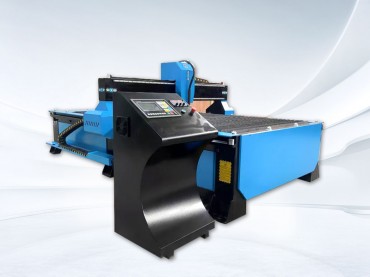
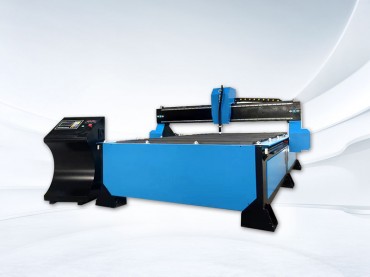
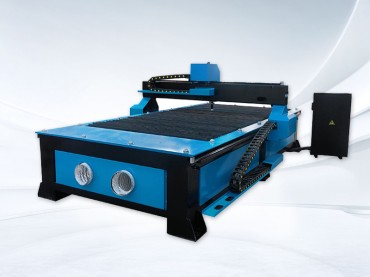
CNC plasma cutting machine is a modern metal processing equipment that integrates numerical control technology and plasma cutting technology. It controls the cutting process through digital instructions to achieve efficient and precise cutting of metal materials. The following provides a detailed introduction from five dimensions: technical principles, equipment structure, comparison with traditional punching machines, application areas, and development trends.
1. Technical principle: Physical basis of plasma cutting
The core principle of a CNC plasma cutting machine is to use the energy of a high-temperature plasma arc to melt metal, and then blow the molten metal away through high-speed airflow to form a cut. The physical process can be divided into three steps:
1. Arc generation: When compressed air passes through the cutting torch nozzle, it is ionized to form a conductive plasma, and the current passes through the gap between the nozzle and the workpiece to generate a high-temperature arc.
2. Metal melting: The arc temperature can reach over 20000 ℃, causing the metal at the cutting edge of the workpiece to quickly melt or even evaporate.
3. Slag discharge: High speed plasma airflow (supersonic speed) blows molten metal away from the cutting edge, forming a smooth cutting surface.
Comparison with traditional punching machines:
Punching machines deform or separate metals through mechanical pressure, suitable for processes such as punching and material cutting, but cannot directly cut complex contours; The plasma cutting machine achieves continuous cutting through hot melting, especially suitable for irregular graphic processing. For example, a punch press can efficiently punch standard circular holes, but cutting irregular logos requires multiple positioning; The plasma cutting machine can complete complex curve cutting in one go.
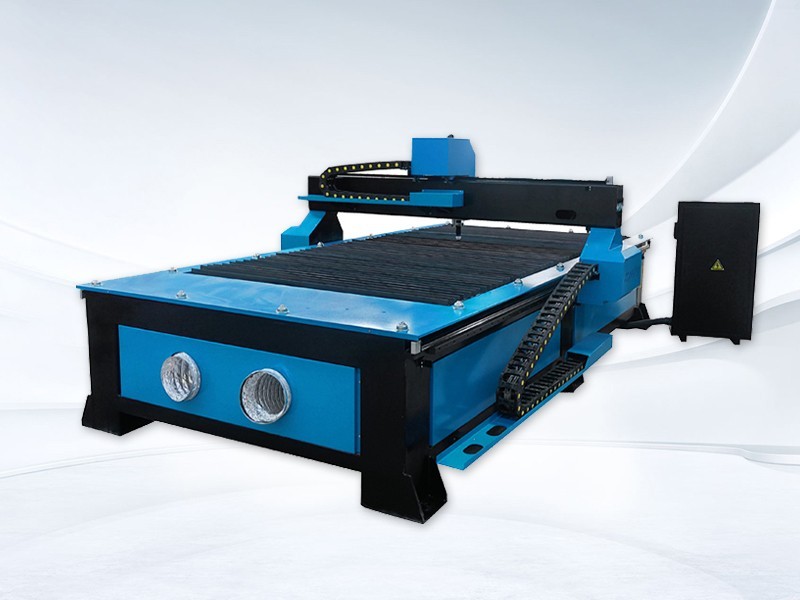
2. Equipment structure: Collaboration between CNC system and mechanical architecture
The CNC plasma cutting machine consists of two core modules:
1. Numerical Control System:
Using CNC (Computer Numerical Control) technology, cutting path, speed, arc voltage and other parameters are controlled through G-code programming.
Equipped with industrial computers or embedded controllers, supporting CAD/CAM software to directly import graphics and achieve "what you see is what you get" machining.
Typical functions include automatic height adjustment, arc voltage feedback, fault diagnosis, etc., to improve cutting accuracy and stability.
2. Mechanical structure:
Longmen structure: Dual axis drive (X/Y axis) achieves large-area planar cutting, suitable for industries such as ships and steel structures.
Cantilever structure: single-sided support design, suitable for small workpieces or space limited scenarios.
Portable structure: Lightweight design, capable of on-site cutting of large components such as wind turbine towers.
Key components such as linear guides, servo motors, reducers, etc. are designed with high precision and rigidity to ensure the accuracy of cutting trajectories.
Structural differences from traditional punching machines:
Punching machines mainly rely on mechanical transmission, converting rotational motion into linear stamping through mechanisms such as crankshafts and connecting rods; The plasma cutting machine relies on a numerical control system to control the motor drive and achieve multi axis linkage cutting. In addition, punch presses require matching molds, while plasma cutting machines generate cutting paths directly through programming, providing higher flexibility.
3. Application area: Comprehensive coverage from thin to thick plates
CNC plasma cutting machines are widely used in the following industries due to their high efficiency and flexibility:
1. Metal processing: Cutting thin sheets of non-ferrous metals such as stainless steel, aluminum, and copper (thickness ≤ 30mm) at speeds up to 5-6 times faster than oxygen cutting.
2. Automotive manufacturing: rapid cutting of body coverings and chassis components to reduce secondary processing.
3. Shipbuilding: Thick plate cutting (thickness>30mm), underwater plasma technology can reduce noise and dust.
4. Advertising industry: The special-shaped cutting of LED luminous characters and identification signs can be achieved through an integrated punching machine that can achieve "punching and cutting integration".
5. Emergency rescue: Portable devices can quickly cut deformed metals (such as car accident debris), which is safer and more efficient than traditional grinding wheels.
4. Development Trend: Integration of Intelligence and High Precision
1. Fine plasma technology: The cutting quality is close to the laser level (incision flatness ± 0.2mm), suitable for precision parts processing such as titanium alloys and aluminum alloys.
2. High power cutting: Cutting thickness exceeds 150mm, expanding its application range to heavy machinery, nuclear power equipment and other fields.
3. Intelligent functions: integrating visual recognition, automatic thickness measurement, path optimization and other functions to reduce manual intervention.
4. Environmental upgrade: Underwater cutting, dry dust removal and other technologies reduce dust and noise pollution, meeting the requirements of green manufacturing.
Collaborative application with punch press:
In the processing of complex parts, CNC plasma cutting machines can complete contour cutting, and then punching, flanging and other processes are carried out by punching machines, forming an integrated production line of "cutting stamping" to improve overall efficiency.
5. Summary: The core value of CNC plasma cutting machine
The CNC plasma cutting machine combines digital control with plasma cutting technology to achieve high efficiency, precision, and flexibility in metal processing. Compared to traditional punching machines, its advantages lie in:
1. No need for molds: reduce production costs and shorten delivery cycles.
2. Flexible cutting: It can process any complex shape and adapt to personalized customization needs.
3. Wide applicability of materials: covering all conductive metals, especially suitable for non-ferrous metals and high-strength steel.
The CNC plasma cutting machine, with its excellent performance, has become a key equipment for many enterprises to improve production efficiency and product quality. For metal processing enterprises, introducing CNC plasma cutting machines can not only significantly improve cutting efficiency, but also reduce labor costs and material waste. During use, enterprises should pay attention to the maintenance and upkeep of equipment, regularly inspect and replace vulnerable parts, and ensure the stable operation of the equipment. At the same time, operators should receive professional training and master the operation skills and safety regulations of the equipment proficiently. Let us actively embrace CNC plasma cutting machines, fully leverage their advantages, and win the initiative in the fierce market competition.

 Address:Room 1202, Detaitang Building, No. 118 Huaguang Road, Zhangdian District, Zibo, Shandong
 WhatsApp:+8615653328535
 Wechat: +8615965331535
  E-mail:zs@sdsmachinery.com