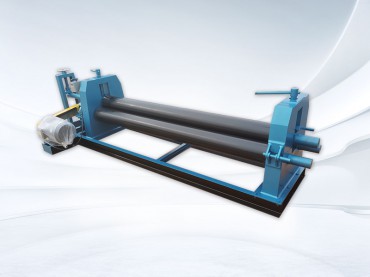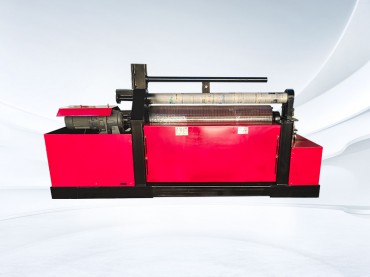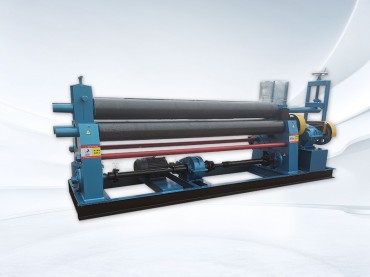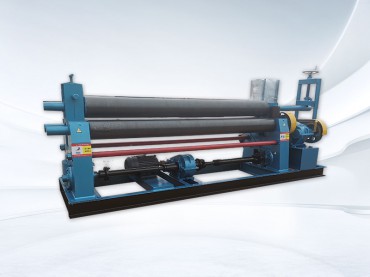
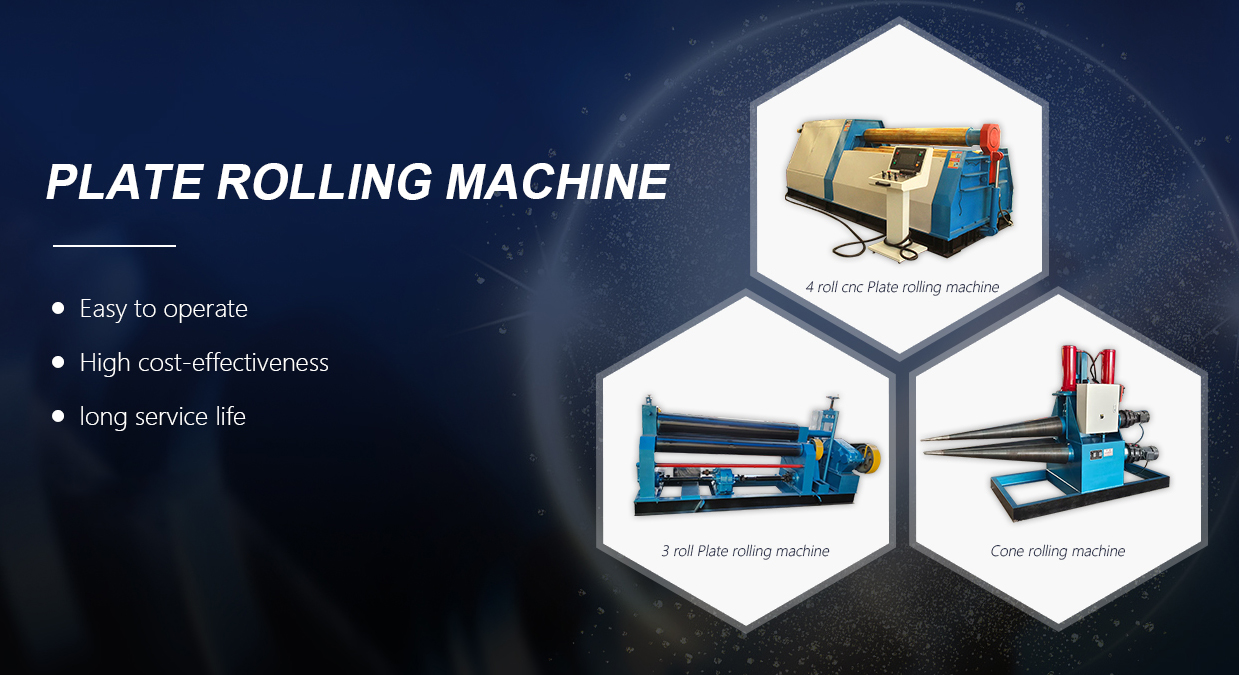
In modern industrial production, plate rolling machine is a kind of important equipment widely used in metal plate forming and processing. It is capable of extruding and bending flat metal sheets through rollers, gradually molding them into cylindrical, curved or tapered workpieces. With the development of the industry, the coiler is constantly improving in terms of technical precision, production efficiency and safety control, and has become an important equipment for modern manufacturing industry to enhance competitiveness. This article will be introduced from the working principle of the coiler, the main types, methods of use and application advantages to help you better understand this product.
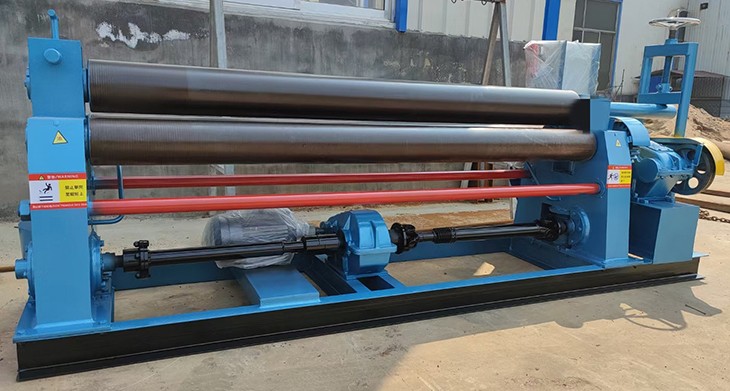
plate rolling machine is mainly composed of upper roll, lower roll, side roll, frame and hydraulic / electric drive system. The upper roller is the active roller, through the motor or hydraulic cylinder to provide pressure; the lower roller is fixed to support the plate; side rollers (some models are equipped) to assist in adjusting the curvature of the roll. When working, the three rolls make the sheet metal plastic deformation through cooperative movement.
When the sheet is fed into the rollers, the upper roller is pressed down to exert pressure, the lower roller rotates to drive the sheet forward, and the sheet is gradually bent into the required curvature through repeated reciprocating movements. For example, when rolling a Q235 steel plate with a thickness of 10mm (according to the standard GB/T 3274-2017), it is necessary to apply pressure gradually in 3-4 times to avoid cracking of the plate.
The pressure range of hydraulic plate rolling machine is usually 20-200MPa (reference: “Safety Technical Conditions for Forging and Pressing Machinery” GB 17120), and the pressure is accurately controlled by the oil cylinder; the mechanical type relies on the gear transmission, which is suitable for thin plate processing.
structure is relatively simple, consisting of an upper roller and two lower rollers. Suitable for medium-thickness plate rolling, but because the ends need to leave a straight edge, processing efficiency is relatively limited.
in the traditional three-roller based on the addition of an auxiliary side roller, to achieve the full-length rolled sheet, without the need to leave a straight edge, processing efficiency is higher, suitable for mass production.
adopts computerized control system, which can precisely adjust the roller position, pressure and speed. Its molding error can be controlled within ± 0.1mm, widely used in aerospace, nuclear power equipment and other areas requiring high precision.
- Check the lubrication status of the equipment to ensure that the rollers are not worn.
- According to the thickness of the plate (such as 2-50mm) to adjust the roller spacing, spacing too small easily lead to uneven plate deformation.
-Positioning of the plate: align the plate with the centerline of the rollers, and the deviation should be less than 1mm (refer to JB/T 8780-2018 standard).
-Pre-bending treatment: first pre-bend both ends of the plate by 15°-20° to prevent the straight edge from remaining.
-Formal roll rounding: adjust the upper roller downward in several times, and the amount of downward pressure each time is not more than 10% of the thickness of the plate. For example, the single downward pressure of 8mm steel plate should be ≤0.8mm.
- Overloading is strictly prohibited (e.g. the machine with rated roll thickness of 20mm must not process 25mm plates).
- Emergency stop button must be kept available, wear non-slip gloves when operating.
- Cold roll molding error can be controlled at ± 0.1mm / m (GB / T 15825-2008 standard), hot roll error ± 0.3mm / m.
- The four-roll model is 40% lower in ellipticity deviation than the three-roll model due to the assistance of side rolls.
- Take the 200-ton coiling machine as an example, the new frequency conversion technology makes the annual power consumption of a single unit drop from 120,000 degrees to 90,000 degrees (data source: “Forging Equipment and Manufacturing Technology” 2023 study);
- The hydraulic system adopts biodegradable oil, reducing the risk of pollution by 90%.
The coiler can operate continuously and process 10-30 meters of plates per hour (data source: Metal Forming Process Handbook), increasing efficiency by more than 5 times compared with traditional manual labor.
Different cross-section shapes can be processed by changing the molds, and the following table shows the comparison of common processing ranges:
|
Machine type |
Minimum roll diameter |
Maximum plate thickness (carbon steel) |
Applicable materials |
|
Mechanical three roller |
300mm | 25mm |
Carbon steel, stainless steel |
|
Hydraulic four roller |
150mm | 40mm |
Alloy steel, titanium alloy |
|
CNC level down commissioning |
80mm | 60mm |
High strength steel, composite materials |
As the core equipment of modern metal processing, the coiler plays an irreplaceable role in the fields of energy, ships, bridges, aerospace and so on by virtue of high efficiency, high precision and strong adaptability. With the development of numerical control and intelligence, its application scene will be more broad. For manufacturing enterprises, the reasonable choice and use of plate rolling machine can not only improve production capacity and product quality, but also maintain long-term advantage in the fierce market competition.
If you are interested in plate rolling machine, please contact us, we will recommend the right plate rolling machine to you.
 Address:Room 1202, Detaitang Building, No. 118 Huaguang Road, Zhangdian District, Zibo, Shandong
 WhatsApp:+8615653328535
 Wechat: +8615965331535
  E-mail:zs@sdsmachinery.com