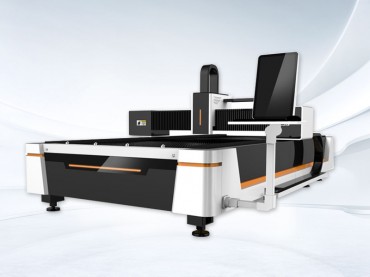
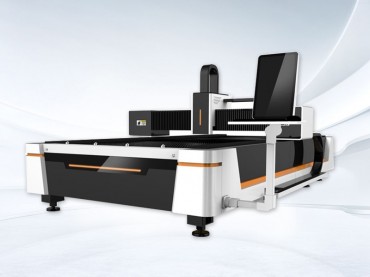
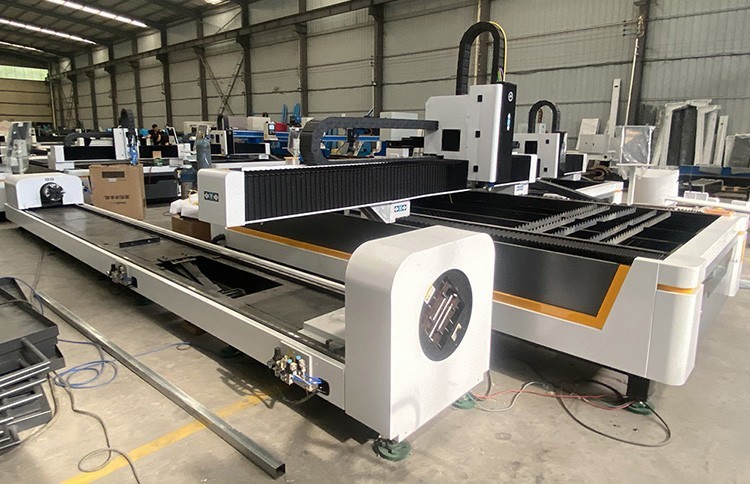
Pipe laser cutting machine is a specialized equipment that uses high-energy laser beams to cut metal or non-metal pipes. It instantly melts or vaporizes the material through a focused laser spot, and works with a CNC system to achieve precise cutting of pipes. It is widely used in pipeline engineering, automobile manufacturing, furniture industry, aerospace and other fields. The following introduces it from four aspects: definition, working principle, core advantages, and application scenarios.
1. Definition: Specialized equipment for high-precision pipe processing
The pipe laser cutting machine is an automated equipment that integrates laser technology, numerical control technology, and mechanical transmission technology. It is specifically used for cutting, punching, slotting, and other processing of pipes such as round pipes, square pipes, rectangular pipes, and special-shaped pipes. Compared with traditional sawing and stamping processes, laser cutting does not require molds and can achieve rapid processing of any complex shape. The cutting surface has high smoothness and does not require secondary processing. For example, in the production of bicycle racks, pipe laser cutting machines can complete the irregular cutting of pipes in one go, with an accuracy of ± 0.05mm.
2. Working principle: Collaboration between laser focusing and CNC linkage
The working principle of the pipe laser cutting machine is based on the collaboration of "laser generator+CNC system+motion mechanism":
(1) Laser generator: generates a high-power laser beam (usually a fiber laser with a power range of 500W-6000W), which is transmitted to the cutting head through optical fibers.
(2) Focusing and cutting head: The cutting head is equipped with a focusing mirror, which focuses the laser beam onto a micrometer sized spot (diameter 0.1-0.3mm), and is also equipped with auxiliary gas (such as oxygen, nitrogen) nozzles to blow away melted or vaporized materials.
(3) Numerical Control System: Control the rotation of pipes (C-axis) and the movement of cutting heads (X/Y/Z axis) according to preset programs, achieving precise cutting in three-dimensional space. For example, when cutting spiral pipes, the CNC system can synchronously control the rotation of the pipe and the axial movement of the cutting head to form a continuous spiral cut.
(4) Motion mechanism: including chuck clamping device, pipe support frame, and linear guide rail, ensuring the stability and positioning accuracy of the pipe during the cutting process.
3. Core Advantage: Triple Breakthrough in Efficiency, Accuracy, and Flexibility
Pipe laser cutting machines for pipes have significant advantages over traditional processes:
(1) High processing accuracy: The cutting seam width is only 0.1-0.3mm, the heat affected zone is small, and the cutting perpendicularity is good, suitable for precision part processing.
(2) High production efficiency: The cutting speed can reach 20-100m/min, and it can continuously process pipes of different diameters and lengths without frequent mold changes.
(3) Strong flexibility: Different shapes can be processed by simply modifying the program, adapting to the production needs of small batches and multiple varieties.
(4) High material utilization rate: By using functions such as common edge cutting and nesting layout, material waste can be reduced and unit costs can be lowered.
4. Application scenario: Cross industry pipe processing solution
The application of pipe laser cutting machine covers multiple industries:
(1) Pipeline engineering: Processing connection ports, elbows, and irregular fittings for oil and natural gas pipelines.
(2) Automobile manufacturing: cutting irregular holes and welding grooves for exhaust pipes and frame pipes.
(3) Furniture industry: producing metal tables, chairs, and railings with pipe cuts and decorative patterns.
(4) Aerospace: Precision cutting of aircraft hydraulic pipelines and engine fittings.
(5) Fitness equipment: cutting connection holes and shapes for treadmills and spinning bike pipes.
Pipe laser cutting machines for pipes have become the mainstream equipment in the field of modern pipe processing due to their high precision, efficiency, and flexibility. It can not only easily meet the cutting needs of circular, square, and irregular pipes, but also achieve complex processes such as groove cutting, punching, and hollowing through program control. With the increase of laser power, the integration of intelligent sensing technology and automated loading and unloading systems, pipe laser cutting machines are developing towards higher speed, higher quality, and lower cost, providing key technical support for the intelligent upgrading of the manufacturing industry.

 Address:Room 1202, Detaitang Building, No. 118 Huaguang Road, Zhangdian District, Zibo, Shandong
 WhatsApp:+8615653328535
 Wechat: +8615965331535
  E-mail:zs@sdsmachinery.com