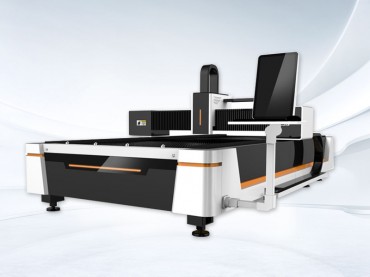
In the increasingly competitive manufacturing industry, the level of cutting efficiency directly affects the production efficiency and market competitiveness of enterprises. As a key equipment in modern industrial processing, the cutting speed of CNC laser cutting machines has always been a focus of attention. It has demonstrated excellent performance in the cutting field with advanced laser technology and precise CNC system, and cutting speed is one of the important indicators to measure its performance. The cutting speed of a CNC laser cutting machine is one of the important indicators to measure its performance and efficiency, which is influenced by various factors. The following is a detailed introduction for you:
1. Factors affecting cutting speed
1. Laser power: Laser power is a key factor affecting cutting speed. Generally speaking, the higher the laser power, the more energy can be provided to the material per unit time, and the faster the material melts or vaporizes, resulting in a faster cutting speed. For example, for stainless steel plates of the same thickness and material, high-power CNC laser cutting machines can complete cutting tasks at a faster speed than low-power cutting machines.
2. Material type and thickness: Different materials have different physical properties such as thermal conductivity, melting point, density, etc., and their absorption and conduction of laser energy are also different, so the cutting speed may vary. For example, the speed of cutting stainless steel is usually slower than cutting aluminum alloy because stainless steel has poor thermal conductivity, and laser energy conducts slowly inside it, requiring more time for the material to reach a molten or vaporized state. Meanwhile, the thickness of the material is also an important factor affecting the cutting speed. The thicker the material, the more energy is required for cutting, and the slower the cutting speed.
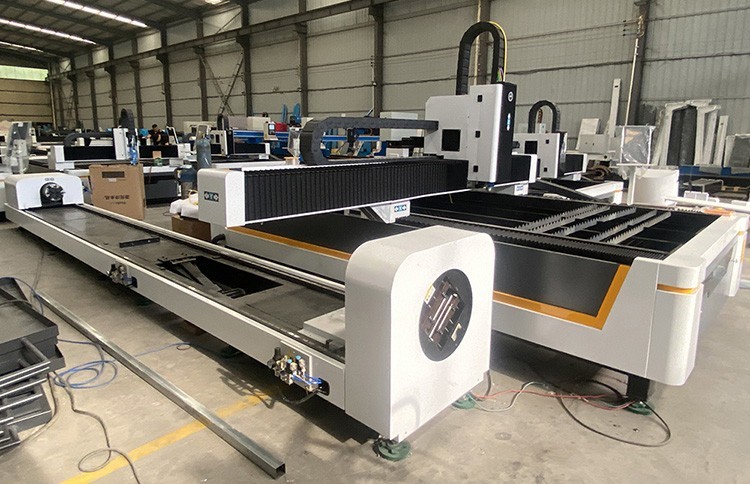
3. Cutting gas and pressure: Cutting gas plays an auxiliary role in laser cutting, blowing away melted or vaporized materials to ensure smooth cutting. Different cutting gases (such as oxygen, nitrogen, air, etc.) have varying effects on cutting speed. For example, when using oxygen as the cutting gas, it undergoes an oxidation reaction with the material, releasing a large amount of heat, which helps to improve the cutting speed, but may cause oxidation at the cutting edge; When using nitrogen as the cutting gas, the cutting edge quality is better, but the cutting speed is relatively slow. In addition, the pressure of the cutting gas can also affect the cutting speed. Appropriate gas pressure can ensure that the cutting gas effectively blows away the melted material, improving cutting efficiency.
4. Laser beam quality: The quality of a laser beam includes factors such as spot size, focusing degree, energy distribution, etc. High quality laser beams with small spot size, high focusing degree, and uniform energy distribution can expose materials to higher energy density in smaller areas, thereby accelerating cutting speed. On the contrary, if the quality of the laser beam is poor, the spot size is large, and the energy distribution is uneven, it will cause uneven heating of the material during the cutting process, reduce the cutting speed, and even lead to incomplete cutting.
5. Performance of CNC system: The performance of CNC system directly affects the motion accuracy and speed of CNC laser cutting machine. Advanced CNC systems can achieve faster interpolation operations and motion control, enabling laser cutting machines to complete cutting tasks at higher speeds and accuracies. At the same time, the programming and operational convenience of CNC systems can also affect cutting efficiency. A simple and easy-to-use programming interface and operating method can reduce programming time and operational errors for operators, and improve production efficiency.
2.Cutting speed range under different materials and thicknesses
1. Metal materials
Stainless steel: For thin sheet stainless steel (thickness between 1-3mm), the cutting speed can reach several meters per minute or even faster; For thicker stainless steel plates (with a thickness exceeding 10mm), the cutting speed will be significantly reduced, possibly only a few tens of centimeters per minute.
Carbon steel: The cutting speed of carbon steel is similar to that of stainless steel, but in general, the cutting speed of carbon steel is slightly faster than that of stainless steel because carbon steel has relatively good thermal conductivity and laser energy is more easily conducted inside it.
Aluminum alloy: The cutting speed of aluminum alloy is relatively slow, mainly due to its high reflectivity and low absorption rate of laser energy. The cutting speed of thin aluminum alloy is generally below several meters per minute, while the cutting speed of thick aluminum alloy is even slower.
2. Non metallic materials
Plastic: Plastic cutting speed is usually faster because plastic has a lower melting point and better absorption of laser energy. For common plastic sheets, the cutting speed can reach several meters per minute or even faster.
Wood: The cutting speed of wood is also fast, but attention should be paid to the smoke and dust generated during the cutting process. The speed of cutting wood can be adjusted according to the type and thickness of the wood, usually around a few meters per minute.
3. Methods to increase cutting speed
Optimize laser parameters: Adjust laser power, pulse frequency, duty cycle and other parameters reasonably according to different materials and thicknesses to improve the utilization rate of laser energy and cutting efficiency. For thicker materials, laser power and pulse frequency can be appropriately increased to improve cutting speed.
Choose the appropriate cutting gas and pressure: Based on the characteristics of the material and cutting requirements, select the appropriate cutting gas and adjust the gas pressure. For example, when cutting stainless steel with a CNC laser cutting machine, if the quality requirements for the cutting edge are not high, oxygen can be used as the cutting gas to improve the cutting speed.
Improve the quality of laser beams: Regularly inspect and maintain components such as laser generators and optical systems to ensure stable quality of laser beams. Optical focusing system optimization technology can be used to improve the focusing degree and energy distribution uniformity of the laser beam, thereby increasing the cutting speed.
Upgrade the CNC system: adopt a more advanced CNC system to improve the calculation speed and motion control accuracy of the CNC system. At the same time, optimizing CNC programming and adopting more efficient cutting path planning algorithms can reduce idle travel and acceleration/deceleration time during the cutting process, thereby improving cutting efficiency.
Reasonable design of cutting graphics and layout: Before cutting, the cutting graphics should be designed reasonably to reduce unnecessary cutting lines and corners, optimize cutting layout, and improve material utilization and cutting efficiency. For example, using techniques such as common edge cutting and nesting cutting can reduce cutting time and material waste.
The cutting speed of CNC laser cutting machines is not only related to the improvement of production efficiency, but also a key factor for enterprises to achieve efficient and low-cost production. With the continuous advancement and innovation of technology, we have reason to believe that CNC laser cutting machines will make greater breakthroughs in cutting speed, injecting stronger impetus into the development of the manufacturing industry. For enterprises, keeping up with the trend of technological development and applying CNC laser cutting machines reasonably will help them seize the opportunity in fierce market competition and win broader development space.

 Address:Room 1202, Detaitang Building, No. 118 Huaguang Road, Zhangdian District, Zibo, Shandong
 WhatsApp:+8615653328535
 Wechat: +8615965331535
  E-mail:zs@sdsmachinery.com