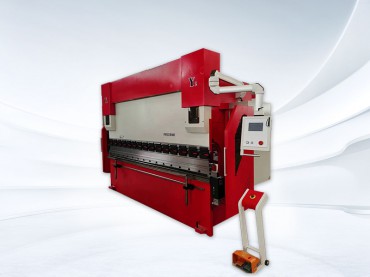
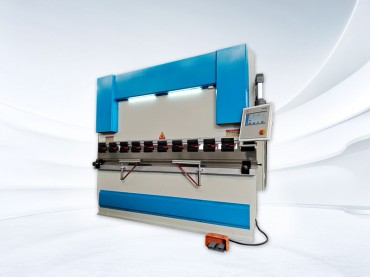
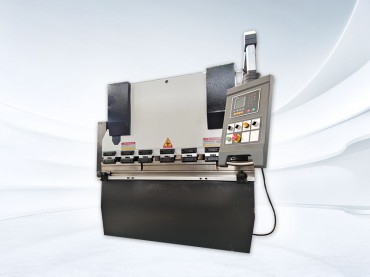
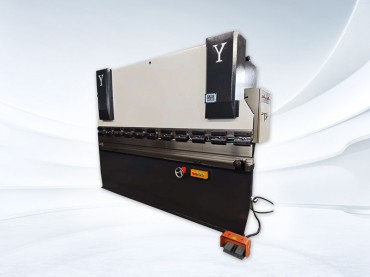
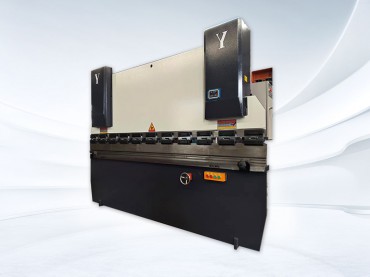
A CNC bending machine is an advanced metal processing equipment widely used in the bending of various metal sheets. It combines CNC technology with mechanical bending technology to achieve high-precision metal sheet bending, significantly improving production efficiency and product quality. As a manufacturer specialising in the R&D of bending machine equipment, we will now explain the working principle, operating procedures, application scenarios, and maintenance and care points of CNC bending machines to help you better understand the machine and make an informed choice.
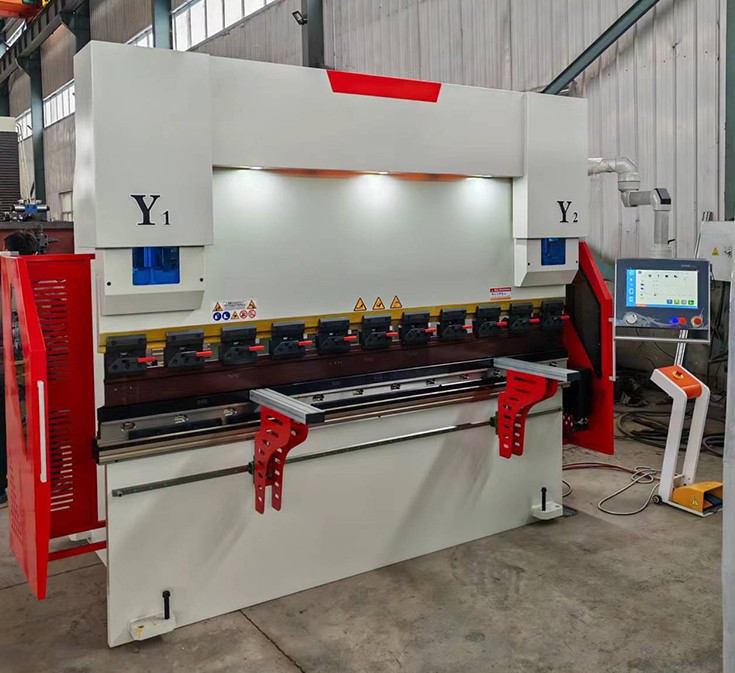
1. Working Principle of CNC Bending Machines
CNC bending machines primarily consist of the machine tool body, hydraulic system, electrical system, and CNC system. Their working principle involves the hydraulic system providing power to clamp the metal sheet between the lower and upper dies of the machine tool. The CNC system then controls the movement of the hydraulic cylinders, causing the upper die to press down and complete the bending of the metal sheet.
A CNC bending machine is an automated machine tool primarily used for bending metal sheets. Its working principle involves placing the metal sheet on the machine's workbench and using CNC programs to control the bending dies on the machine, enabling the workpiece to undergo bending processing on the dies to achieve the desired bending angle and shape.
2. Operating Procedures for CNC Bending Machines
(1) Set processing parameters: Set and adjust the parameters of the metal sheet to be processed on the screen, including length, thickness, bending angle, etc. Based on design and processing requirements, determine the working mode of the CNC system and select the appropriate program for processing.
(2) Secure the workpiece: Place the metal sheet to be processed on the workbench of the machine tool body, clamp it with fixtures to ensure the workpiece does not move or deform during processing, thereby ensuring processing accuracy and quality.
(3) Start processing: Close the bending machine's guard cover and press the start button to begin processing. During the process, closely monitor the CNC system's operational status to ensure normal processing without abnormalities. If any abnormalities occur, immediately shut down the machine for inspection and troubleshooting.
(4) Inspect the finished product: After processing is complete, release the clamps and remove the processed metal plate. Inspect the processing quality and dimensions to ensure they meet requirements. If any deviations are found, adjustments must be made.
3. Application scenarios of CNC bending machines
CNC bending machines have a wide range of application scenarios in the metal processing and manufacturing industries. They are primarily used in the following fields:
(1) Metal sheet processing
CNC bending machines are suitable for processing various types of metal sheets, such as steel sheets, aluminium sheets, and copper sheets. They can bend metal sheets into various shapes, such as U-shaped, V-shaped, and Z-shaped, to meet diverse processing requirements.
(2) Manufacturing Industry
CNC bending machines also have extensive applications in the manufacturing industry. They can be used to manufacture various types of components and products, such as automotive parts, electronic products, and furniture. Their precise bending operations ensure that the manufactured products have high quality and consistency.
(3) Construction Industry
CNC bending machines are also used in the construction industry. They can be used to manufacture building materials such as roof panels and wall panels. Their precise bending operations ensure that building materials have high strength and consistency.
4. Maintenance and Care
(1) Daily Maintenance Precautions
Before performing machine tool maintenance or cleaning, align the upper die with the lower die and shut down the machine. During maintenance, pay special attention to the hydraulic oil circuit, including weekly checks of the oil tank level, use of the correct hydraulic oil, and regular replacement of hydraulic oil. At the same time, keep the machine tool clean and lubricated to ensure its long-term stable operation.
(2) Hydraulic System Maintenance
Oil Temperature Control: Maintain the temperature between 35℃ and 60℃, and do not exceed 70℃to prevent oil degradation and component damage due to high temperatures.
Filters: Replace or thoroughly clean the filters when changing hydraulic oil. Inspect the air filter every three months, and replace it annually.
Component Inspection: Clean hydraulic components monthly and inspect oil lines for deformation. After one month of operation for new machines, check for loose fasteners.
In summary, CNC bending machines have become indispensable equipment in modern industrial manufacturing due to their high precision, efficiency, and wide range of applications. With the continuous advancement of technology and industrial development, CNC bending machines will play an increasingly important role in future manufacturing.
If you are interested in CNC bending machines, please contact us, and we will recommend suitable machines and provide a quote.

 Address:Room 1202, Detaitang Building, No. 118 Huaguang Road, Zhangdian District, Zibo, Shandong
 WhatsApp:+8615653328535
 Wechat: +8615965331535
  E-mail:zs@sdsmachinery.com