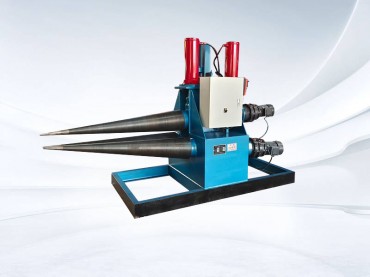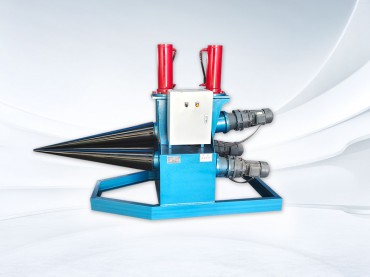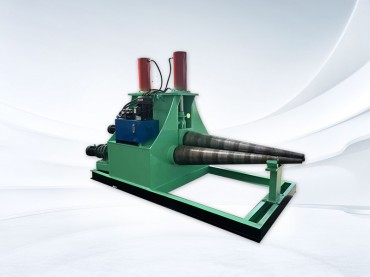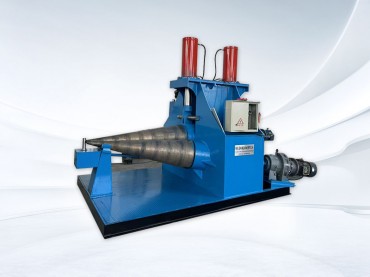
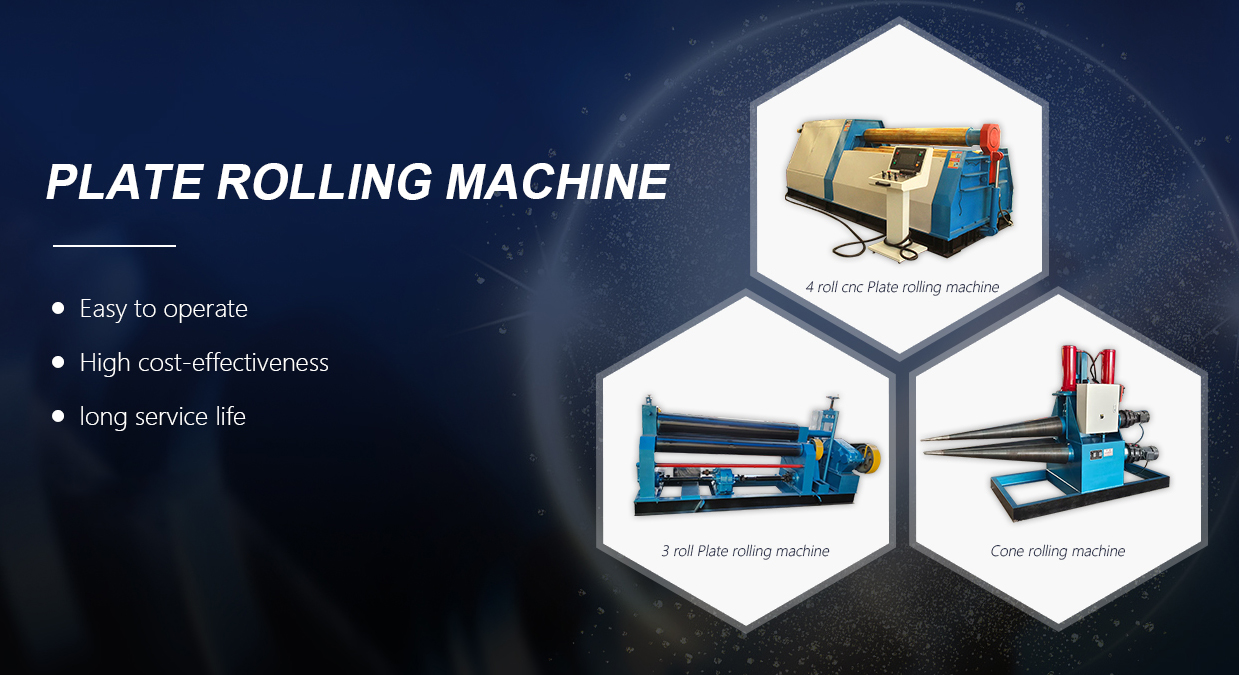
Building a comprehensive manufacturing system, we leverage over a decade of expertise in the field of cone rolling machines to detail the breakthroughs in overcoming the challenges of rolling thick-walled cone tubes:
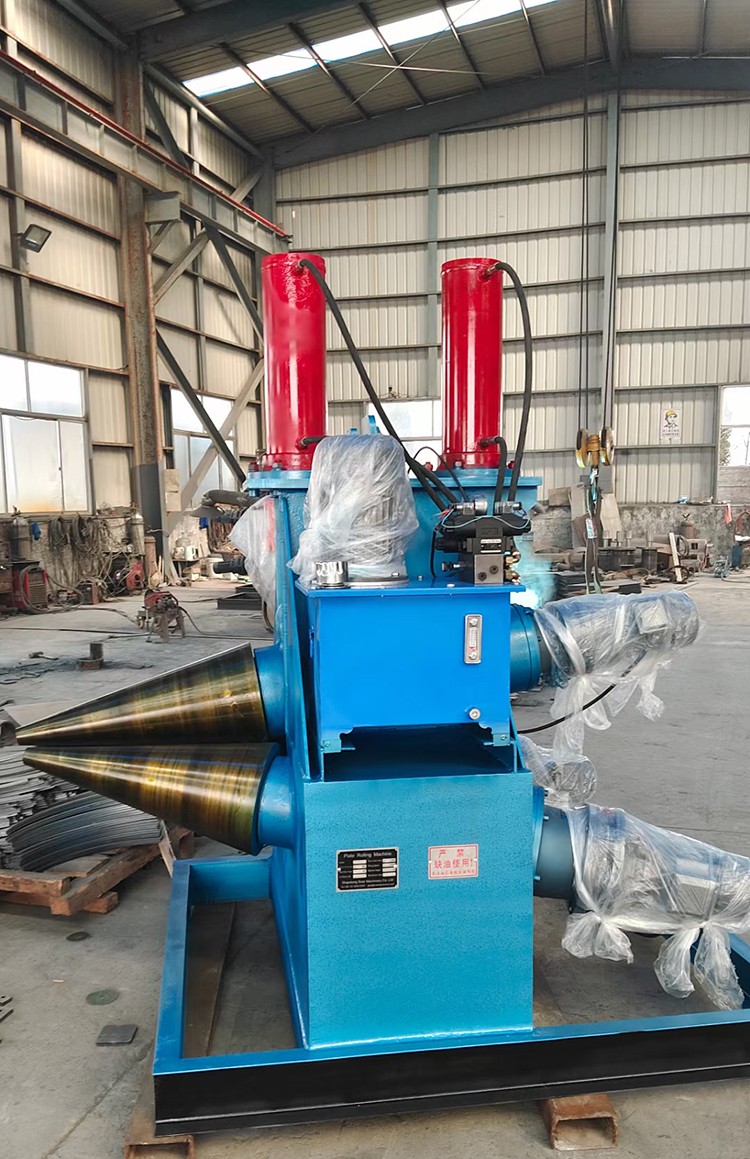
A cone rolling machine is a crucial piece of equipment in metal processing for producing conical workpieces, and its processing accuracy directly impacts the assembly performance and usage effectiveness of the workpiece. The rolling of thick-walled conical tubes is a complex process in metal forming, and compared to ordinary thin-walled conical tubes, its processing difficulty is significantly higher.
During the forming process of thick-walled conical tubes, roll forming machines often encounter issues such as large material springback, uneven wall thickness control, and insufficient forming accuracy. Effectively overcoming these challenges is key to improving product quality and production efficiency. The following analysis examines the key challenges and corresponding measures for the roll forming of thick-walled conical tubes from three aspects: process adjustment, equipment optimization, and operational control.
1, Control of Material Springback
During the rolling process of thick-walled conical tubes, due to the significant material thickness, the internal stress distribution of the metal is uneven, resulting in more pronounced springback after forming. Springback can cause the curvature radius of the conical tube to deviate from design requirements, affecting the final dimensional accuracy.
Solutions:
Pre-bending compensation method: During the initial rolling stage, based on the material springback characteristics, appropriately adjust the roll compression force to ensure that the springback after forming exactly offsets the pre-bending excess. Typically, the springback coefficient for different materials must be determined through testing, and compensation values are pre-set in the program.
Segmented pressure application method: During the rolling process, pressure is increased in stages to allow the material to gradually adapt to plastic deformation, reducing internal stress concentration caused by sudden loading and thereby minimizing springback effects.
Thermal-assisted forming: For difficult-to-form materials such as high-strength steel, localized heating can be used to reduce yield strength, making the material easier to form plastically while also minimizing springback.
2, Ensuring uniform wall thickness
The wall thickness control of thick-walled conical tubes directly affects their structural strength and subsequent welding quality. Due to uneven metal flow during the rolling process, local thickening or thinning may occur, particularly in the transition areas between the large and small ends of the conical tube.
Solutions:
Dynamic adjustment of roller gaps: When using a CNC rolling cone machine, the gaps between the upper and lower rollers can be adjusted in real time via the program to ensure reasonable pressure distribution at different positions, thereby avoiding uneven wall thickness caused by excessive squeezing on one side.
Multi-pass progressive forming: Avoid bending into position in a single pass. Instead, form gradually in multiple passes, checking the wall thickness and fine-tuning the roller position at each pass to ensure overall uniformity.
Optimized material pre-treatment: Flatten the sheet metal before rolling to eliminate initial stress and ensure that the edges are cut neatly to avoid uneven stress during rolling due to burrs.
3, Improvement in forming accuracy
Thick-walled tapered tubes have high accuracy requirements, especially for large-diameter or high-taper workpieces. If the forming deviation is too large, it may lead to difficulties in subsequent assembly. The main factors affecting accuracy include equipment rigidity, mold wear, and operational errors.
Solutions:
Selection of high-rigidity equipment: Prioritize roll forming machines with stable frame structures and high roller shaft support strength to avoid deformation of the equipment affecting forming accuracy. For ultra-thick-walled tubes (e.g., wall thickness exceeding 50 mm), heavy-duty roll forming equipment must be used.
Regular maintenance of molds: Rollers may experience wear or surface scratches after prolonged use, leading to slippage or feeding issues during rolling. Regularly inspect the condition of the roller surfaces and perform grinding or replacement as necessary.
Laser-assisted positioning: During the rolling process, a laser rangefinder is used to monitor the curvature radius of the conical pipe in real time and compare it with the theoretical value. The position of the rollers is adjusted in a timely manner to ensure that the forming dimensions meet the requirements.
4, Prevention of cracks and wrinkles
During rolling, thick-walled conical tubes are prone to surface cracks or inner wrinkles due to large amounts of material deformation, especially in high-strength steel or alloy materials.
Solutions:
Reasonably control the deformation rate: Excessively fast rolling speeds may prevent the material from flowing sufficiently, increasing the risk of cracking. The feed speed should be selected according to the material properties; for example, low speeds are recommended for stainless steel.
Application of lubricants: Apply high-temperature lubricants to the contact surface between the rollers and the sheet metal to reduce friction resistance and prevent cracks caused by excessive local stretching.
Crease suppression technology: For thin-walled areas or workpieces with large taper angles, support rollers can be installed on the inner side to prevent the material from becoming unstable and creasing during compression deformation.
5, Operational and Process Optimization
In addition to equipment and material factors, the rationality of operational methods and process routes also affects the rolling quality of thick-walled conical tubes.
Solutions:
Conduct process trials in advance: Before mass production, conduct small-scale trials to determine the optimal roll pressing parameters, feed speed, and springback compensation values to avoid producing scrap products directly.
Standardized operations: Develop detailed operating procedures, including roller adjustment steps, pressure loading sequence, and inspection frequency, to reduce human error.
Automated control application: Use a CNC roll forming machine in conjunction with a PLC system to automatically adjust pressure, speed, and position, improving processing consistency and efficiency.
The main challenges in rolling thick-walled conical tubes lie in springback control, wall thickness uniformity, forming accuracy, and defect prevention. By optimizing process parameters, selecting high-rigidity equipment, strengthening process monitoring, and standardizing operating procedures, rolling quality can be effectively improved. In actual production, solutions should be flexibly adjusted based on material properties and product requirements to ensure that the dimensional accuracy and mechanical properties of the conical tubes meet usage requirements.
If you are interested in cone rolling machines, please contact us.
 Address:Room 1202, Detaitang Building, No. 118 Huaguang Road, Zhangdian District, Zibo, Shandong
 WhatsApp:+8615653328535
 Wechat: +8615965331535
  E-mail:zs@sdsmachinery.com