With the development of modern manufacturing, metal plate processing technology plays an increasingly vital role in sectors such as mechanical manufacturing, pressure vessel production, shipbuilding, construction engineering, petrochemicals, and energy equipment. Plate rolling machines—capable of processing metal plates of varying thicknesses, widths, and materials—are indispensable equipment in metal fabrication workshops. Whether manufacturing large storage tanks, metal piping, and pressure vessels, or producing machinery housings, fan components, and architectural decorative elements, plate rolling machines are often required to bend and shape the metal plates.
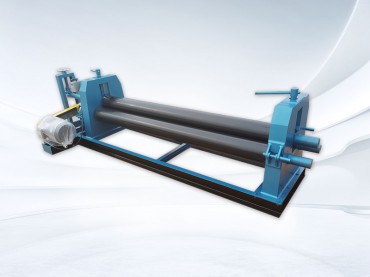
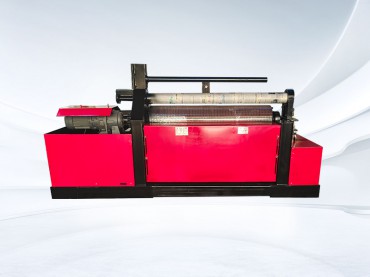
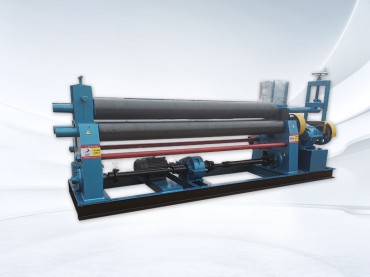
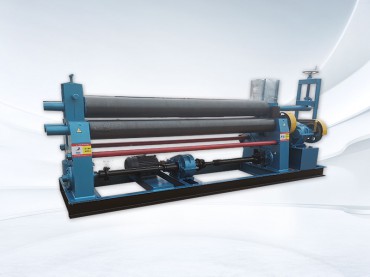
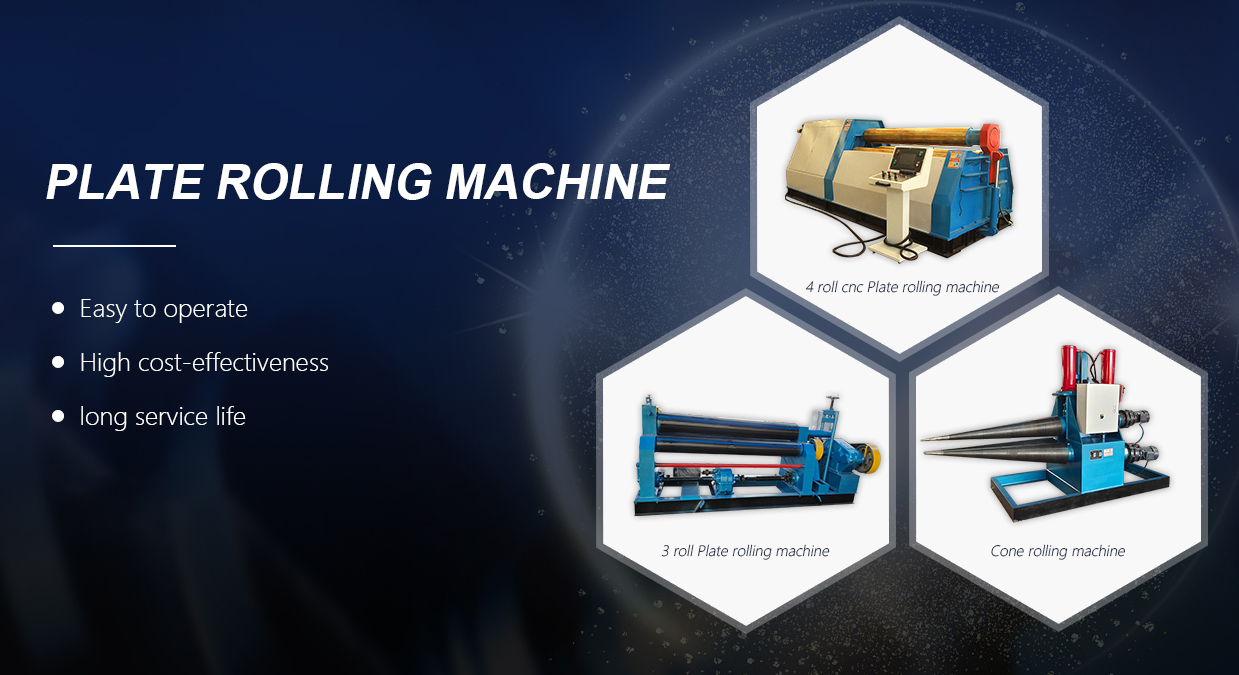
A plate rolling machine is a piece of mechanical equipment that uses multiple working rolls to continuously bend metal plates. Through the relative motion and pressure exerted by these rolls, flat metal plates undergo gradual plastic deformation, ultimately taking the form of cylinders, arcs, or other shapes with specific curvatures. Typically, a plate rolling machine consists of a frame, working rolls, a transmission system, a hydraulic system, an electrical control system, and various auxiliary devices. Depending on the specific design, the number of working rolls, their movement patterns, and the drive mechanisms may vary. Based on the number of rolls and structural characteristics, common types include three-roll and four-roll plate rolling machines. They can also be categorized by their transmission and control systems, such as mechanical, hydraulic, or CNC (computer numerical control) models.
In practical production, plate rolling machines can process carbon steel, stainless steel, aluminum, and other metals with sufficient plasticity. The specific materials, thicknesses, and widths that can be processed depend on the equipment's design parameters and the mechanical properties of the material. Compared to traditional manual bending methods, plate rolling machines utilize mechanical pressure to achieve consistent, stable forming, making them ideal for batch production and the fabrication of large metal components.
Creating cylindrical components is one of the most common applications for plate rolling machines. In industrial production, many types of equipment and products require a cylindrical structure—for instance, oil storage tanks, water tanks, metal shells, ventilation ducts, industrial vessels, and machinery housings. Traditional processing methods for bending metal plates often require multiple stages, resulting in limited efficiency and a high demand for manual labor. In contrast, a plate rolling machine allows a flat metal plate to be placed between its working rollers; as the rollers apply continuous pressure, the plate is gradually bent into an arc, eventually forming a complete cylindrical structure. For large-diameter cylinders, processing parameters can be adjusted based on design specifications and the dimensions of the metal plate. Once the rolling process is complete, the workpiece typically undergoes subsequent operations such as welding, rounding (calibration), and dimensional inspection. By streamlining the forming stage, plate rolling machines significantly enhance production efficiency, enabling manufacturers to produce cylindrical metal products of various specifications.
Beyond cylindrical products, plate rolling machines can also be used to fabricate a wide range of curved metal components. In sectors such as architectural decoration, machinery manufacturing, and equipment production, many applications require components with specific radii—for instance, curved metal casings, architectural decorative panels, equipment guards, circular structural supports, and various mechanical parts. By adjusting the position and pressure of the working rollers, the degree of curvature can be precisely controlled to meet specific design requirements. Operators can fine-tune equipment parameters based on material thickness, plate width, and design specifications to achieve the desired curvature. When using a CNC (computer numerical control) plate rolling machine, parameters can be programmed into the control system, ensuring high consistency across repeated production runs.
Certain industrial applications require conical structures, such as conical hoppers, tapered piping, industrial funnels, conical vessels, and specific equipment connectors. Because these components feature different diameters at their top and bottom ends, they cannot be produced using standard cylindrical rolling techniques. Instead, such parts require a specialized cone-rolling machine—or a plate rolling machine equipped with cone-rolling capabilities. During the cone-rolling process, the positions of the rollers must be adjusted according to the required taper (cone angle), plate dimensions, and material properties, ensuring that the plate develops a gradually varying curvature throughout the forming process. For conical workpieces, the equipment structure, the adjustment range of the rollers, and the processing capacity all influence the final forming result. Therefore, if a company frequently produces conical products, it should prioritize evaluating the cone-rolling capabilities and the applicable operating range when procuring such equipment.
In sectors such as oil, gas, chemicals, power generation, and construction, there is a frequent need for metal pipes of various diameters and specifications. For certain large-diameter pipes and non-standard metal fittings, a plate-rolling machine can be used to roll steel plates into cylindrical shapes, which are then joined—typically via welding—to form pipes. Compared to purchasing standard, pre-manufactured piping, rolling steel plates offers a flexible production method for creating large-scale pipes or those with unique, non-standard specifications.
Furthermore, plate-rolling machines can be used to fabricate curved pipe components, pipe casings, and various specialized structural elements. It should be noted that the plate-rolling machine is primarily responsible for the bending and forming of the plates; the final dimensional accuracy, weld quality, and pressure-bearing capacity of the pipes must be ensured through subsequent processing, welding, and inspection procedures.
In the chemical, oil, gas, food processing, and energy industries, many pieces of equipment—such as gas storage tanks, oil storage tanks, reaction vessels, heat exchanger shells, and large liquid storage tanks—require cylindrical or curved structures. These products typically involve the use of thick metal plates and demand high levels of processing precision and structural integrity. Plate-rolling machines are capable of shaping flat metal plates into the required cylindrical forms, providing the foundation for subsequent welding and assembly.
For manufacturers of large-scale pressure vessels, it is essential to select a plate-rolling machine with sufficient capacity, based on factors such as plate thickness, width, material strength, and the required cylinder diameter. It must be emphasized that the plate-rolling machine only performs the forming stage of the process. Whether a pressure vessel meets operational requirements ultimately depends on material quality, welding techniques, non-destructive testing, heat treatment, and compliance with relevant standards and regulations.
In modern construction projects, metal plates are not only used for flat structures but are also frequently shaped into various curved and cylindrical components. For example, architectural roof decorative structures, curved metal wall panels, circular column casings, metal decorative covers, and various large-scale building auxiliary components may all require processing via a plate rolling machine. Using such a machine, companies can transform metal sheets into curved shapes that meet architectural design specifications, allowing metal components to satisfy both structural and installation requirements while achieving a more diverse range of visual effects. For large-scale construction projects, plate rolling machines facilitate the processing of curved panels in various dimensions, meeting the demand for non-standard metal components.
In the machinery manufacturing industry, many pieces of equipment require metal casings, circular guards, or curved structural components. Examples include housings for industrial fans, cylindrical bodies for dust-collection equipment, protective covers for conveyor systems, machine guards, and various circular parts for industrial machinery—all of which can be processed using a plate rolling machine. Such products typically come with diverse size and shape requirements. Plate rolling machines allow for the adjustment of the bending radius based on production needs, enabling metal sheets to be shaped into structures suitable for equipment assembly. For machinery manufacturers, having the right plate rolling equipment in-house can reduce the need for outsourcing, thereby increasing flexibility in production scheduling.
A plate rolling machine functions primarily by applying pressure through the relative movement of its working rollers, causing the metal sheet to undergo continuous plastic deformation (bending). While different types of plate rolling machines vary in their structure and operation, the fundamental principle remains the same: rollers apply force to the material, gradually altering its shape.
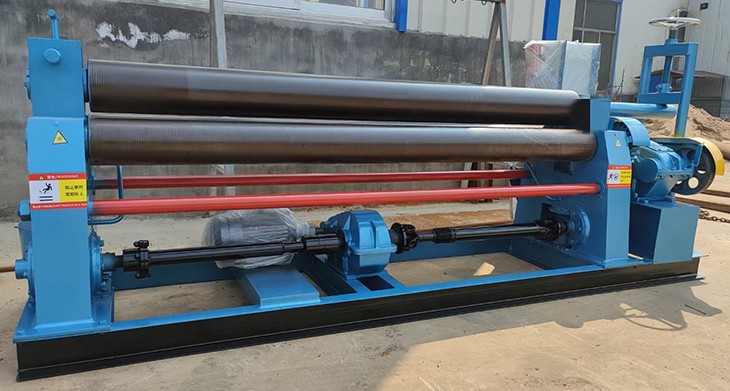
Taking a common three-roll plate rolling machine as an example, the equipment typically consists of one top roller and two bottom rollers. As a metal sheet is fed between these rollers, their rotation drives the sheet forward while simultaneously applying bending pressure. By adjusting the positions of the rollers, the sheet is gradually shaped to a specific curvature. Through continuous rolling, the flat sheet is transformed into a curved form, ultimately resulting in the desired cylindrical workpiece.
A four-roll plate rolling machine, by contrast, typically consists of one top roller, one bottom roller, and two side rollers. The side rollers can be adjusted in position according to processing requirements, facilitating the pre-bending and rolling of metal plates. For metal plates of varying thicknesses, widths, and materials, it is necessary to select the appropriate working roller positions and processing parameters. Generally, thicker materials or those with higher strength require greater processing capacity.
The production of oil and gas requires a large number of storage tanks, pipelines, pressure vessels, and auxiliary metal equipment. Plate rolling machines are used to process the cylindrical and curved plates required for this equipment, providing the foundation for subsequent welding and assembly.
Chemical production facilities often utilize metal vessels, reactor shells, liquid storage tanks, and piping. Depending on the design specifications, plate rolling machines are used to fabricate the necessary metal cylinders and curved components.
Shipbuilding requires a vast array of metal plates with varying curvatures, including those for hull structures, compartment components, and various arc-shaped parts. Plate rolling machines are essential for shaping metal plates to meet the specific structural requirements of vessels.
In power generation equipment, wind energy infrastructure, and other energy-related projects, components such as tower sections, outer shells, storage tanks, and piping are often produced through the plate rolling process.
Plate rolling machines are used to fabricate metal architectural decorative elements, casings for circular columns, curved roofing, and various steel structural components.
Equipment such as dust collectors, sewage treatment systems, industrial filtration units, and solid material handling systems frequently incorporate cylindrical metal shells or storage structures. Plate rolling machines are used to manufacture the cylinders and shells for these types of equipment.
By using mechanical rollers to continuously shape metal plates, plate rolling machines eliminate the need for certain traditional manual bending processes, thereby enhancing the efficiency of plate forming. For enterprises that need to process a large volume of cylindrical or curved workpieces, using a plate rolling machine can improve production workflows and reduce repetitive manual labor.
Depending on the equipment specifications and configuration, plate rolling machines can process metal sheets of various thicknesses, widths, and materials. From thin sheets to medium-to-thick plates, different models can meet the specific production requirements of various enterprises.
Plate rolling machines utilize rollers to apply continuous pressure, allowing metal sheets to undergo gradual bending deformation. This method is ideal for producing cylinders, curved sections, and other the curved structures, helping to ensure consistency in batch processing.
Beyond standard cylinders, plate rolling machines—depending on their specific capabilities—can also be used to process curved plates and certain specialized metal shapes. For manufacturing enterprises with diverse product portfolios, selecting the right plate rolling machine helps maximize equipment utilization.
Plate rolling machines can be integrated with shearing machines, welding equipment, cutting systems, and lifting gear to form a comprehensive metal plate processing production line. For example, a metal sheet might first be cut to the required dimensions using a shearing machine, then bent into shape by a plate rolling machine, and finally welded and inspected for dimensional accuracy.
(1) Before processing, inspect the working rollers, transmission system, hydraulic system, and electrical control system to ensure the equipment is in proper working order.
(2) Set appropriate processing parameters based on the material’s thickness, width, and mechanical properties, ensuring that the equipment’s specified processing capacity is not exceeded.
(3) Before feeding a plate into the working rollers, verify that its dimensions and surface condition meet the processing requirements; ensure that the plate edges, foreign objects, or irregular shapes do not interfere with the operation.
(4) Operators must follow the equipment’s operating instructions. Never attempt to adjust the machine or touch moving parts while it is in operation. Keep the area around the equipment clean and organized, and ensure that unauthorized personnel do not enter the workspace.
(5) Upon completion of the operation, metal debris must be promptly cleared from the work rolls and equipment surfaces. Additionally, relevant components should be lubricated and inspected in accordance with the manufacturer’s requirements.
(6) For hydraulic plate rolling machines, the condition of the hydraulic oil, pipeline connections, and sealing components must be checked regularly; any identified anomalies should be addressed immediately.
The primary purpose of a plate rolling machine is to process flat metal sheets into cylinders, arcs, cones, or other shapes with specific curvatures. These machines are widely used across various sectors, including the manufacture of pressure vessels, petrochemical equipment, ships, construction components, machinery, power and energy systems, and environmental protection equipment. For enterprises engaged in long-term metal sheet rolling, selecting a machine with stable performance and appropriate processing capacity not only enhances production efficiency but also improves the forming quality of the workpieces, providing a reliable foundation for subsequent processes such as welding, assembly, and final product manufacturing. With the advancement of CNC technology and automated manufacturing, plate rolling machines will continue to play a vital role in the modern metal processing industry.
 Address:Room 1202, Detaitang Building, No. 118 Huaguang Road, Zhangdian District, Zibo, Shandong
 WhatsApp:+8615653328535
 Wechat: +8615965331535
 E-mail:zs@sdsmachinery.com