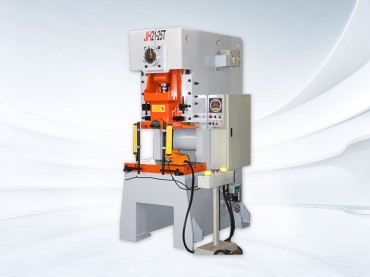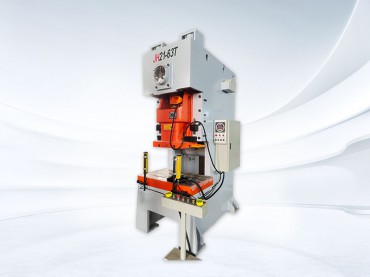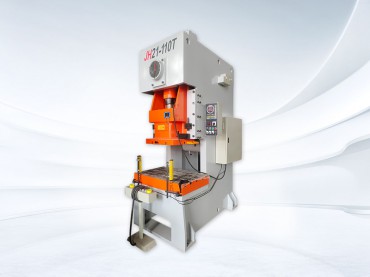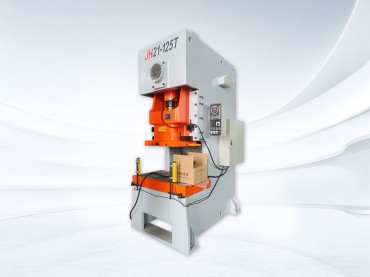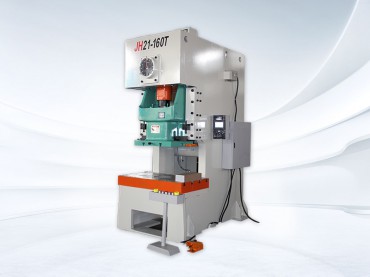
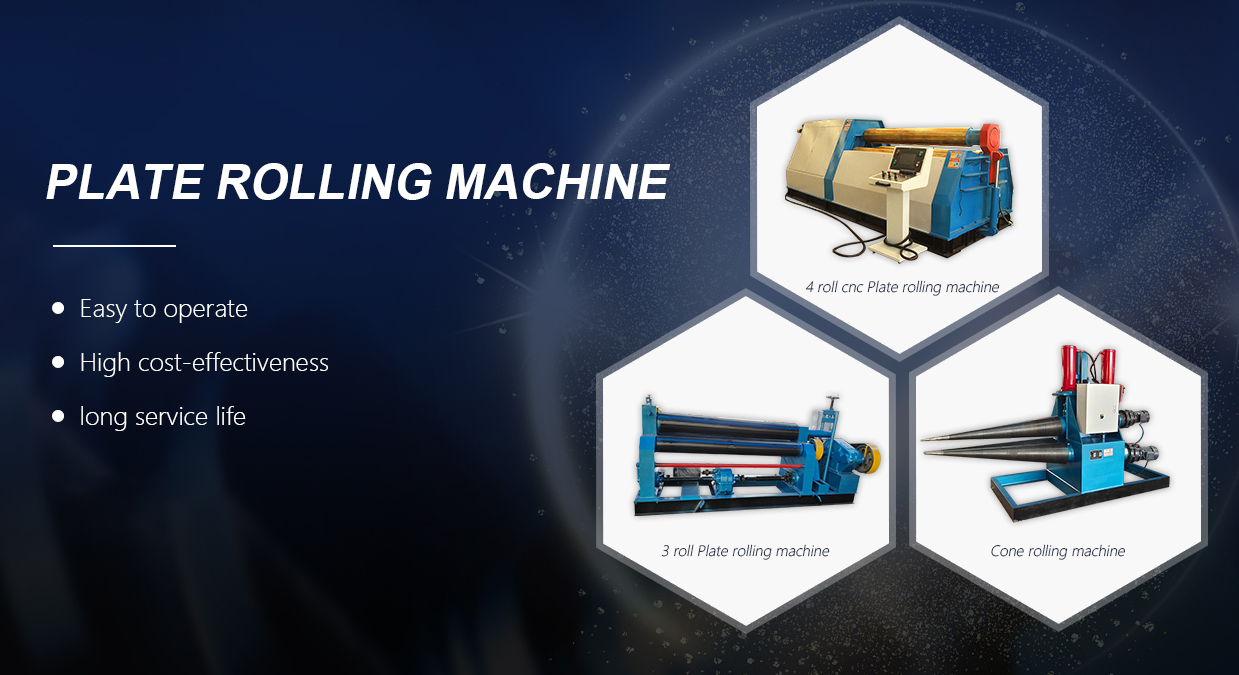
As the manufacturing industry continues to evolve toward greater automation, precision, and efficiency, punch machines have become indispensable equipment in the metalworking sector. Whether for automotive parts, household appliances, hardware components, electronic product enclosures, or structural metal elements, processes such as punching, blanking, bending, deep drawing, and forming are frequently required. By applying pressure to sheet metal via dies, punch machines shape materials into predetermined forms, making them vital for high-volume, standardized manufacturing.
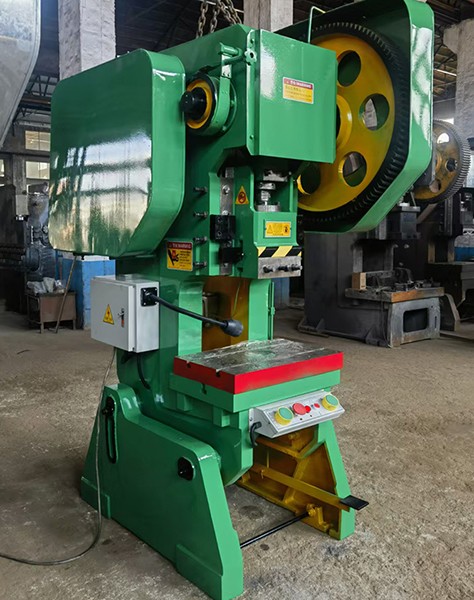
A punch machine is a mechanical device that uses pressure and dies to process sheet metal, strips, or other suitable materials. Its fundamental operating principle involves a power system that drives a slide or punch, which works in conjunction with a die set to exert pressure on the material—thereby performing operations such as punching, blanking, trimming, bending, shallow drawing, or other forming tasks.
Punch machines typically consist of a frame, a worktable, a slide, a transmission mechanism, a power system, a control system, and dies. Depending on the specific type, the power source may be a mechanical transmission system (driven by an electric motor), a hydraulic system, a compressed air system, or a servo-driven system.
The primary advantages of punch machines include high processing speeds, superior production efficiency, and excellent dimensional consistency. Furthermore, they can be integrated with equipment such as automatic feeders, decoilers, levelers, and robotic arms to form continuous production lines. For businesses that repeatedly manufacture the same parts, selecting the appropriate punch machine and tooling can significantly boost productivity and reduce the per-unit processing cost.
Mechanical punch machines are a widely used category of stamping equipment in industrial production. Typically powered by an electric motor, they utilize a flywheel, clutch, crankshaft, or other mechanical transmission components to drive the slide in a reciprocating (up-and-down) motion, thereby executing the stamping process. The operation of a mechanical punch machine is characterized by a highly cyclical nature. An electric motor drives a flywheel to store and transmit energy. When the equipment initiates a stamping cycle according to preset conditions, the mechanical transmission mechanism transfers motion to the slide, enabling it to complete its downward stroke and return. Depending on the specific design, different models may utilize mechanisms such as cranks, connecting rods, or other transmission configurations.
The primary advantages of mechanical punch machines include high production rates, a mature design, and high operational efficiency, making them well-suited for repetitive stamping tasks. They are particularly effective for the mass production of items such as metal gaskets, brackets, connectors, hardware components, and certain automotive parts.
However, because the motion of a mechanical punch machine slide is dictated by its fixed mechanical transmission structure, it is generally less flexible than a servo punch machine when it comes to adjusting stroke lengths or motion profiles. When selecting equipment, one must consider factors such as the material being processed, the die structure, the stamping frequency, and the rated pressure capacity.
Pneumatic punch machines are machines that use compressed air to drive an actuator to perform stamping operations. They typically consist of an air supply treatment unit, a cylinder or pneumatic actuator, control valves, a frame, a punch, and a worktable. By regulating the supply and exhaust of compressed air, the equipment drives the punch to execute specific processing tasks. Pneumatic punch machines are commonly used for lighter-duty stamping applications, such as punching thin sheets, processing small metal parts, performing certain assembly steps, or executing repetitive tasks that do not require high stamping force. They are well-suited for production requirements in sectors like electronic components, hardware manufacturing, and light metal processing.
One of the key advantages of a pneumatic punch machine is its relatively simple power system and rapid control response; under appropriate operating conditions, it can achieve high efficiency. The pneumatic drive system offers particular convenience for light-duty tasks that require frequent starting and stopping. Furthermore, pneumatic systems can be integrated with automated control devices to facilitate timed operations or simple automated processing.
Hydraulic punch machines utilize a hydraulic system to generate and transmit pressure, employing a hydraulic cylinder to drive the slide or punch to perform the required processing. Its main components include a hydraulic pump, hydraulic cylinders, control valves, an oil tank, a machine frame, a worktable, and a control system.
A key feature of hydraulic punch machines is their ability to regulate pressure and motion profiles via the hydraulic system, offering distinct advantages for tasks that require high force, extended pressure-holding durations, or specific forming curves. Compared to mechanically driven equipment, hydraulic punch machines differ in how they control motion and pressure, which also influences their range of applications.
Hydraulic punch machines are suitable for operations such as punching, embossing, press-fitting, and straightening sheet metal, as well as certain deep-drawing and forming processes. For applications requiring high forming forces or precise control over slide speed, hydraulic drive systems offer valuable flexibility. Hydraulic punch machines are an excellent choice for operations involving high pressure, complex forming, or the need for adjustable pressure settings. Conversely, if the primary focus is on high-speed, high-volume, simple punching or blanking, it is advisable to compare the efficiency and costs of mechanical punch machines or high-speed punch machines.
Servo punch machines are machines that utilize servo motors and dedicated control systems to drive the stamping mechanism. Unlike traditional mechanical drive systems, servo drives offer greater flexibility in controlling motion speed, position, and specific motion profiles—with the exact level of control depending on the machine's design and the configuration of its control system. Servo punch machines allow for the adjustment of the slide’s motion profile to suit specific manufacturing processes; for instance, the slide speed can be reduced during certain stages of the operation and increased during others, or the slide’s stopping position and movement pattern can be precisely programmed. This adaptability helps meet the requirements of diverse manufacturing tasks.
Factors such as procurement costs, the complexity of the control system, and maintenance requirements should also be taken into account. Companies should evaluate whether a servo press will deliver sufficient production value based on criteria such as required product precision, production batch sizes, the frequency of process changes, and the available investment budget.
(1) Clearly define the materials to be processed and their thicknesses. Different materials—such as standard low-carbon steel, stainless steel, and aluminum—vary in terms of strength, ductility, and the level of difficulty involved in processing them. Different materials of the same thickness may require different stamping forces. Therefore, the processing load should be calculated by considering material properties, hole diameters, peripheral dimensions, and die structure.
(2)Determine the product shape and the type of process required. For simple punching, blanking, or repetitive operations, mechanical punch machines are a primary option. If precise control over pressure and the forming process is needed, consider hydraulic punch machines. For lighter-duty tasks that fall within the equipment's capacity, pneumatic presses may be suitable. If more flexible motion control is required, evaluate servo punch machines. For high-frequency, continuous production, consider high-speed punch machines. If the application involves creating various hole shapes and complex hole patterns on a sheet, a CNC turret punch machine may be the best choice.
(3)Consider production volume and the frequency of die changes. High-volume, long-term stable production typically prioritizes cycle time, durability, and automated feeding capabilities. Conversely, high-mix, low-volume production focuses more on die-change efficiency, program switching, and process flexibility.
(4)Verify the equipment's technical specifications. Beyond nominal tonnage (press capacity), examine parameters such as slide stroke, stroke rate, shut height, bolster/table dimensions, die mounting space, power or air supply requirements, and automation interfaces. For projects requiring continuous production, also assess the compatibility between the feeding equipment and the press.
(5)Prioritize safety and after-sales support. As industrial equipment involving mechanical motion and high stamping forces, a press must be equipped with appropriate safety guards, control systems, and interlocks tailored to its type and specific application. During procurement, confirm the availability of installation training, spare parts, maintenance requirements, and technical support to ensure long-term, stable operation.
Regardless of the type of punch machine chosen, standardized daily maintenance and safe operation are essential for ensuring production efficiency. Before the equipment is put into service, trained personnel should conduct an inspection according to the manufacturer’s instructions, verifying that safety guards, control systems, lubrication systems, and emergency stop functions are all in proper working order.
During daily production, regularly inspect the condition of the dies, fasteners, lubrication points, and transmission mechanisms. For hydraulic punch machines, attention must be paid to the condition of the hydraulic fluid, filtration systems, seals, and piping connections. For pneumatic punch machines, checks should focus on air supply pressure, air lines, valves, and drainage/filtration units. For CNC equipment, the status of programs, positioning mechanisms, and sensors must be monitored.
Die changes, troubleshooting, and internal equipment maintenance must be performed in accordance with the manufacturer’s specifications, with energy sources disconnected and isolated whenever necessary. Operators must never bypass safety guards or reach into hazardous areas while the equipment is in operation. Specific operating procedures should be developed based on equipment manuals, on-site risk assessments, and local safety regulations.
Regular maintenance, proper die usage, and standardized operating procedures help reduce unplanned downtime, extend the service life of both equipment and dies, and improve the consistency of processed parts.
There is a wide variety of punch machines available. When selecting the appropriate press, manufacturing enterprises should consider factors such as material type, sheet thickness, product geometry, production volume, required machining precision, automation needs, and budget. Mechanical punch machines are suitable for many routine, high-volume stamping tasks; pneumatic punch machines are typically used for lighter-duty operations within their capacity range; hydraulic punch machines are ideal for forming processes that require precise pressure control; servo presses offer more flexible motion control; high-speed presses are designed for high-frequency production; and CNC turret punch machines are well-suited for sheet metal processing that involves multiple holes.
As the manufacturing sector continues to advance in automation and digitalization, punch machine is evolving toward higher efficiency, more flexible control, and more robust safety management. By making informed equipment selections, adhering to standardized maintenance, and optimizing production processes, enterprises can fully leverage the capabilities of their punch machines to enhance both production efficiency and product quality.
 Address:Room 1202, Detaitang Building, No. 118 Huaguang Road, Zhangdian District, Zibo, Shandong
 WhatsApp:+8615653328535
 Wechat: +8615965331535
 E-mail:zs@sdsmachinery.com