In the metalworking industry, conical metal components are widely used in pressure vessels, chemical processing equipment, ventilation ducts, hoppers, storage tanks, industrial conveying systems, and various machinery manufacturing projects. To transform flat metal sheets into cones with precise dimensions and smooth transitions, many manufacturing enterprises utilize cone rolling machines. Compared to traditional manual fabrication, using appropriate cone rolling equipment enhances production efficiency, improves the roundness and dimensional consistency of the cones, and meets diverse requirements regarding cone angles, diameters, and material thicknesses.
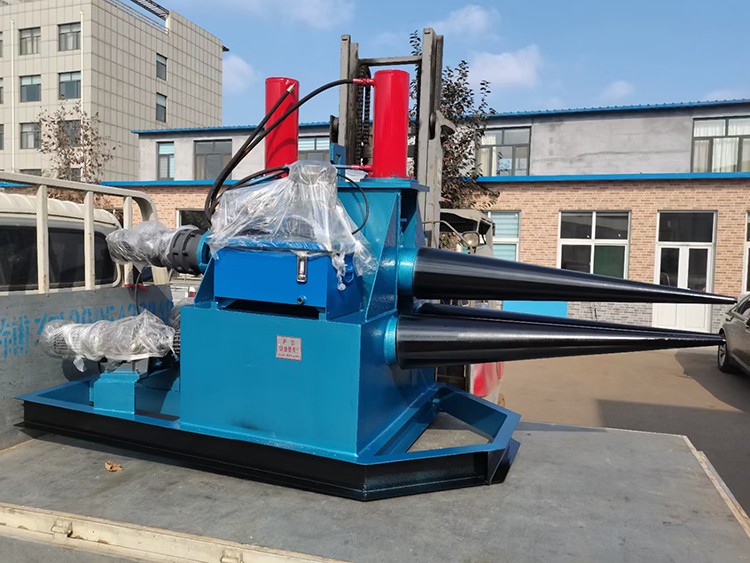
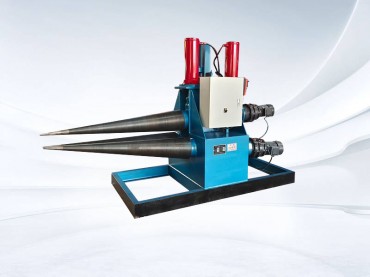
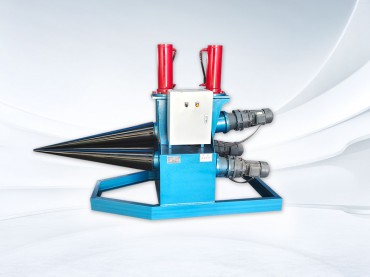
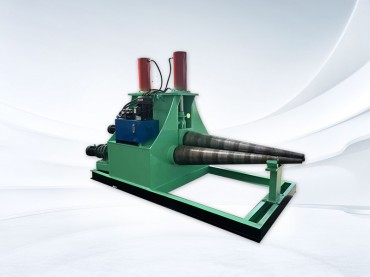
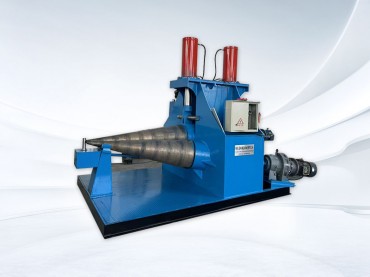
A cone rolling machine is a piece of metal-forming equipment designed to roll metal sheets into conical or near-conical components. Depending on their structural design, drive mechanism, and control system, these machines can be mechanical or hydraulic, and may be equipped with CNC (Computer Numerical Control) systems to meet specific requirements for machining precision and production efficiency.
Cone rolling machines typically apply pressure to a metal sheet via multiple rollers, causing the material to undergo gradual plastic deformation until it achieves the desired conical profile. Unlike standard plate rolling machines, cone rolling machines feature a specialized design tailored for conical workpieces; by adjusting the position of the rollers, their tilt angle, or the pressure applied across different sides, the machine can induce varying bending radii at different points along the metal sheet.
2. Key structure and working principle of a cone rolling machine
(1) Working Rollers
The working rollers are the core components of a cone rolling machine, serving to support the metal sheet and apply the necessary forming pressure. Depending on the specific design, a machine may feature a varying number and configuration of rollers. During the rolling process, the metal sheet is subjected to bending forces as it passes between the rollers, gradually taking on the required conical shape. Factors such as the diameter of the rollers, their surface condition, their positioning, and their movement patterns all influence the final forming result.
(2) Hydraulic or Mechanical Adjustment Systems
Some cone rolling machines utilize hydraulic systems to adjust the position and pressure of the rollers, while others employ mechanical adjustment mechanisms. Since adjustment methods vary by equipment, operators should always follow the instructions provided by the manufacturer. In the processing of conical components, the adjustment of the rollers must be aligned with the dimensions of the workpiece’s large and small ends, as well as the thickness of the plate. Improper adjustment can lead to dimensional deviations at either end, inaccurate cone angles, or uneven deformation of the plate.
(3) Drive System
The drive system powers the rotation of the working rollers, moving the plate continuously through the roller assembly. Depending on the equipment configuration, the drive mechanism may utilize hydraulic power, an electric motor with a reduction gear, or other mechanical transmission systems. A stable drive ensures a continuous rolling process, minimizing processing errors caused by fluctuations in speed or slippage of the plate.
(4) Control System
Some modern cone-rolling machines are equipped with digital displays, position feedback mechanisms, or CNC systems, which assist operators in setting and recording processing parameters. For enterprises that frequently produce cones of the same specifications, these control systems help improve process repeatability. However, a high degree of automation does not negate the need for workpiece inspection; variations in the material, thickness, or initial condition of the plate can still affect the final formed result.
3. What preparations are required before rolling a cone?
(1) Define the Design Dimensions of the Cone
First, confirm the key geometric parameters of the cone based on the product drawings, including: the large-end diameter, small-end diameter, cone height or slant length, cone angle (or half-cone angle), plate thickness, material grade, and relevant performance requirements.
If the product drawings use different conventions for defining dimensions, clarify what each term—such as diameter, radius, axial height, or slant length—specifically represents to avoid confusion during layout and processing. For cones that require welding, also verify the joint type, weld groove specifications, welding allowances, and any subsequent processing requirements. The actual dimensions for cutting the plate must be calculated by a qualified layout technician or process engineer based on the drawings; they cannot be determined solely by the final diameter of the finished cone.
(2) Inspect the Quality of the Plate
The surface quality and dimensional accuracy of the plate directly influence the rolling results. Before processing, inspect the plate for any visible cracks, deep scratches, localized deformation, corrosion, or other defects that could compromise the forming process. At the same time, verify that the plate thickness, material, and dimensions meet production requirements. Different materials possess varying yield strengths, elongation rates, and spring-back characteristics; consequently, even with identical thicknesses, the required rolling parameters may differ.
If the plate exhibits significant initial curvature or localized unevenness, a qualified professional should assess whether pre-treatment is necessary.
(3) Check the condition of the cone rolling machine
Before startup, inspect the roll shafts, drive components, hydraulic system, electrical control system, and relevant safety devices in accordance with the equipment operation manual. Operators must also confirm that the equipment is securely installed, the roll shaft surfaces are free of foreign objects that could damage the plate, and that emergency stop devices and protective guards are functioning correctly. Any abnormal noise, hydraulic leaks, or control system malfunctions must be addressed prior to processing.
(4) Confirm the developed shape of the plate
Cones are generally not formed by directly rolling a simple rectangular plate. For an ideal right circular truncated cone, the developed lateral surface typically resembles a portion of an annular sector—specifically, an annular sector blank. Therefore, before cutting the plate, calculate the developed dimensions based on the large-end radius, small-end radius, and slant height of the cone; then, determine the actual cutting profile by factoring in requirements for welding, cutting, and subsequent finishing.
Errors in calculating the developed dimensions can result in a cone that fails to meet drawing specifications, even if the cone rolling machine is operated correctly.
4. Basic steps for rolling cones using a cone rolling machine
(1) Confirm the workpiece and process plan
Before processing, operators should review the cone drawings, plate specifications, equipment rated capacity, and process requirements to ensure the equipment is suitable for the target workpiece. Key factors to verify include plate thickness, material strength, maximum processing width, cone diameter, and the equipment's suitability for conical workpieces. If the workpiece dimensions or material properties exceed the equipment's capabilities, the process should not be forced by applying excessive pressure.
For complex cones or high-precision workpieces, procedures such as pre-bending, incremental rolling, measurement, and finishing should also be determined in advance.
(2) Plate Layout and Cutting
Based on the approved development drawing, mark, cut, and perform necessary edge preparation on the plate. After cutting, inspect the profile, dimensions, and edge condition of the blank. For workpieces requiring welding, prepare the joint edges according to the drawings and verify that the welding allowance has been accounted for in the cutting dimensions. If the blank is cut to an incorrect developed shape, subsequent adjustments to the rollers may not be sufficient to fully compensate for the dimensional errors. Therefore, layout and cutting should be treated as a distinct quality control stage.
(3) Plate Positioning and Equipment Adjustment
Place the plate within the designated working area of the equipment, and complete the positioning and necessary clamping as per the operating instructions. For workpieces with distinct large and small ends, determine the correct feed orientation based on the process documentation. Operators must adjust the positions of the rollers, the applied pressure, and other forming parameters according to the specific design of the equipment. Since different cone-rolling machines may achieve conical forming through different roller movements, adjustment methods for one model cannot be directly applied to another.
Throughout this process, ensure the plate is positioned securely to prevent skewing, slippage, or the development of abnormal stresses between the rollers.
(4) Pre-bending
Certain cone-rolling processes require the edges of the plate to be pre-bent before the main rolling operation to minimize straight edges or localized flat zones in the final formed part. The method for pre-bending depends on the equipment design and the specific requirements of the workpiece. Some machines can perform the necessary pre-bending directly, while other workpieces may require alternative processing methods.
During pre-bending, control the degree of deformation to avoid excessive localized strain. For thick plates, high-strength materials, or large-scale workpieces, select an appropriate processing method based on the established process plan.
(5) Gradual Conical Rolling
Once the equipment is confirmed to be in a safe operating state, the operator feeds the plate through the working rollers in accordance with the established process, gradually forming the desired conical surface. Throughout the rolling process, manage the roller movements, plate feed, and forming parameters in strict accordance with the equipment design specifications and process documentation. For workpieces requiring multiple adjustments, the forming status should be checked in stages to avoid excessive bending in a single pass. During the processing, operators must monitor dimensional changes at both ends of the plate, watch for the appearance of noticeable waves or localized creases on the surface, and ensure the workpiece does not skew. If any irregularities occur, the equipment must be stopped following established safety procedures, and an inspection should be conducted only after confirming that the equipment is in a safe state.
Never attempt to adjust the position of the plate by hand while the rollers are in motion, and do not reach—or allow clothing or tools to enter—the nip area between the rollers.
(6) Checking the Geometric Dimensions of the Cone
After the initial rolling process, the large-end diameter, small-end diameter, slant height, cone angle, and other critical dimensions of the cone must be measured in accordance with process requirements. For workpieces requiring high levels of roundness and coaxiality, checks should also be performed on roundness, the shape of the ends, and overall deviation. Where necessary, appropriate measuring instruments, specialized templates, or inspection fixtures should be used for verification.
If the measured results deviate from the specifications in the drawings, the operator and process engineer must evaluate—based on the equipment manual and the processing plan—whether corrective rolling is required. Do not arbitrarily increase roller pressure without such an evaluation, as this could lead to material damage or further dimensional deviation.
(7) Seam Processing and Final Inspection
For cones formed by rolling plates and subsequently welding the seams, the assembly and welding of the joints must be carried out according to an approved welding procedure. Since welding can cause shrinkage and localized deformation, it is generally necessary to re-verify key dimensions afterward. For pressure vessels or other equipment subject to strict regulatory requirements, all aspects—including materials, welding, non-destructive testing (NDT), and final acceptance—must comply with applicable standards and be performed by qualified personnel.
Once inspection is complete, all relevant dimensional data and quality results must be recorded to ensure the product meets the design drawings and all applicable technical requirements.
A cone-rolling machine is an essential piece of equipment for processing metal plates into conical shapes, capable of gradually rolling flat, pre-cut, and developed plates into cones that meet specific design requirements. Mastering the correct processing workflow involves a comprehensive approach: starting with dimensional calculations and plate preparation, followed by edge pre-bending, equipment adjustment, incremental rolling, dimensional verification, and final inspection of the finished workpiece. For enterprises that frequently process metal workpieces of varying dimensions and tapers, selecting a cone-rolling machine tailored to specific production requirements—complemented by standardized operating procedures and quality control protocols—will help enhance both production efficiency and product quality. As industrial automation technology continues to advance, cone-rolling machines will remain vital in sectors such as pressure vessel manufacturing, the petrochemical industry, environmental protection machinery, and other areas of metal fabrication.

 Address:Room 1202, Detaitang Building, No. 118 Huaguang Road, Zhangdian District, Zibo, Shandong
 WhatsApp:+8615653328535
 Wechat: +8615965331535
  E-mail:zs@sdsmachinery.com