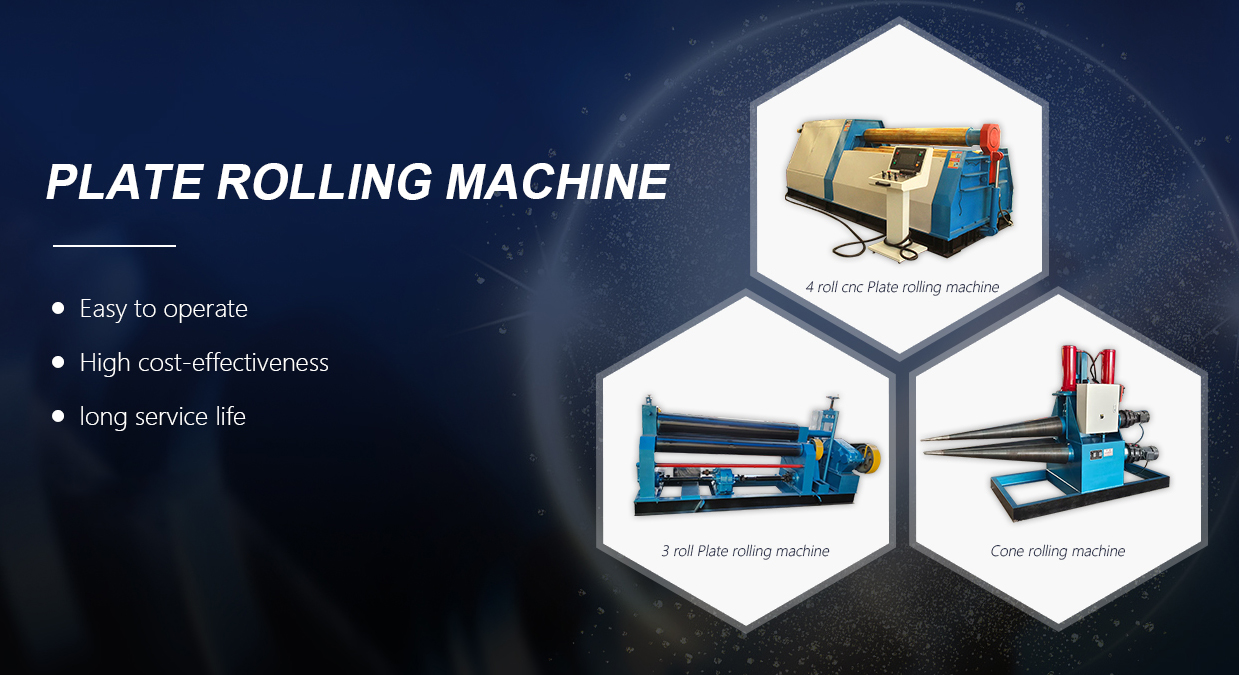
With the continuous development of modern manufacturing, sheet metal processing technology plays an increasingly vital role in sectors such as machinery manufacturing, pressure vessels, petrochemicals, construction engineering, environmental protection equipment, and energy equipment. In these industries, many products require not only the forming of flat metal sheets into cylinders but also the creation of conical shapes, conical transition sections, or other specialized metal structures based on design specifications. To enhance processing efficiency and forming precision, cone rolling machines have become essential equipment in the field of sheet metal processing.
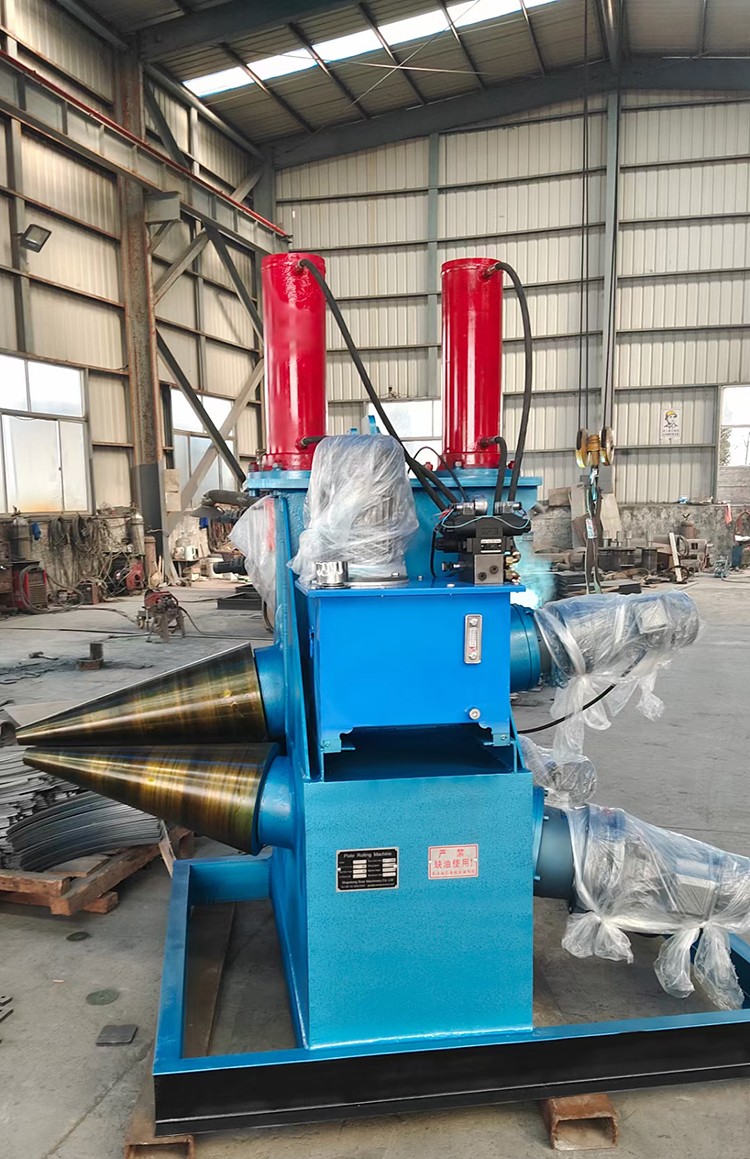
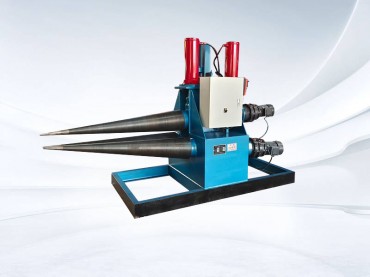
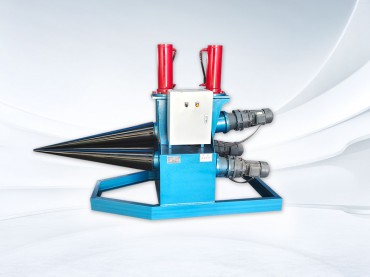
A cone rolling machine—also known as cone rolling equipment or a conical plate rolling machine—is a specialized type of plate rolling equipment. While standard plate rolling machines are primarily used to form metal sheets into cylinders or arc-shaped structures, cone rolling machines are specifically designed to meet the forming requirements of conical workpieces. In actual processing, the diameters at the two ends of a conical workpiece typically differ—one end is larger, and the other is smaller. To achieve this shape, the equipment must precisely control the degree of bending at various points along the sheet, ensuring the formation of a continuous, smooth conical surface during the rolling process.
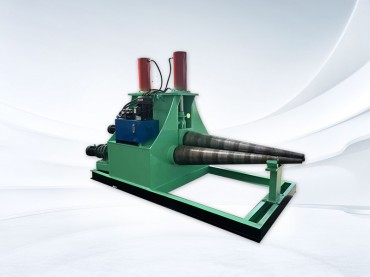
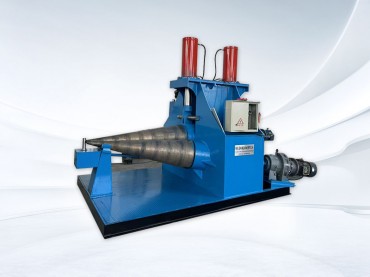
Cone rolling machines generally consist of a frame, work rolls, a drive system, adjustment mechanisms, a hydraulic or mechanical transmission system, and an electrical control system. Different models may vary in terms of the number of rolls, adjustment methods, and the level of automation.
Depending on processing requirements, enterprises can choose from mechanical cone rolling machines, hydraulic cone rolling machines, or specialized equipment with CNC capabilities. For manufacturers producing large conical shells, thick-plate cones, or high-precision components, selecting the right cone rolling machine helps improve product quality and production efficiency.
In industrial production, many types of equipment require metal shells with gradually changing diameters to meet specific needs regarding material transport, fluid flow, structural connections, or equipment installation. Using a cone rolling machine, production personnel can process steel plates, stainless steel plates, and other suitable metal sheets into conical cylindrical bodies.
For instance, certain industrial vessels require structures that are wider at the top and narrower at the bottom (or vice versa); while standard cylindrical rolling equipment cannot fully meet these forming requirements on its own, a cone rolling machine can be adjusted according to the diameters of the workpiece's large and small ends as well as the length of the cone.
This processing method is widely used in fields such as industrial equipment manufacturing, metal vessel production, and the fabrication of large structural components.
The pressure vessel manufacturing industry demands high quality in metal plate forming. Conical heads, conical transition sections, and other conical components play a vital role in the structures of certain storage tanks, reaction equipment, separation units, and pressure vessels.
Cone rolling machines can be used to fabricate the conical plate structures required for these components, laying the foundation for subsequent fit-up, welding, and final assembly.
It is important to note that pressure vessel components must not only meet dimensional specifications but also comply with relevant material standards, design codes, and manufacturing inspection requirements. Consequently, the processing capabilities of the cone rolling machine must align with the plate thickness, material type, cone angle, and specific product technical requirements.
The petroleum and chemical industries require vast amounts of metal equipment for storage, reaction, separation, and transport. In some equipment, conical structures serve to connect pipes or cylinders of differing diameters or to form specific vessel shapes.
Cone rolling machines can process metal plates into conical components that meet design specifications, enabling manufacturers to produce equipment shells and transition structures.
For example, certain chemical vessels, material storage units, and industrial piping systems utilize conical transition sections. By using a cone rolling machine, companies can process the necessary plates according to design dimensions, thereby reducing reliance on complex forming processes. For equipment intended for corrosive environments, suitable materials—such as stainless steel—can be selected for processing in accordance with operational requirements.
Ventilation, dust removal, and industrial exhaust systems often require the connection of ducts or pipes with varying diameters. Some duct connectors feature a conical design to facilitate dimensional transitions or meet equipment layout requirements.
Cone-rolling machines are used to fabricate suitable conical metal duct sections and transition components for applications such as factory ventilation systems, dust collection equipment, industrial exhaust ducts, and related environmental protection systems.
In these applications, the dimensions and shape of the conical components directly affect the quality of the duct connections. Therefore, during fabrication, the diameters of the large and small ends, the cone length, and the interface dimensions must be strictly controlled according to design specifications.
Construction projects and large-scale steel structure projects often require conical metal components. For instance, certain light poles, tower sections, support structures, and decorative metal elements feature a truncated cone shape that tapers gradually from a larger diameter to a smaller one.
Cone-rolling machines provide a solution for rolling the metal plates used in these components. After rolling, the plates typically undergo positioning, welding, shape correction, and dimensional inspection to form the finished metal structure.
For engineering projects with unique shape requirements, cone-rolling machines help manufacturers improve the processing efficiency of conical plates and facilitate subsequent assembly steps.
(1) Operators prepare the metal plate based on product drawings and verify that its dimensions, thickness, and material properties meet processing requirements. If necessary, the plate undergoes preliminary processing such as cutting or edge beveling.
(2) The plate is placed between the machine's work rolls; adjusting the roll positions and pressure induces the appropriate bending deformation. As the machine operates, the rolls drive the continuous movement of the plate, gradually forming the desired curved surface. Unlike standard cylindrical rolling, conical rolling requires the plate to form different bending radii across its width. Consequently, cone-rolling machines employ specialized roll layouts, roll tilting capabilities, or positioning adjustment mechanisms to control the forming process on both sides of the plate.
(3) Once the plate approaches the intended shape, the operator inspects the workpiece to verify the large- and small-end diameters, cone angle, roundness, and overall dimensions. If the workpiece does not yet meet requirements, necessary adjustments and corrections can be made in accordance with the equipment's operating specifications.
(4) Rolled workpieces typically require subsequent processing—such as tack welding, final welding, or other finishing steps—to form the final product. Actual operating procedures vary depending on the equipment's structure and control system; therefore, processing should be carried out according to the specific model's operation manual.
Cone rolling machines enable plate forming through mechanized rolling, reducing the need for manual intervention in certain processing stages. For enterprises requiring repetitive production of conical workpieces, using specialized equipment helps boost processing efficiency.
By properly configuring equipment parameters, workpieces of the same specifications can maintain consistent shapes and dimensions. In mass production, this enhances product uniformity and reduces the need for adjustments during subsequent assembly.
Depending on the design and rated capacity, cone rolling machines can process metal plates of varying thicknesses, widths, and materials, enabling the production of diverse conical structures. However, specific processing limits must be determined based on the equipment's rated parameters; one cannot judge capabilities solely by the machine's name.
For conical workpieces suitable for roll forming, the machine can directly execute the primary bending operations, eliminating some of the complex steps required by traditional processing methods.
This simplifies the production workflow and lays the groundwork for subsequent processes such as welding, assembly, and surface treatment.
Requirements for the dimensions and structures of conical components vary widely across projects, ranging from small metal products to large-scale industrial equipment. Selecting the right cone rolling machine allows manufacturers to schedule production tasks with greater flexibility.
(1) Confirm the plate material and thickness. Materials such as carbon steel, stainless steel, and other metals differ in strength and formability, which affects the processing capacity required of the equipment.
(2) Determine the workpiece dimensions. It is necessary to specify the large-end diameter, small-end diameter, length, and cone angle to select the appropriate equipment configuration.
(3) Consider production capacity. If the enterprise requires continuous production or the processing of large workpieces, priority should be given to the equipment's rated plate-rolling capacity, drive system, and operational stability.
(4) Consider the control method. Depending on the complexity of the processing and the production batch size, one can choose equipment with mechanical adjustment, hydraulic adjustment, or CNC control.
(5) Focus on safety and maintenance. The equipment should feature necessary safety protections and allow for easy inspection of the rollers, drive system, and hydraulic components. Routine maintenance helps reduce the risk of failure and extends the equipment's service life.
A cone rolling machine is a specialized piece of machinery designed to form flat metal sheets into conical or truncated conical workpieces. It is primarily used in the manufacture of products such as conical shells, pressure vessel components, chemical processing equipment, hoppers, funnels, industrial piping transition sections, and architectural metal components. Compared to standard plate rolling machines, cone rolling machines are better suited for handling conical workpieces with differing large- and small-end diameters. By selecting the appropriate equipment model and processing parameters, enterprises can enhance sheet forming efficiency, improve product dimensional consistency, and meet diverse industrial manufacturing needs.
When purchasing a cone rolling machine, a comprehensive assessment should be conducted based on factors such as material type, plate thickness, workpiece dimensions, cone angle range, and production capacity. As metal processing technology continues to advance, cone rolling machines will continue to play a vital role in sectors such as machinery manufacturing, the chemical industry, environmental protection, construction, and energy equipment.
 Address:Room 1202, Detaitang Building, No. 118 Huaguang Road, Zhangdian District, Zibo, Shandong
 WhatsApp:+8615653328535
 Wechat: +8615965331535
  E-mail:zs@sdsmachinery.com