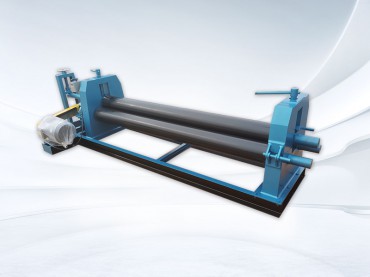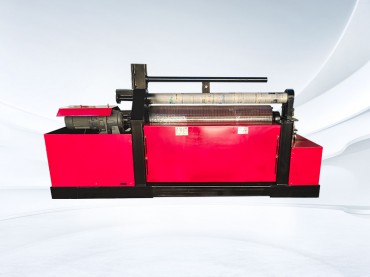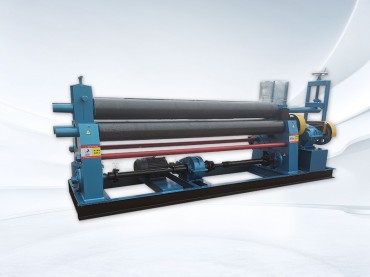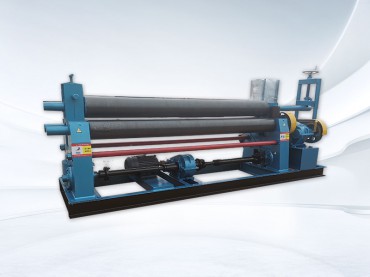
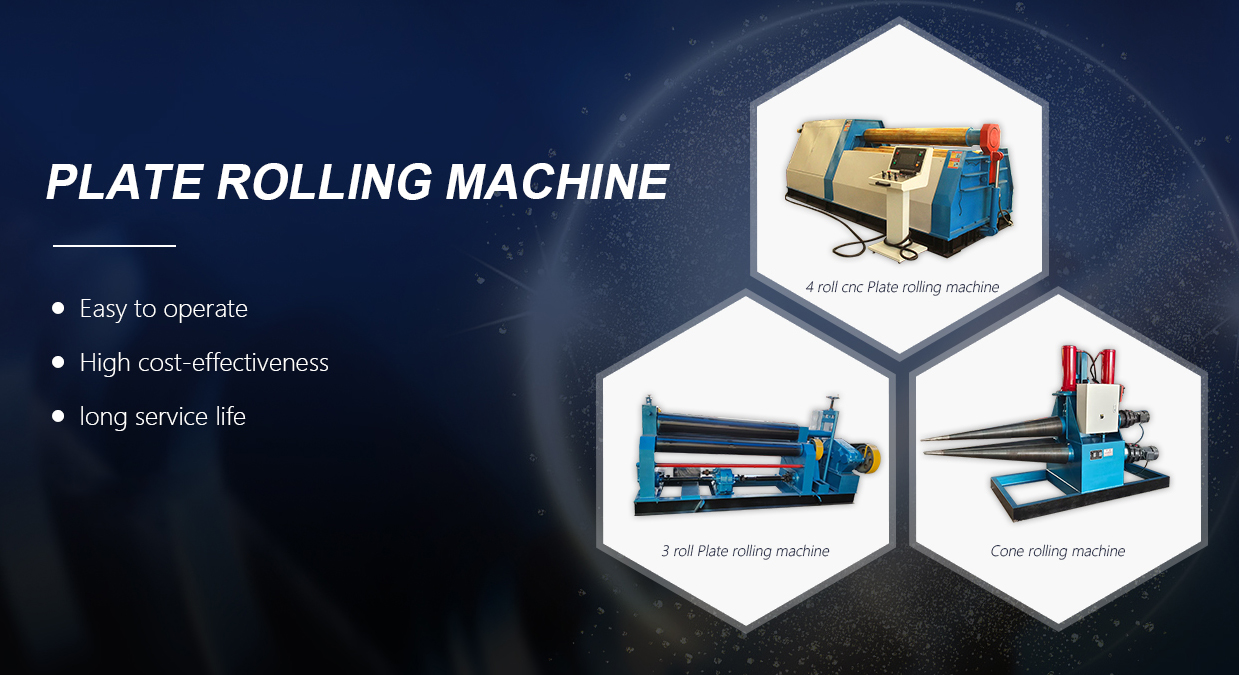
As the metal processing industry evolves, metal sheets—such as steel, aluminum, and stainless steel—must undergo processes like cutting, welding, bending, and rolling to be transformed into components that meet production specifications. For enterprises manufacturing cylinders, curved parts, conical sections, and other curved structures, the plate rolling machine is a vital piece of metal forming equipment.
Plate rolling machines operate primarily by applying pressure to metal sheets via multiple rollers, causing the material to undergo gradual plastic deformation until it takes on the desired arc, cylindrical, or other curved shape. Compared to traditional manual processing methods, the proper use of plate rolling machines enhances forming efficiency, improves processing consistency, and accommodates a wide range of material specifications and processing requirements.
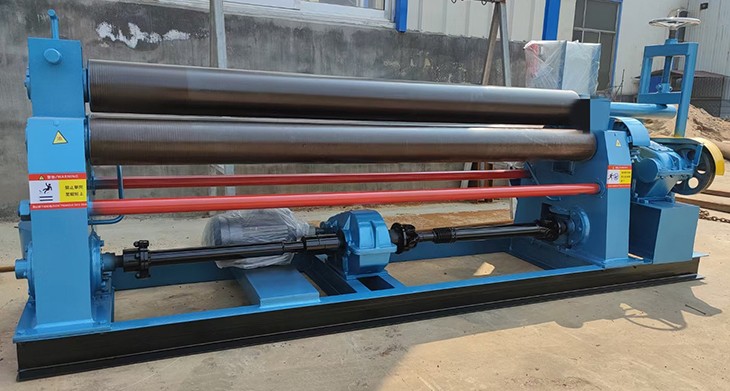
A plate rolling machine is a mechanical device designed to bend and form metal sheets using rollers. Depending on their structure and operating mechanism, common types include three-roll and four-roll machines, as well as mechanical, hydraulic, and CNC (Computer Numerical Control) models. Different types are suited to specific sheet thicknesses, widths, and processing requirements.
In practical production, these machines process various metals—such as steel, stainless steel, and aluminum—and are widely used across industries including machinery manufacturing, pressure vessels, petrochemicals, boiler production, wind power, shipbuilding, and construction.
One of the most significant advantages of using a plate rolling machine is the increased efficiency of the rolling process. Traditional methods often require manual, repetitive adjustments to the sheet's position and the degree of curvature—a process that demands substantial time and labor, particularly when handling thick or large metal sheets.
Plate rolling machines apply continuous pressure through rollers, gradually shaping the sheet to the required curvature. In mass production, this minimizes repetitive manual tasks and ensures a more continuous production flow. For companies that need to produce large quantities of cylinders or curved plates, selecting the right machine helps reduce the processing time per unit.
Metal plate rolling processes typically require consistent curvature and dimensions. Relying entirely on manual operation can lead to processing variations between different operators. Plate rolling machines control the plate deformation process by adjusting roll positions, pressure, and processing parameters. Hydraulic or CNC rolling machines allow for parameter adjustments via control systems.
Under identical processing conditions, the equipment can perform repetitive operations according to set parameters, thereby enhancing the consistency of batch products.
Plate rolling machines can process metal plates of different thicknesses depending on their specifications. Maximum rolling thickness, maximum rolling width, and minimum rolling diameter vary by model. For instance, lightweight machines are suitable for relatively thin plates, whereas large hydraulic rolling machines can handle thicker steel plates. Therefore, when selecting a machine, specifications must be determined based on actual production needs rather than assuming all machines are suitable for the same types of plates.
Plate rolling machines are not limited to producing standard cylinders. Depending on the machine structure, roll adjustment methods, and processing techniques, they can also form arc-shaped plates, cylinders, elliptical structures, conical structures, and certain specialized curved components. For enterprises manufacturing circular or arc-shaped metal structures, rolling machines offer flexible forming capabilities. When conical components are required, manufacturers can select specialized cone-rolling equipment or standard rolling machines equipped with cone-rolling capabilities.
Large metal plates are often heavy; manual handling, positioning, and repeated adjustments increase the physical strain on operators. Plate rolling machines utilize mechanical drives or hydraulic systems to perform the primary plate-forming tasks. Hydraulic rolling machines, in particular, leverage hydraulic systems to generate high working pressure, making the rolling of thicker plates much easier. Highly automated equipment can also reduce the need for manual intervention, leading to a more standardized production process.
Plate rolling machines have a wide range of applications.
(1)In the pressure vessel manufacturing industry, they are used to process cylindrical components such as vessel shells.
(2)In the petroleum and chemical industries, they are used for forming plates for storage tanks, pipelines, and equipment casings.
(3)In the boiler manufacturing industry, they are used to process metal cylinders and curved structures.
(4)In the shipbuilding industry, they are used for the curved forming of hull plates.
(5)In the wind power equipment industry, large-scale rolling machines are used to process large cylindrical structures such as tower sections.
Additionally, plate rolling machines are widely used in sectors such as machinery manufacturing, construction, and metalworking.
Proper use of a plate rolling machine allows for plate forming through processes such as pre-bending, rolling, and rounding. Four-roll machines, in particular, enable more flexible positioning and processing of plates by coordinating the movements of the different rolls. Reducing unnecessary repetitive adjustments helps improve production efficiency and minimizes the frequency of material handling during operation. However, as processing workflows vary by product, specific procedures must be determined based on plate specifications and the requirements of the finished product.
Modern industrial production prioritizes production stability alongside processing speed. Frequent adjustments, fluctuations in dimensions, or mechanical failures during long-term operation can disrupt the entire production schedule. Reliable plate rolling machines typically feature sound mechanical structures, hydraulic systems, and control systems, ensuring stable operation within their specified working range. Regular maintenance—including lubrication, inspection of hydraulic systems and rolls, and upkeep of electrical control systems—is crucial for maintaining this stability.
Before selecting a machine, it is essential to determine your actual processing requirements.
(1)Plate thickness: Confirm the maximum and commonly used plate thicknesses.
(2)Plate width: Ensure the machine's effective rolling width meets production requirements.
(3)Material type: Different materials possess varying yield strengths and deformation characteristics, requiring the selection of equipment with matching capabilities.
(4)Minimum rolling diameter: If the product requires a small cylinder diameter, particular attention should be paid to the equipment's minimum rolling diameter specification.
(5)Level of automation: For mass production, hydraulic, CNC, or highly automated equipment should be considered. Selecting equipment based on actual production requirements is essential to fully leveraging the advantages of the plate rolling machine.
As a common piece of metal plate forming equipment, the plate rolling machine uses rollers to apply continuous pressure, shaping flat metal plates into arcs, cylinders, and other curved structures. Compared to traditional manual processing methods, the proper use of a plate rolling machine offers numerous advantages, including increased processing efficiency, improved forming consistency, reduced manual labor intensity, adaptability to various plate specifications, and the ability to meet diverse industrial production needs. From machinery manufacturing to pressure vessels, and from petrochemicals to shipbuilding and wind power, plate rolling machines play a vital role across various sectors by meeting specific process requirements. When selecting a plate rolling machine, enterprises should look beyond the purchase price and comprehensively consider factors such as plate thickness and width, material strength, minimum rolling diameter, automation level, and long-term maintenance costs.
Selecting a plate rolling machine that aligns with production needs—combined with correct operating procedures and regular maintenance—ensures stable and efficient performance during the metal plate processing workflow.
 Address:Room 1202, Detaitang Building, No. 118 Huaguang Road, Zhangdian District, Zibo, Shandong
 WhatsApp:+8615653328535
 Wechat: +8615965331535
  E-mail:zs@sdsmachinery.com