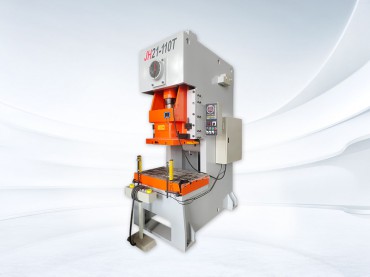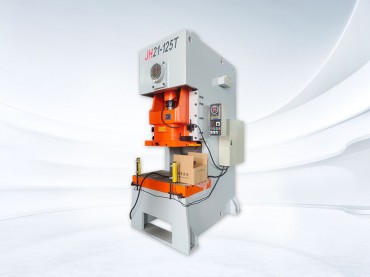
In the metalworking industry, the punching machine is a vital piece of machinery, widely used in sectors such as automotive manufacturing, home appliance production, electronics, hardware processing, and general machinery manufacturing. As industrial demands for processing efficiency, precision, and automation rise, enterprises often compare the performance of different types of punching machines when making purchasing decisions. The choice of equipment depends on a comprehensive assessment of factors such as the material being processed, production efficiency requirements, the necessary punching force, and the operating environment.
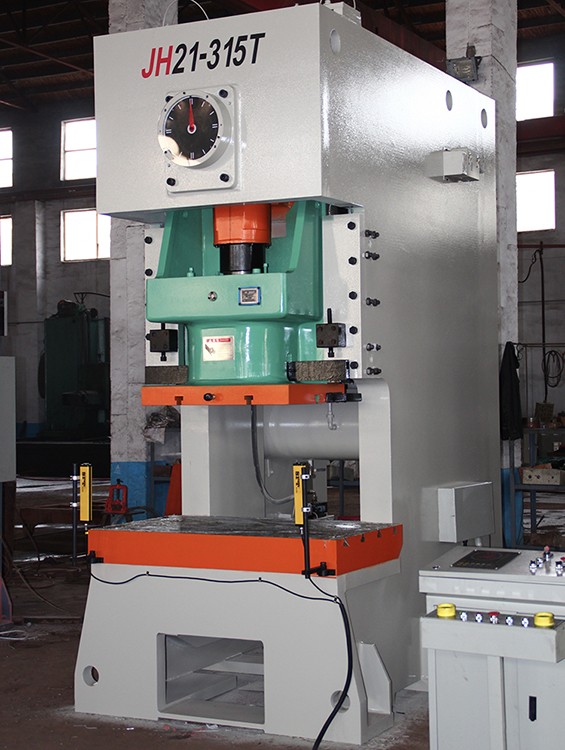
A pneumatic punching machine is a machine that uses compressed air as its power source to perform punching operations via a pneumatic cylinder, a clutch, and a mechanical transmission system. During operation, compressed air enters the pneumatic system and drives the mechanism, causing the slide (ram) to move the die and execute the punching action.
Pneumatic punching machines typically consist of the following components: the machine frame/body; a pneumatic clutch; a slide system; a crankshaft mechanism; a control system; and safety protection devices.
Because they utilize pneumatic control, these presses offer rapid response times and ease of operation, making them well-suited for continuous production. They are widely used in high-volume manufacturing environments, such as the production of electronic components, hardware parts, and sheet metal stamping.
A hydraulic punching machine is a machine that generates punching force using hydraulic oil pressure. It employs components such as hydraulic pumps, cylinders, and control valves to convert hydraulic energy into mechanical pressure, driving the slide to perform the punching operation. The primary characteristics of hydraulic punching machines are their ability to deliver high force and their wide range of pressure control.
They are typically used for: processing thick plates; metal forming; deep drawing; manufacturing large parts; and processing high-strength materials. Because hydraulic systems can maintain a stable pressure output, they offer a distinct advantage for tasks requiring high punching force.
Determining the "robustness" of a punching machine requires analysis from several perspectives.
Regardless of whether it is pneumatic or hydraulic, high-quality equipment requires a robust machine body structure. Typically, the press frame is constructed from high-strength cast iron or welded steel to withstand the vibrations and impacts associated with long-term stamping operations.
Consequently, the equipment's lifespan depends not only on the drive mechanism but also on material quality, manufacturing processes, structural design, machining precision, and maintenance. A well-designed and expertly manufactured pneumatic press can also achieve a long service life.
In terms of maximum force capacity, hydraulic punching machine generally hold the advantage. Hydraulic systems can generate high output forces by increasing hydraulic pressure, making them suitable for processing thicker materials. Pneumatic punching machine, driven primarily by compressed air, are better suited for high-speed stamping operations involving small to medium tonnages. Therefore, hydraulic punching machine are usually the better choice for processing large, thick plates or workpieces requiring immense force.
Pneumatic punching machine offer advantages in high-speed, continuous stamping. Due to the rapid response of pneumatic power, these machines can achieve high stamping frequencies. For instance, they can boost productivity during the mass production of small metal parts. While hydraulic punching machine deliver powerful force, their operating speeds are generally slower, making them better suited for processes requiring stable, consistent pressure output.
Driven by compressed air, pneumatic punching machine respond quickly. This enhances productivity for tasks requiring repetitive, high-volume stamping.
Pneumatic punching machine easily integrate with equipment such as feeders and automated production lines, enabling the creation of continuous processing systems in modern automated factories.
Pneumatic systems feature relatively simple structures; routine maintenance focuses primarily on air lines, lubrication, and the inspection of mechanical components.
Pneumatic presses are highly adaptable for processing items such as metal casings, small parts, hardware products, and electronic components.
The defining characteristic of a hydraulic punching machine is its immense force capacity. It can process thicker metal materials and execute complex forming operations.
Hydraulic systems allow for the control of the processing operation by adjusting pressure parameters. This is crucial for products requiring precision forming.
Hydraulic punching machines are commonly used for: large metal parts, thick steel plate processing, compression molding, and deep-drawn products.
Hydraulic punching machines maintain stable operating conditions during low-speed, high-pressure processing.
Enterprises should make their choice based on actual production requirements.
If the primary operations involve thin metal sheets, small parts, hardware products, or high-volume stamped parts, a pneumatic punching machine may be more suitable.
If the primary operations involve thick plate materials, large parts, or high-pressure forming, a hydraulic punching machine usually better meets the needs.
Regardless of the type of press chosen, proper maintenance is essential.
During daily use, pay attention to the following: regularly check the lubrication system; keep the equipment clean; inspect the condition of fasteners; perform regular maintenance on the power system; and operate the equipment within its rated parameters. Avoiding prolonged overloading effectively reduces mechanical wear and enhances equipment stability.
With the continuous advancement of smart manufacturing technology, press equipment is evolving towards automation, high precision, and energy efficiency. Different types of presses do not simply replace one another; rather, each offers distinct advantages suited to specific production environments.
Pneumatic punching machines feature high speeds, strong continuous production capabilities, and high levels of automation, making them ideal for processing thin sheets and high-volume stamping. Hydraulic punching machines offer high pressure, stable control, and suitability for thick materials, making them better suited for high-intensity forming tasks. The robustness of Address:Room 1202, Detaitang Building, No. 118 Huaguang Road, Zhangdian District, Zibo, Shandong
 WhatsApp:+8615653328535
 Wechat: +8615965331535
  E-mail:zs@sdsmachinery.com