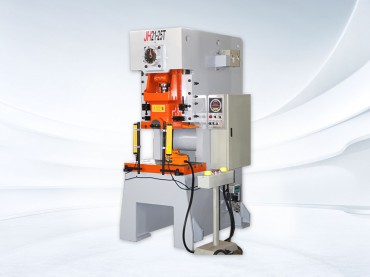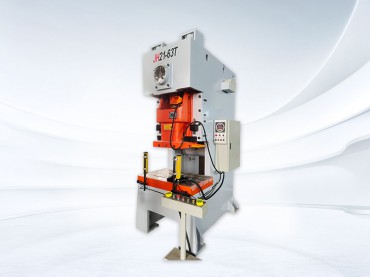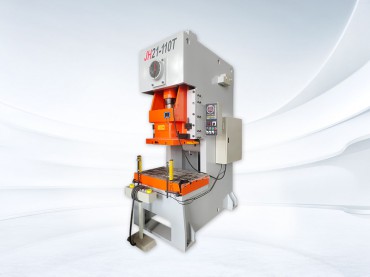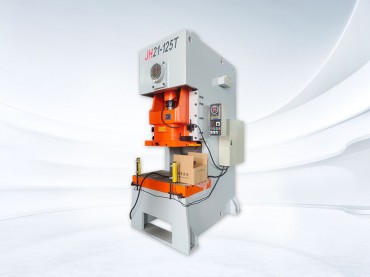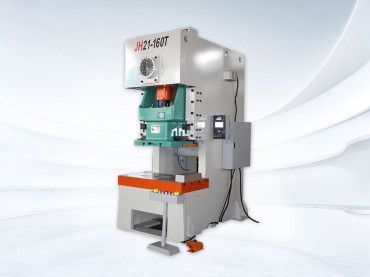
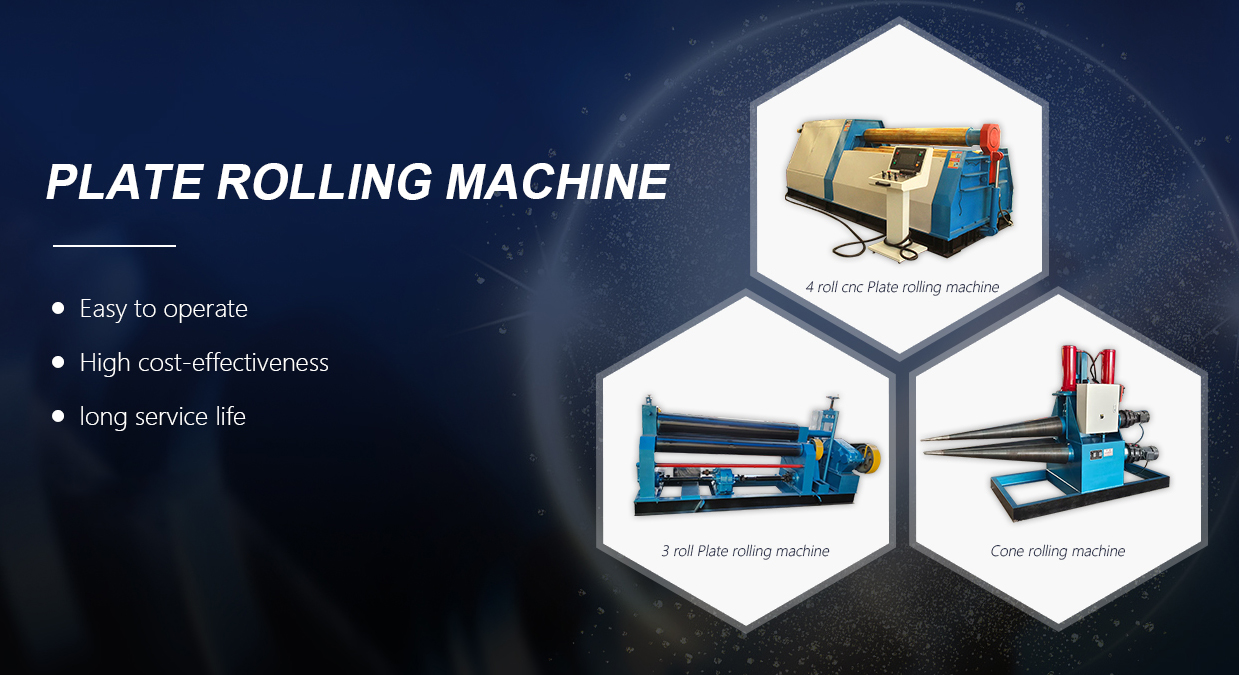
In modern industrial manufacturing, the power press is an indispensable piece of metalworking equipment, widely utilized across numerous sectors including automotive, home appliances, hardware, construction materials, and general machinery manufacturing. By subjecting metal sheets or other materials to stamping processes—such as cutting, punching, forming, and bending—the power press serves as a vital tool in industrial production for enhancing efficiency, ensuring precision, and reducing costs.
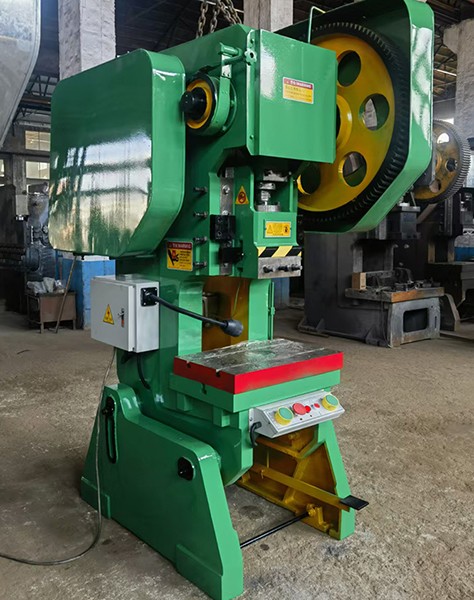
A power press is a processing machine that employs mechanical, hydraulic, or pneumatic power to apply pressure via a punch tool onto a material, thereby inducing plastic deformation or shearing it. The core components of a power press include the machine frame (body), the punch tool, the die, the power system, and the control system.
Based on their power source and structural characteristics, power press are primarily categorized into the following types:
- Mechanical Power Press: These utilize a crank and connecting rod mechanism to generate punching force, making them suitable for high-efficiency, mass-production operations.
- Hydraulic Power Press: Powered by a hydraulic system, these machines offer adjustable punching force and are well-suited for processing thick plates or complex parts.
- Pneumatic Power Press: Driven by compressed air, these presses are ideal for processing small, thin, and lightweight materials; they feature a simple structure and are easy to operate.
The high-speed, high-precision, and multi-functional capabilities of power press render them an irreplaceable and essential asset in modern industrial production.
The most fundamental application of a power press is the blanking (cutting) and punching of metal sheets. Through specialized die designs, the machine can create holes of various shapes, intricate cutting patterns, and precise edge finishes. This process is extensively employed in the manufacturing of automotive body panels, appliance casings, hardware components, and architectural metal elements.
Beyond merely cutting metal sheets, power press are also capable of performing various forming operations, such as bending, embossing, deep drawing, and flanging. For instance, the fabrication of automotive chassis components, electronic device enclosures, kitchenware, and metal furniture all rely on power press to achieve precise shaping.
In the fields of machinery manufacturing and hardware processing, power press are utilized to fabricate a wide array of metal structural components—such as brackets, connectors, flanges, and more. By processing these parts using a power press, manufacturers can ensure dimensional accuracy and batch consistency, thereby significantly boosting production efficiency.
The high-efficiency processing capabilities of power press make them the preferred equipment for mass production. For instance, products such as automotive components, metal casings for home appliances, and standard hardware parts require power press to facilitate rapid, repetitive processing, thereby reducing production cycles and manufacturing costs.
With the advancement of CNC power press, these machines are no longer limited to simple blanking operations; they can now execute high-precision machining for complex processes—such as multi-hole punching, precision deep drawing, and combined operations. CNC power press utilize programmable controls to fabricate complex parts, thereby enhancing product precision and consistency.
In automotive manufacturing, power press are utilized for the blanking and forming of metal components such as body panels, chassis parts, doors, and dashboards. Processing with power press ensures dimensional accuracy, boosts assembly efficiency, and helps meet the rigorous quality standards demanded by the automotive industry.
In the production of home appliances, power press are primarily used to fabricate metal casings, control panels, support brackets, and internal structural components. High-precision power press ensure both the aesthetic appeal and assembly accuracy of finished appliances, while simultaneously accelerating production speeds to meet market demands for rapid delivery.
In the construction industry, power press are employed to process metal building materials such as color-coated steel sheets, corrugated panels, guardrails, doors and windows, and roofing panels. Processing with power press enables standardized and modular production, thereby enhancing the processing precision and installation efficiency of construction materials.
Power press are widely used for the fabrication of small parts, including standard hardware items, nuts, brackets, clips, and connectors. These machines facilitate rapid, repetitive processing, ensuring dimensional consistency and adherence to high-quality standards for these components.
Small-scale precision power press are extensively utilized in sectors involving electronic components, precision instruments, and control panels. Processing with power press ensures the high precision and accurate shaping of miniature parts, thereby enhancing the overall reliability of electronic products and instruments.
Power press are capable of executing high-speed, high-frequency stamping operations, making them particularly well-suited for mass production environments. The advancement of mechanization and automation enables enterprises to process large volumes of workpieces within a short timeframe, thereby shortening production cycles.
Automated power press operations reduce reliance on manual labor, thereby lowering labor input and operational risks. Furthermore, power press can execute highly repetitive and physically demanding tasks, leading to enhanced operational efficiency.
Power press processing maximizes the utilization of sheet metal; through optimized layout planning and die design, it minimizes scrap generation and reduces raw material costs.
Parts produced via power press processing feature precise dimensions and stable shapes, resulting in lower defect rates and improved product quality and customer satisfaction.
- Safe Operation: Operators must undergo professional training and strictly adhere to safety protocols to ensure personal safety.
- Die Management: Dies should be inspected and maintained regularly to ensure processing precision and extend equipment lifespan.
- Lubrication and Maintenance: The hydraulic system, mechanical transmission components, and guide rails must be kept well-lubricated to extend the service life of the equipment.
- Environmental Management: The area surrounding the power press should be kept clean to prevent dust and debris from interfering with equipment operation.
Power press not only boost production efficiency and reduce labor costs and material waste, but they also guarantee product precision and consistency. With advancements in intelligent technology, CNC automation, and energy-efficient, eco-friendly solutions, power press are poised to play an increasingly vital role across industries such as automotive, home appliances, construction, hardware, and electronics. Selecting the appropriate power press equipment is of paramount importance for enterprises seeking to enhance production efficiency, reduce costs, and improve product quality. In the future, power press will continue to serve as core equipment in industrial manufacturing, driving the upgrading and development of the manufacturing sector.
 Address:Room 1202, Detaitang Building, No. 118 Huaguang Road, Zhangdian District, Zibo, Shandong
 WhatsApp:+8615653328535
 Wechat: +8615965331535
  E-mail:zs@sdsmachinery.com