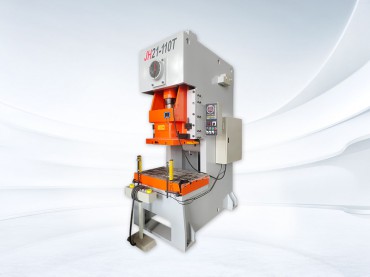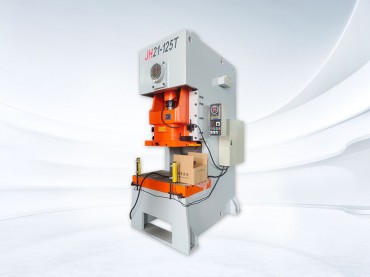
In modern manufacturing, stamping equipment stands as one of the indispensable mechanical devices in the field of metal processing. With the continuous advancement of industrial automation, various types of stamping equipment have evolved. Among them, pneumatic presses are widely applied in electronics, hardware, automotive components, and light industrial manufacturing due to their simple structure, stable operation, safe handling, and high efficiency.
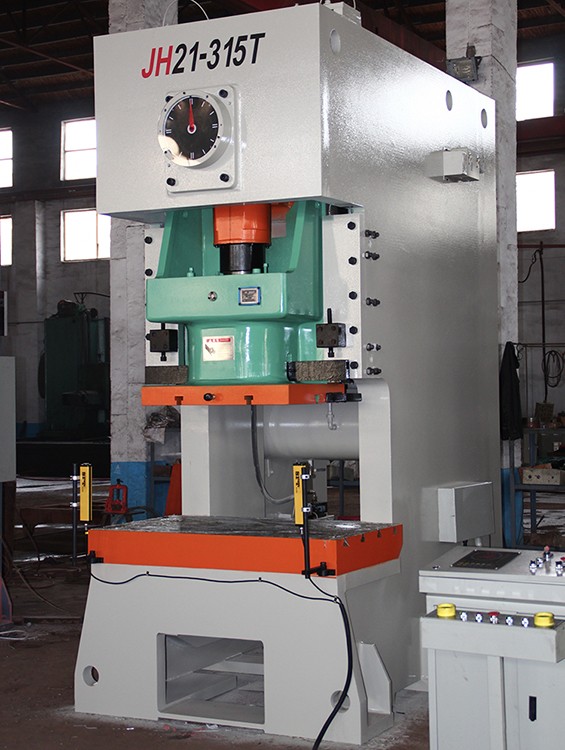
A pneumatic press is a stamping machine powered by compressed air. The equipment utilizes a pneumatic system to convert air pressure into mechanical force, thereby driving the punch to perform stamping operations on workpieces. Its primary functions include punching, cutting, embossing, bending, and simple forming. In actual production, pneumatic presses are typically used in conjunction with various dies. By replacing different dies, diverse processing tasks can be accomplished. Pneumatic presses are generally suitable for small to medium-tonnage stamping operations, finding extensive application in electronic components, sheet metal materials, and precision part manufacturing.
The operation of pneumatic presses is fundamentally based on pneumatic transmission technology. When compressed air enters the equipment's cylinder, it drives the piston movement, thereby moving the slide and punch downward to perform stamping operations on the workpiece.
The entire working process typically involves the following steps:
(1) An air compressor generates compressed air, which is delivered through air pipes to the pneumatic system of the press.
(2) Compressed air enters the control valve system, where its flow direction is regulated by solenoid valves or mechanical valves.
(3) Upon receiving compressed air, the cylinder's piston begins downward movement, driving the punch to execute the stamping action.
(4) After stamping completion, the pneumatic system reverses airflow direction, causing the cylinder to retract and return the punch to its initial position.
Through this cyclic motion, the pneumatic press achieves continuous stamping operations. Its rapid response time enables high operational efficiency. Additionally, adjusting air pressure regulates stamping force to accommodate diverse materials and workpiece requirements.
Although pneumatically operated presses feature relatively simple structures, each component plays a critical role in equipment operation:
The frame serves as the foundational support for the entire press. Typically constructed from welded high-strength steel plates or cast iron, it ensures sufficient rigidity and stability. A stable frame structure minimizes vibration during stamping, thereby enhancing processing precision and extending equipment lifespan.
The pneumatic system is the core component of the pneumatic punch press, comprising cylinders, air tubes, control valves, and pressure regulation devices. This system converts compressed air into mechanical power. Its design directly impacts the equipment's operational efficiency and stability, necessitating precise engineering and rigorous testing during manufacturing.
The ram serves as the critical link between the cylinder and the punch. When the cylinder drives the ram's movement, the punch moves vertically to execute the stamping action. The punch typically operates in conjunction with dies; different punch shapes achieve various processing effects, such as punching holes, cutting, or embossing.
The workbench serves as the area for placing workpieces and dies. It features high flatness and strength to ensure stable workpiece positioning during processing. In advanced equipment, the workbench may incorporate automatic feeding devices to enhance production efficiency.
The control system manages the pneumatic punch press's workflow, including start/stop functions, punching speed regulation, and safety protection features. Modern pneumatic presses are generally equipped with electronic control systems, enabling automation and improving operational safety.
(1) Pneumatic presses feature simple structures and relatively low manufacturing costs. Compared to complex mechanical transmission systems, pneumatic systems are easier to maintain.
(2) Equipment operates stably. Compressed air provides inherent cushioning, reducing impact forces during stamping and minimizing equipment wear.
(3) Pneumatic presses offer user-friendly operation. Punching force and working speed can be easily adjusted by controlling air pressure and flow direction.
(4) Pneumatic presses also provide high safety levels. Equipment automatically stops when abnormal air pressure occurs, minimizing safety risks.
(5) Pneumatic presses typically operate at lower noise levels, making them suitable for factories requiring quieter production environments.
- In the electronics industry, pneumatic presses are commonly used for stamping electronic components, connectors, and thin metal sheets.
- In hardware manufacturing, they produce various metal parts such as gaskets, brackets, and small structural components.
- In automotive parts manufacturing, pneumatic presses perform punching, embossing, and forming of small components.
- In home appliance manufacturing and light industrial sectors, pneumatic presses are frequently employed for producing diverse metal enclosures and structural components.
As a vital stamping equipment, pneumatic presses play a significant role in modern manufacturing. Utilizing compressed air as a power source, these machines efficiently perform multiple processing tasks including punching, cutting, and forming. With advantages including simple structure, stable operation, user-friendly handling, and low maintenance costs, pneumatic presses are widely adopted across electronics, hardware, automotive components, and home appliance manufacturing. As technology advances, pneumatic presses will increasingly evolve toward automation, intelligence, and energy efficiency, delivering more efficient and reliable processing solutions for modern manufacturing.
If you are interested in pneumatic presses, please contact us. We will recommend suitable machines and provide quotations.
 Address:Room 1202, Detaitang Building, No. 118 Huaguang Road, Zhangdian District, Zibo, Shandong
 WhatsApp:+8615653328535
 Wechat: +8615965331535
  E-mail:zs@sdsmachinery.com