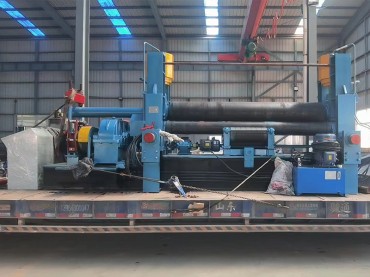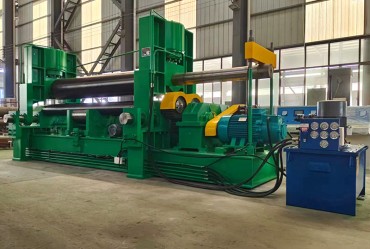
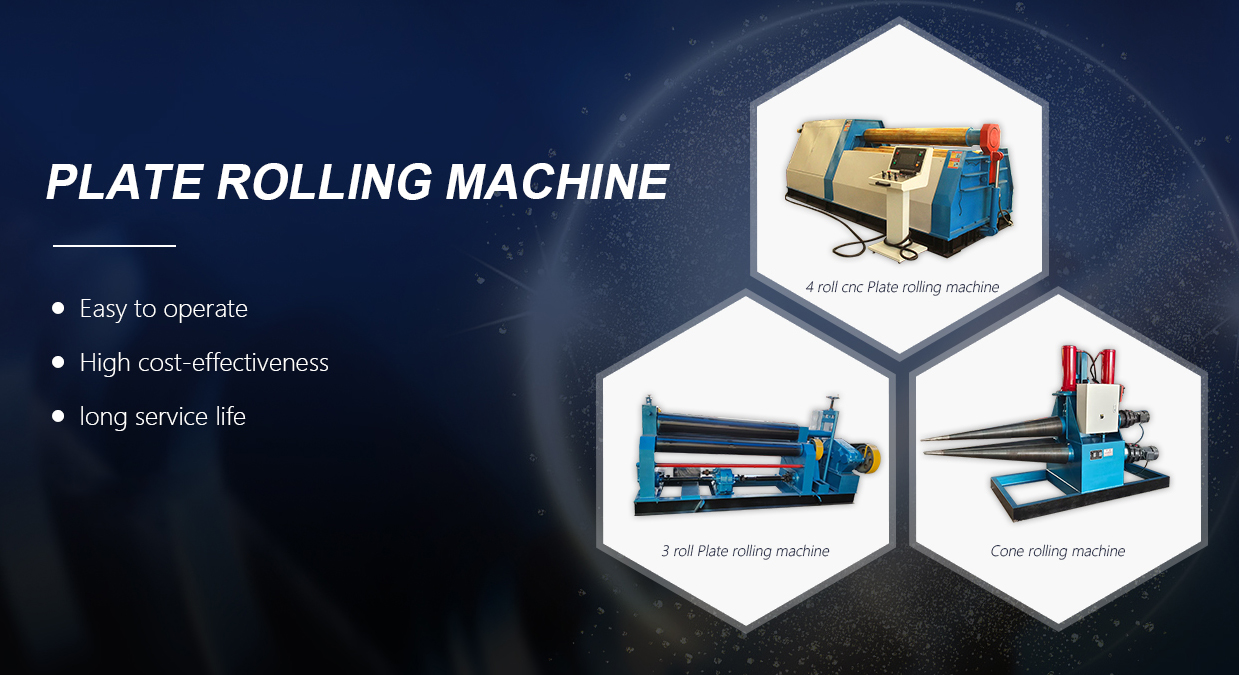
In the modern metal processing industry, sheet metal forming technology has become a crucial component of manufacturing. From pressure vessels and wind turbine towers to shipbuilding and steel structure engineering, the bending and rolling of metal sheets are virtually ubiquitous. Among the various equipment available, hydraulic plate rollers have gradually emerged as the mainstream machinery in metal sheet processing due to their stable performance, robust processing capabilities, and high level of automation.
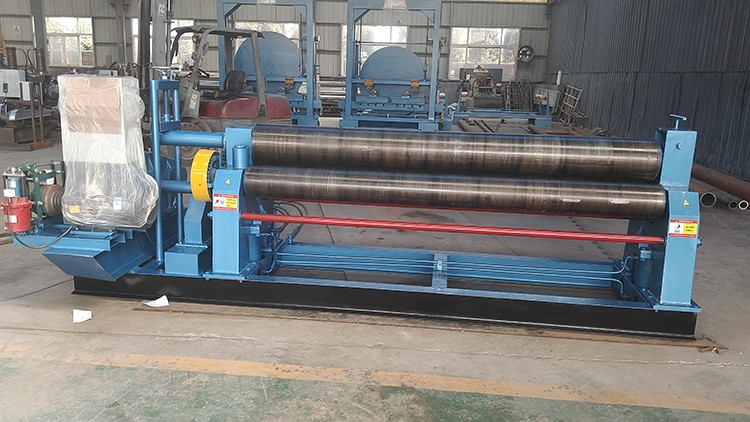
A hydraulic plate rolling machine utilizes a hydraulic system as its power source. Through the movement of upper and lower rolls or side rolls, it progressively bends metal sheets into cylindrical, arcuate, or conical structures. Compared to traditional mechanically driven equipment, the hydraulic system delivers more stable power output, ensuring smooth operation during processing. During operation, the sheet metal is fed into the rolling machine. Through the pressure between the upper and lower rollers and the adjustment of the side rollers, the sheet undergoes gradual plastic deformation to achieve the desired curvature. The hydraulic system precisely controls the position and pressure of the rollers, allowing the equipment to adapt to processing requirements for sheets of varying thicknesses and materials.
One of the standout features of hydraulic plate rolling machines is their powerful drive system. The hydraulic system generates substantial pressure, enabling the equipment to process thicker and higher-strength metal plates. In heavy industries such as pressure vessel manufacturing, petrochemical equipment production, and wind turbine tower fabrication, where plates are often thick and demanding, hydraulic rolling machines reliably handle these high-intensity tasks, significantly boosting production capacity.
The hydraulic system offers excellent control performance, enabling precise adjustment of roller position and pressure to ensure process stability. Compared to traditional mechanical plate rollers, hydraulic models deliver superior processing accuracy. By precisely controlling roller spacing, the equipment achieves more uniform bending results, producing cylindrical structures with superior roundness. For industries demanding high precision, such as pressure vessel manufacturing and aerospace equipment production, this high-accuracy processing capability is particularly crucial.
Modern hydraulic plate rollers typically feature CNC systems or intelligent control systems. Operators simply input parameters via the control panel, allowing the equipment to automatically complete the plate rolling process. Automated control not only reduces manual intervention but also boosts production efficiency while minimizing human error. Additionally, automated systems can store processing parameters, facilitating repeat production.
Hydraulic plate rolling machines can process various metal sheet materials, including carbon steel, stainless steel, aluminum sheets, and alloy steel. By adjusting hydraulic pressure and roller positions, the equipment adapts to different material processing requirements. This flexibility grants hydraulic plate rolling machines broad application value across multiple industries.
The hydraulic system minimizes impact during operation and delivers stable power output, resulting in reduced wear during prolonged use. This consistent performance not only enhances processing quality but also extends the equipment's lifespan. Furthermore, modern hydraulic plate rollers typically feature high-strength steel structural frames, ensuring robust and reliable construction capable of withstanding demanding industrial environments involving extended, high-intensity production cycles.
Beyond standard cylindrical structures, hydraulic plate rolling machines can process complex shapes such as curved plates, conical structures, and large cylinders. This versatility makes them highly valuable in pressure vessels, storage tanks, pipeline equipment, and architectural steel structures.
Pressure vessels are critical equipment in industries like petrochemicals and energy equipment. Plate rollers shape steel plates into cylindrical structures, providing the foundation for subsequent welding and processing.
With the development of the new energy industry, demand for wind turbine tower manufacturing continues to grow. Hydraulic plate rolling machines can process thick steel plates, making them essential equipment for wind power equipment manufacturing.
During shipbuilding, large quantities of curved steel plates require forming via plate rolling machines. Hydraulic plate rolling machines meet the processing demands of large ship hull structures.
In modern architecture, large-scale steel structures and curved designs are increasingly prevalent. Rolling machines facilitate the production of various curved steel components, enhancing architectural design flexibility.
Overall, hydraulic plate rolling machines have become essential equipment in modern metal processing due to their powerful drive, high processing precision, advanced automation, and strong adaptability. They play an irreplaceable role across both heavy industrial manufacturing and emerging energy equipment production. With continuous advancements in manufacturing technology, hydraulic plate rolling machines will achieve greater breakthroughs in efficiency, precision, and intelligence in the future.
If you are interested in hydraulic plate rolling machines, please contact us. We will recommend suitable machines and provide quotations.
 Address:Room 1202, Detaitang Building, No. 118 Huaguang Road, Zhangdian District, Zibo, Shandong
 WhatsApp:+8615653328535
 Wechat: +8615965331535
  E-mail:zs@sdsmachinery.com