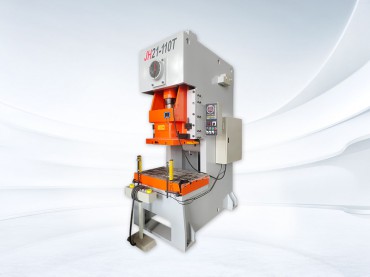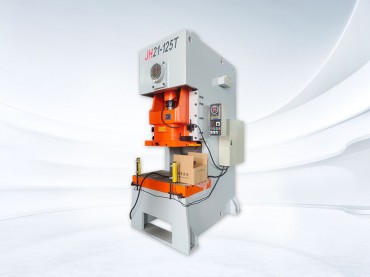
Pneumatic punch presses, as common mechanical processing equipment, are widely used in industries such as metal fabrication and plastic molding. Utilizing compressed air as their power source, they drive the punch to perform various stamping operations. Due to their simple structure, ease of operation, and high efficiency, pneumatic punch presses play a vital role in diverse production lines.
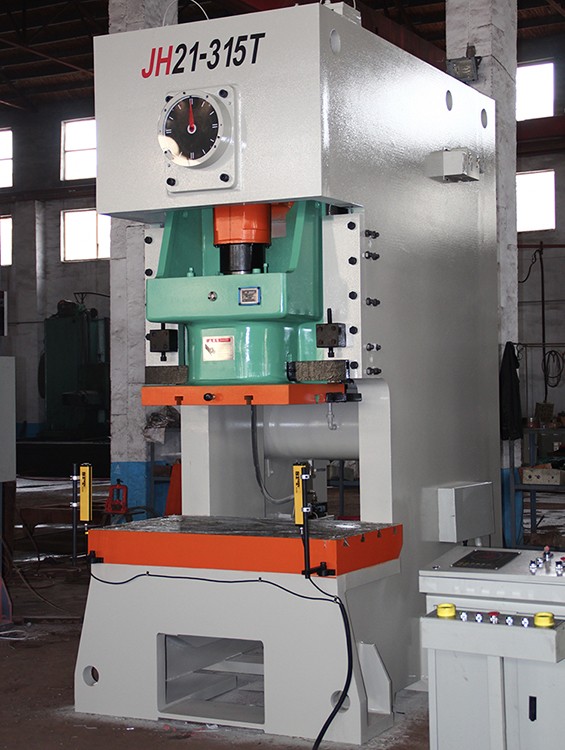
Pneumatic punch presses primarily rely on compressed air as their power source to drive the punch in vertical motion, thereby performing various stamping operations. Their working principle can be broken down into the following steps:
The power for pneumatic punch presses comes from compressed air. Compressed air is pressurized to high levels by an air compressor and stored in an air receiver tank. This process ensures sufficient air pressure and power for stamping operations.
When the press is activated, the control system releases compressed air from the storage tank into the cylinder via pneumatic valves. The air pressure within the cylinder rapidly drives the piston, causing the punch to move up and down. The piston generates thrust under air pressure, propelling the punch through punching, cutting, bending, and other forming actions.
The punch and die of a pneumatic punch press work in close coordination. The punch, as the core component, moves vertically driven by the cylinder, while the die is mounted on the press base to secure and shape the workpiece. This precise interaction enables accurate cutting, stamping, and punching operations.
pneumatic punch press operation is typically regulated by a control system. This system adjusts parameters like cylinder speed, punching force, and cycle count as required. Generally, pneumatic punch presses support both single-stroke and continuous-stroke modes, allowing flexible configuration based on production needs.
The cylinder is a core component of the pneumatic punch press, responsible for driving the punch's vertical movement via air pressure. The size and type of the cylinder directly impact the press's operational capacity. Common cylinder types include single-acting cylinders and double-acting cylinders. The former requires only air pressure for operation, while the latter enables bidirectional movement through changes in air pressure.
The punch is the primary component for performing punching operations in a pneumatic punch press. Driven by the cylinder, the punch moves vertically on the press bed to perform cutting, punching, drawing, and other operations. The shape and size of the punch vary according to specific process requirements.
Dies are components used in conjunction with the punch to determine the shape of the stamped part. Typically consisting of a die head and a die base, the die head is mounted on the punch while the die base is fixed to the press bed. The precision of die design directly impacts the quality of stamped parts.
The air compressor and air tank serve as the power source for pneumatic punch presses. The air compressor compresses air and stores it in the air tank. When required, the control system releases compressed air into the cylinder, driving the punch to execute stamping operations. The size and pressure settings of the air tank significantly influence the efficiency and stability of the pneumatic punch press.
The control system of a pneumatic punch press typically includes components such as pneumatic control valves, push buttons, and sensors to regulate the press's operational status. This system enables automated functions, allowing adjustment of parameters like stamping speed and cycle count to enhance production efficiency and ensure operational precision.
pneumatic punch presses offer numerous benefits, making them a vital piece of equipment widely used in industrial production:
- High efficiency and low cost: Driven by compressed air, pneumatic punch presses eliminate the need for complex electric or hydraulic systems, thereby reducing production costs and saving energy consumption.
- Simple and easy operation: The operating system of pneumatic punch presses is relatively straightforward, and maintenance is also convenient. Operators can swiftly configure required stamping parameters by adjusting air pressure and cylinder movement.
- Adjustable Punching Force: Punching force can be tailored to specific process requirements, accommodating diverse materials and product specifications.
- Superior Stability: Utilizing air as the power source, pneumatic punch presses offer greater operational stability compared to hydraulic systems, minimizing issues like oil leakage.
Due to their efficiency, stability, and low cost, pneumatic punch presses are widely used across multiple industries, particularly in metal processing, automotive manufacturing, and home appliance production:
- Metal Processing: pneumatic punch presses are commonly used for punching, cutting, and bending operations in metal processing, especially suitable for thin sheet materials.
- Plastic Molding: In the plastics processing industry, pneumatic punch presses are employed for stamping and trimming plastic components.
- Automotive Manufacturing: pneumatic punch presses are utilized in producing automotive parts, such as stamping and forming body components.
- Home Appliance Industry: pneumatic punch presses are extensively applied in home appliance production for processes like metal casing stamping and plastic molding.
To boost efficiency, many modern pneumatic punch presses incorporate automated feeding devices and sorting systems, reducing manual intervention and accelerating production speed. Additionally, advanced control systems enable precise adjustment of parameters like stamping frequency and depth, achieving more efficient production.
Despite their simple structure, regular maintenance is essential to ensure long-term stable operation of pneumatic punch presses. Key maintenance tasks include checking cylinder air pressure, verifying lubrication system flow, and inspecting air lines for leaks. Additionally, periodic checks of punch and die wear are necessary, with damaged components replaced promptly to maintain stamping quality and equipment stability.
As a highly efficient, stable, and cost-effective stamping solution, pneumatic punch presses play a vital role in industrial production due to their robust functionality and broad applicability. Understanding their operating principles, components, and maintenance methods is crucial for enhancing production efficiency and extending equipment lifespan. With advancements in automation technology, the application prospects for pneumatic punch presses will continue to expand.
 Address:Room 1202, Detaitang Building, No. 118 Huaguang Road, Zhangdian District, Zibo, Shandong
 WhatsApp:+8615653328535
 Wechat: +8615965331535
  E-mail:zs@sdsmachinery.com