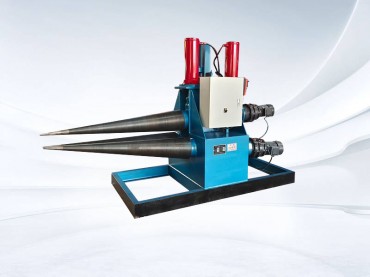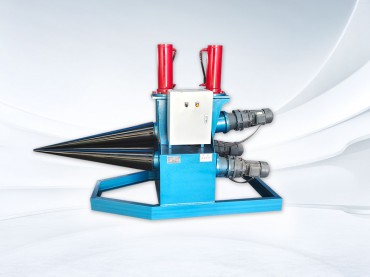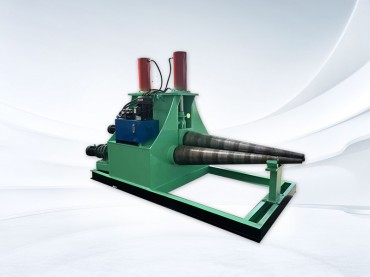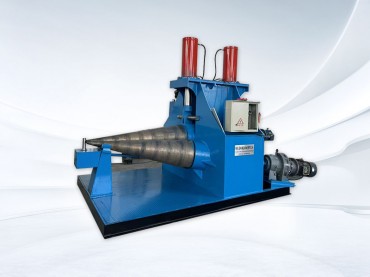
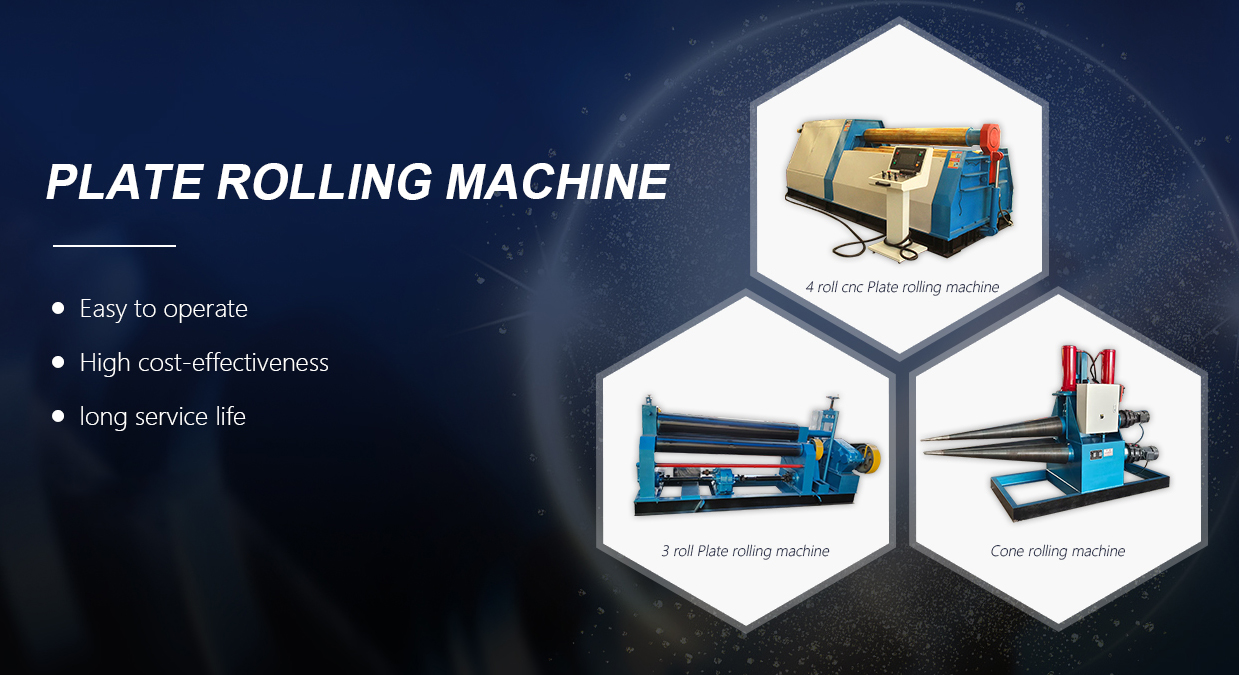
With the rapid development of industrial manufacturing and heavy machinery, metal processing equipment has become an indispensable tool in modern production. As a key metal forming device, hydraulic cone rolling machines are widely used across multiple sectors including petroleum, chemical, power, and metallurgy. Their advantages are particularly evident in manufacturing various conical components, cylindrical vessels, and pipelines.
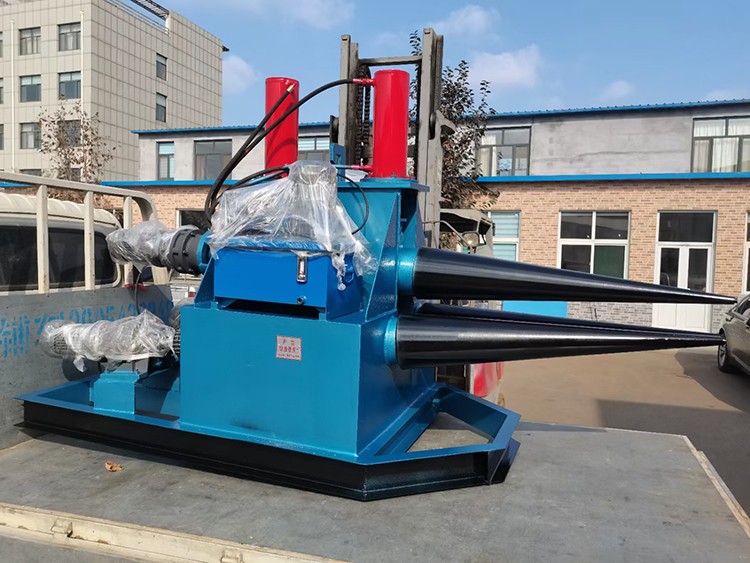
Hydraulic cone rolling machines are specialized mechanical equipment that utilizes hydraulic power to bend and roll metal sheets, widely employed in manufacturing various conical workpieces and cylindrical containers. Compared to traditional mechanical cone rolling machines, hydraulic cone rolling machines offer higher operational precision, stronger deformation capabilities, and superior control performance. This equipment applies pressure through a hydraulic system, causing the metal sheet to bend into the desired conical or circular shape under the action of specific rollers. Hydraulic cone rolling machines play a crucial role in many fields, particularly in the processing of large-sized metal sheets.
First, position the metal sheet to be processed onto the hydraulic cone rolling machine's workbench. Typically, these sheets have been cut and pre-treated to achieve suitable dimensions and shapes for processing. The sheet's size and thickness directly influence the hydraulic cone rolling machine's operating pressure and precision.
The core principle involves the hydraulic system delivering stable pressure through a pressure controller. This pressure is adjustable based on sheet type, thickness, and desired taper angle. The hydraulic pressure is transmitted via cylinders to the pressure rollers or upper rollers, ensuring uniform force distribution during rolling to prevent uneven deformation or damage.
Under hydraulic pressure, the sheet undergoes repeated pressing and bending through multiple rollers, gradually shaping it into the desired form. Hydraulic cone rolling machines typically feature three main rollers (an upper roller and two lower rollers). The upper roller applies downward pressure, while the lower rollers adjust their positions to assist in gradually forming the sheet into a conical or circular shape. As the rollers progressively advance, the metal sheet is gradually rolled into a curved surface or conical structure.
A key advantage of hydraulic cone rolling machines is their precise control over bending angles and radii. During operation, users can adjust the hydraulic system pressure, roller gap, and roller rotation speed as needed to achieve forming with varying angles and dimensions. The adjustability of the hydraulic system ensures high-precision processing results.
After a series of hydraulic controls, roller operations, and sheet deformation, the metal sheet is ultimately rolled into the desired conical or circular shape. The finished product can typically be directly used in downstream processes such as welding and assembly, or undergo further surface treatment.
Hydraulic cone rolling machines find extensive application across multiple industries, particularly where large-format metal sheet forming is required. Key application areas include:
(1) Petrochemical Industry: In manufacturing petroleum storage tanks, pressure vessels, and similar equipment, hydraulic cone rolling machines are commonly used to produce conical or circular steel plates. Hydraulic cone rolling machines meet the demands for large-scale, high-precision processing.
(2) Metallurgical Industry: The metallurgical sector requires extensive steel plate bending and forming. Hydraulic cone rolling machines precisely control bending angles while preserving material strength and corrosion resistance, suitable for metal plates of various thicknesses.
(3) Shipbuilding Industry: Hydraulic cone rolling machines play a vital role in constructing hulls, bulkheads, and hatch covers. Their hydraulic systems ensure uniform bending of large-sized plates, guaranteeing the sealing integrity and structural stability of ship hulls.
(4) Construction Industry: Hydraulic cone rolling machines are employed to fabricate domes, arches, and cylindrical structures for diverse architectural facilities. These structures demand high precision and strength, requirements precisely met by hydraulic cone rolling machines.
(5) Energy Industry: Hydraulic cone rolling machines are also widely applied in the energy sector, particularly in manufacturing pressure vessels like boiler shells and steam generators, where they provide efficient and precise forming solutions.
(1) Ensure proper hydraulic system operation: The quality of hydraulic oil and system maintenance directly impact machine performance. Regularly inspect oil cleanliness and levels, ensuring no leaks and stable pressure.
(2) Adjust roller clearance: Modify the gap between the upper and lower rollers according to sheet thickness and required taper angle. Excessive clearance compromises forming accuracy, while insufficient clearance may damage equipment.
(3) Control pressure and speed: Set hydraulic system pressure and roller rotation speed appropriately to prevent equipment damage or product deformation caused by overly rapid operation.
As an efficient metal forming equipment, the hydraulic cone rolling machine utilizes powerful pressure from the hydraulic system to achieve precise shaping of metal sheets, finding extensive applications across multiple industries. Its working principle and structural design ensure high-efficiency operation and precise processing, meeting diverse manufacturing requirements. In the future, with continuous advancements in manufacturing technology, hydraulic cone rolling machines will demonstrate their advantages in more fields, driving innovation and breakthroughs in industrial manufacturing.
 Address:Room 1202, Detaitang Building, No. 118 Huaguang Road, Zhangdian District, Zibo, Shandong
 WhatsApp:+8615653328535
 Wechat: +8615965331535
  E-mail:zs@sdsmachinery.com