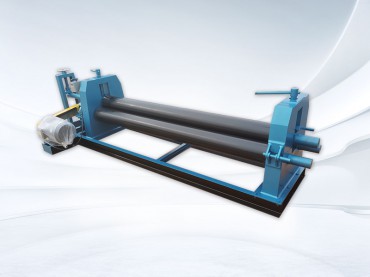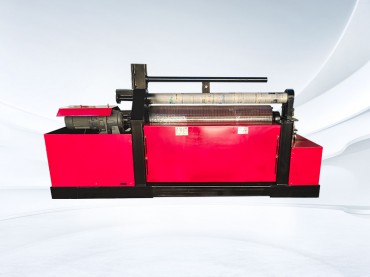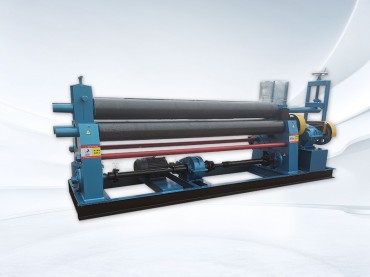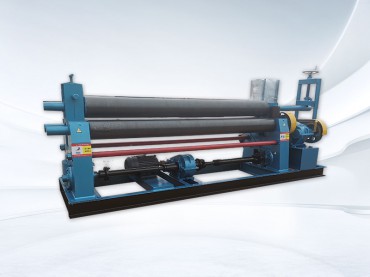
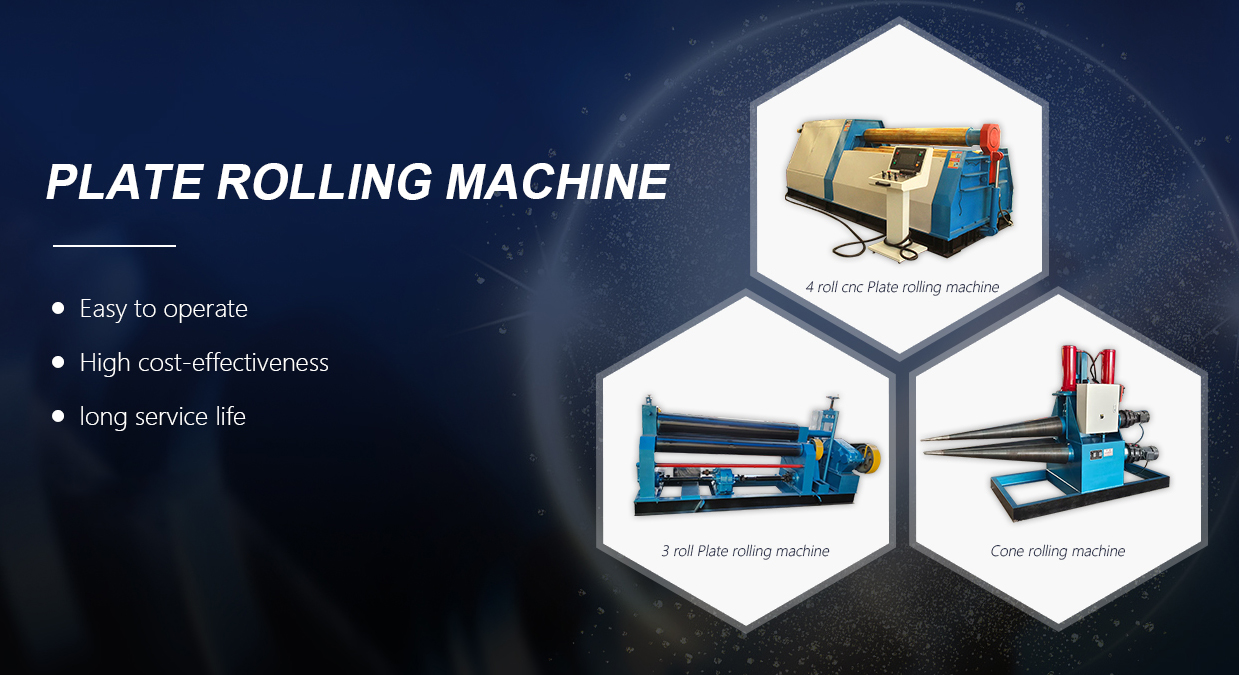
In the metalworking industry, the plate rolling machine is an extremely important piece of equipment, widely used in various processes such as bending, forming circles, and forming cones for all types of metal plates. With its simple structure, convenient operation, and high forming precision, it has become a key device in manufacturing storage tanks, pressure vessels, pipelines, air ducts, and various metal structural components. This article will detail the working principle, classification structure, and application advantages of plate rolling machines in industrial production.
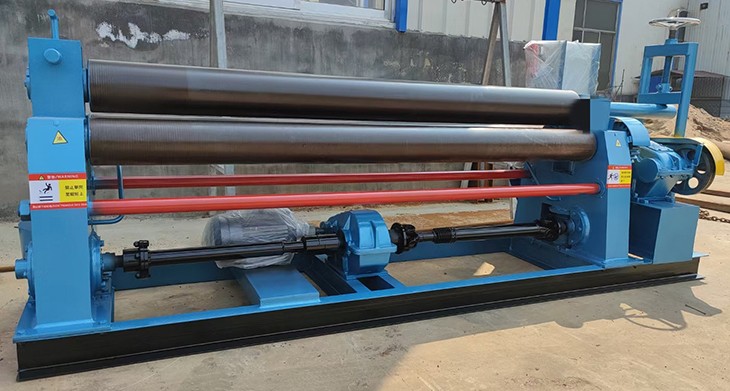
The fundamental principle of plate rolling machines involves the relative motion of upper and lower rolls. This causes the metal plate to undergo repeated bending between the rolls, forming the desired arc or cylindrical shape. During operation, the metal plate is fed into a three-roll or four-roll plate rolling machine. Pressure applied by the upper roll, combined with the rotational motion of the lower roll, induces plastic deformation in the sheet under the rolls' action. When the bending radius reaches the preset value, the workpiece achieves the target circularity.
This deformation process constitutes “continuous bending forming,” whose principle resembles manual bending. However, through mechanical transmission systems, it enables high-precision and high-efficiency batch forming.
(1) Upper and Lower Rolls: Core components for plate rolling machine, typically made of high-strength alloy steel with excellent wear resistance and strength. The upper roll applies pressure while the lower roll provides rotational drive force.
(2) Main Drive Unit: Transfers power to the lower roll via an electric motor, reducer, and gear system to achieve plate feed, retraction, and rotation.
(3) Hydraulic System: Controls the vertical movement of the upper roll and the lateral adjustment of the side rolls to ensure precise bending angles and circularity.
(4) Frame and Support Structure: Bears the working load, ensuring stable and reliable operation during the rolling process.
Based on structural design and operating methods, plate rolling machines can be primarily categorized as follows:
The upper roll moves vertically while the two lower rolls remain fixed and rotate. The plate is bent by forces applied between the three rolls, suitable for forming small to medium-thickness plates into circles.
The upper roll is fixed, while the lower and side rolls are adjustable. This design is more suitable for thin plate processing, offering simple operation and high bending precision.
The upper roll serves as the main roll, while the two lower rolls handle clamping and transmission. The side rolls are used for pre-bending. This machine completes the entire process—loading, pre-bending, rolling, and finishing—in a single operation. Its high automation level makes it widely used in thick plate and large workpiece manufacturing.
Automated operation via PLC control systems allows setting rolling curves, pressure, and angles, significantly enhancing forming precision and production efficiency. Suitable for high-end equipment manufacturing.
(1) Loading: Position the plate above the lower roll.
(2) Pre-bending: Adjust the side rolls to create an initial bend at one end of the plate, reducing the straight edge length.
(3) Rolling Forming: The upper roll gradually applies pressure, continuously bending the plate during rotation to form the target arc.
(4) Trimming and Discharge: Reverse operation unloads the rolled cylindrical workpiece.
This process requires operators to adjust roll spacing and pressure based on plate thickness, material, and target diameter for optimal forming results.
(1) High forming precision: Hydraulic control systems enable precise adjustment of bending radii.
(2) Strong adaptability: Capable of processing various metals including carbon steel, stainless steel, and aluminum plates.
(3) High efficiency and low labor intensity: Automated control reduces manual operation steps.
(4) Stable structure and long service life: Constructed with premium materials to withstand heavy loads and prolonged operation.
(5) Material savings: Continuous rolling process maximizes material utilization and minimizes scrap generation.
(1) Pressure vessel manufacturing: Production of air tanks, liquefied gas cylinders, boiler drums;
(2) Building structures: Fabrication of curved steel frameworks, support rings, etc.;
(3) Pipeline manufacturing: Processing large-scale oil, gas, and water transmission pipelines;
(4) Shipbuilding and aerospace: Fabricating curved hull plates and aircraft fuselage shells;
(5) New energy equipment: Wind turbine towers, solar panel mounts, etc.
In modern manufacturing, plate rolling machines have become indispensable foundational equipment, providing efficient and precise solutions for metal forming processes.
With the rapid advancement of smart manufacturing, plate rolling machines are evolving in the following directions:
(1) CNC and automation: Adopting intelligent control systems to achieve fully automated rolling processes;
(2) High precision and energy efficiency: Optimizing structural design to enhance energy efficiency and machining accuracy;
(3) Multifunctional integration: Integrating functions such as shearing, leveling, and welding to improve production line integration.
Future plate rolling machines will be smarter and more efficient, propelling the metal processing industry toward green manufacturing and digital transformation.
As core equipment in metal forming, plate rolling machines operate on the principle of roll bending. Through precise mechanical control and hydraulic adjustment, they efficiently shape various metal sheets. With technological advancements and manufacturing upgrades, the automation and intelligence of plate rolling machines will continuously improve, playing an increasingly vital role across industries and providing more stable, reliable technical support for industrial production.
 Address:Room 1202, Detaitang Building, No. 118 Huaguang Road, Zhangdian District, Zibo, Shandong
 WhatsApp:+8615653328535
 Wechat: +8615965331535
  E-mail:zs@sdsmachinery.com