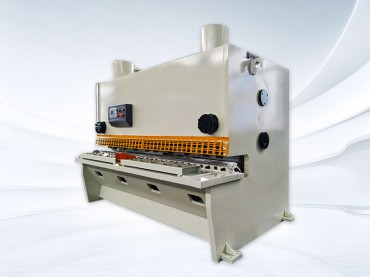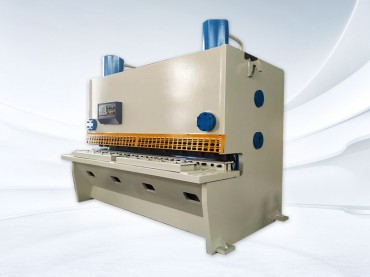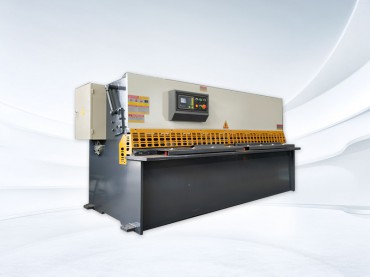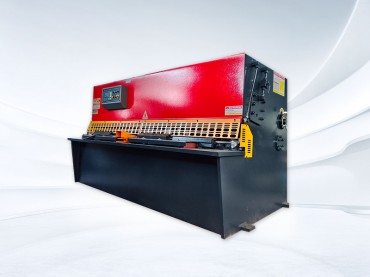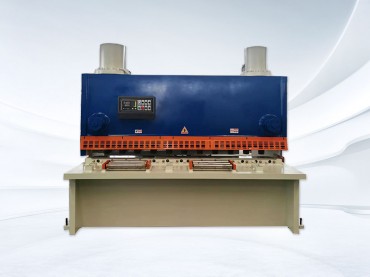
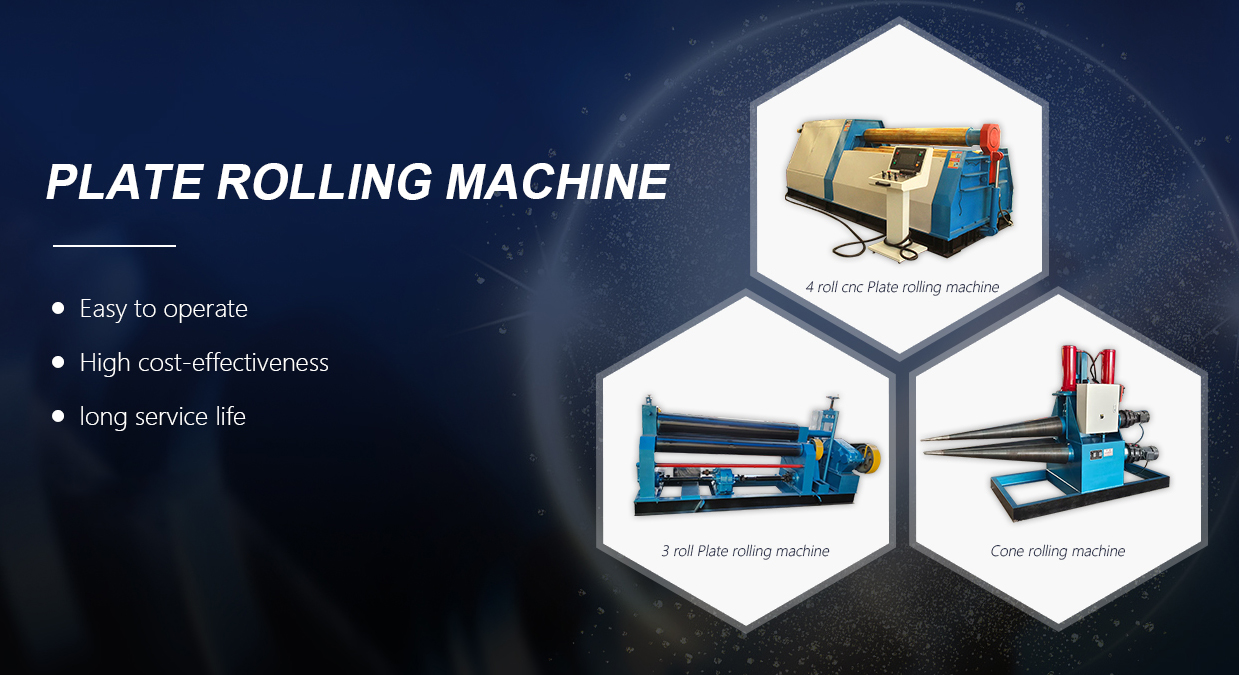
By introducing a CNC shearing machine, automation, high precision, and flexible production of sheet metal cutting can be achieved, significantly improving production line efficiency. This is reflected in four aspects: improved machining accuracy, shortened production cycle, optimized material utilization, and improved overall equipment efficiency. As the core equipment of sheet metal processing, the technical characteristics of CNC shearing machine and the collaborative optimization of production line are the key to improving efficiency. The following analysis will be conducted from four dimensions: technological upgrading, process optimization, data-driven, and intelligent maintenance.
The core advantage of CNC shearing machine lies in the precise control of cutting parameters through the CNC system, combined with advanced technologies such as servo drive and laser positioning, which can meet the needs of complex shapes, multiple varieties, and small batch sheet metal processing.
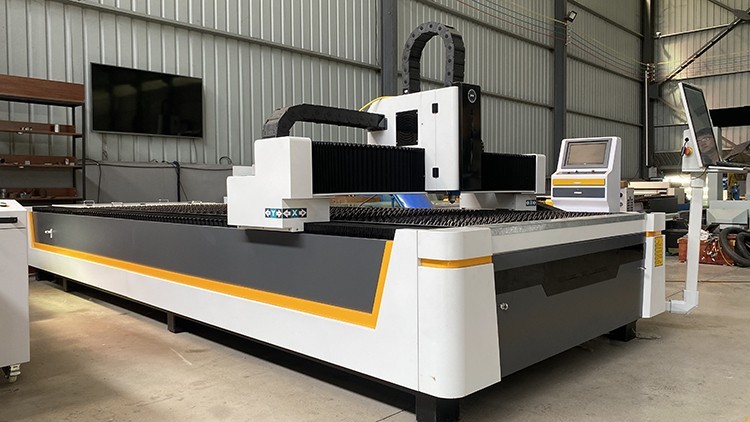
Traditional shearing machines can only achieve linear cutting, while CNC shearing machines can complete complex trajectory cutting such as oblique cutting and arc cutting through multi axis (X/Y/Z axis) linkage control. For example, by using CNC programming to control the synchronous movement of the rear stop plate and the tool holder, precise cutting of irregular plates can be achieved, reducing subsequent processing steps and shortening single piece processing time by more than 30%.
The CNC shearing machine is equipped with high-precision sensors (such as laser displacement sensors), which can monitor the blade gap, plate thickness, and deformation in real time, and automatically adjust cutting parameters (such as blade gap compensation value ± 0.05mm) through the CNC system. Dynamic compensation technology can eliminate dimensional deviations caused by uneven thickness or thermal deformation of the board, achieving cutting accuracy within ± 0.1mm and significantly improving product qualification rate.
The CNC shearing machine supports fast mold changing function, and can complete the clamping and positioning of different specifications of plates within 5 minutes through electric fixtures or pneumatic positioning devices. Combined with the program switching function of the CNC system, continuous processing of multiple types of sheet metal can be achieved without the need for manual adjustment of equipment parameters. The changeover time is reduced by 80%, making it suitable for small batch and multi variety production modes.
Through process optimization, non cutting time (such as clamping and measurement) and material loss can be reduced, directly improving the production line efficiency of CNC shearing machines.
Using CAD/CAM software to generate cutting paths and verifying program feasibility through offline simulation functions can avoid collisions or incorrect cutting during on-site debugging. The automatic programming function can shorten the programming time from 2 hours in the traditional way to 10 minutes, while reducing material waste caused by program errors.
The CNC shearing machine supports nested cutting algorithms, and by optimizing the sheet metal nesting methods (such as rectangular nesting and irregular nesting), the material utilization rate can be increased from 75% in traditional methods to over 90%. For example, for a 2m × 1m board, nested cutting can cut 2-3 more parts, saving material costs up to 10% -15% annually.
The CNC shearing machine can achieve continuous cutting (such as automatic feeding and unloading), reducing manual intervention. By adjusting the cutting speed (such as a blank line speed of 1000mm/s and a cutting speed of 200mm/s) and acceleration (such as 500mm/s ²), the single piece processing cycle can be shortened to one-third of traditional equipment, and the production cycle can be increased to 15 seconds per piece.
The CNC shearing machine can achieve transparency in the production process through data acquisition and analysis, providing a basis for efficiency optimization.
The CNC shearing machine is equipped with an IoT module, which can collect real-time equipment operation data (such as cutting frequency, fault code, energy consumption) and production data (such as processing quantity, pass rate). By integrating data through the MES system (Manufacturing Execution System), production reports (such as daily output and equipment utilization) can be generated to provide decision support for production scheduling.
Based on device operating data (such as vibration, temperature, current), predict component life (such as remaining blade life, servo motor failure probability) through machine learning algorithms. Predictive maintenance can arrange maintenance plans in advance to avoid unplanned downtime, and the overall equipment efficiency (OEE) can be improved by 20% -30%.
It can record the cutting parameters (such as blade clearance, cutting speed) and quality data (such as size deviation, burr height) of each product. Through the quality traceability system, the root cause of quality problems (such as incorrect parameter settings or blade wear) can be quickly identified, and the cutting process of the CNC shearing machine can be optimized to reduce the rate of defective products.
The intelligent maintenance function of the CNC shearing machine can reduce equipment failures and ensure the continuous operation of the production line.
The CNC system has a built-in self diagnostic function that can detect fault codes in real time (such as E101 indicating tool holder overload and E203 indicating sensor failure), and send the fault information to the maintenance team through a remote communication module. Remote support can quickly locate problems and provide solutions, reducing downtime by more than 50%.
Equipped with an automatic lubrication system (such as a progressive distributor), it can quantitatively supply oil to key parts such as guide rails and screws according to a set cycle (such as every 4 hours), reducing the problem of manual lubrication omission or excess. At the same time, the cooling system of the CNC shearing machine (such as circulating water cooling) can control the blade temperature (≤ 60 ℃), extending the blade service life (from the traditional 500 hours to 2000 hours).
The CNC shearing machine is equipped with safety devices such as gratings and dual hand operation buttons, which can prevent injuries caused by accidental contact by operators. At the same time, by displaying device status and operation instructions through the human-machine interface (HMI), the training time for new employees is reduced (from the traditional 2-week approach to 3 days), and production flexibility is improved.
 Address:Room 1202, Detaitang Building, No. 118 Huaguang Road, Zhangdian District, Zibo, Shandong
 WhatsApp:+8615653328535
 Wechat: +8615965331535
  E-mail:zs@sdsmachinery.com