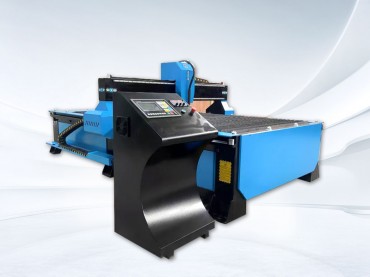
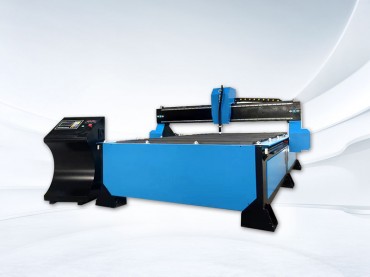
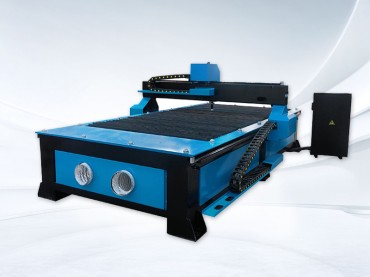
In the field of modern metal processing, plasma cutting machines have become indispensable equipment due to their high efficiency and precision. However, when there is rust on the surface of the cutting material, it will have a series of chain effects on the cutting process, equipment life, and final processing quality. It is crucial to scientifically assess these impacts and take effective measures to ensure smooth production.
1. The impact mechanism of rust on cutting quality
As an oxide on the metal surface, rust has completely different physical and chemical properties from the substrate, which directly affects the stability and energy transfer efficiency of plasma arc.
When the plasma arc encounters the rust layer, due to the much lower conductivity of the rust layer compared to clean metal, the arc needs to first penetrate the unstable surface of this layer before it can reach the substrate. This process can lead to the dispersion of arc energy, and the incision is prone to oblique angles - the phenomenon of a wider upper and narrower lower slope incision is exacerbated. At the same time, the uneven distribution of rust can cause the drift of the arc attachment point, directly increasing the roughness of the cutting surface and forming obvious cutting ripples.
In terms of slag hanging, the influence of rust is particularly prominent. Due to rust changing the thermal conductivity and melting characteristics of materials, the fluidity of molten metal will deteriorate. These molten substances cannot be smoothly discharged from the cutting seam during the cooling process, resulting in the formation of hard slag at the bottom of the board. This not only increases the workload and time cost of subsequent cleaning, but may also affect the assembly accuracy of the workpiece.
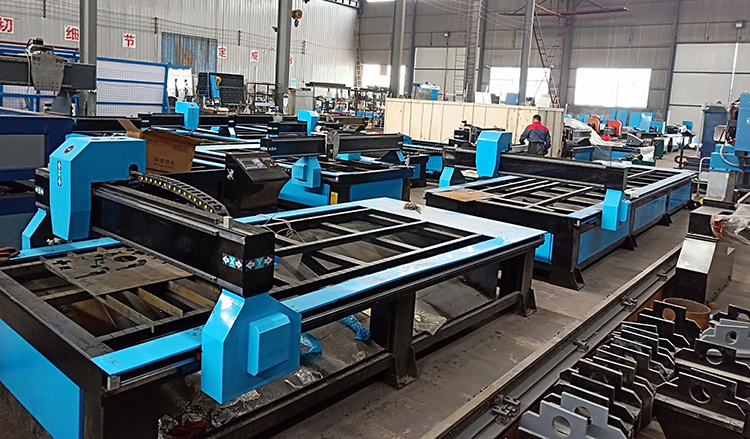
2. Potential hazards to equipment systems
The damage of rust to the plasma cutting machine body is often overlooked, but this damage is gradual and cumulative.
The most direct impact is reflected in the shortened lifespan of consumables. As the core vulnerable parts of plasma cutting machines, electrodes and nozzles face more stringent working environments when cutting rusted plates. The metal vapor generated by the vaporization of rust at high temperatures can accelerate the erosion of electrodes, while the splashing rust slag may adhere to the inner wall of the nozzle, damaging its precise geometric shape, leading to turbulent gas flow fields and unstable arcs. Practice has proven that operating with rust can reduce the lifespan of consumables by more than 30% under the same cutting time.
The threat of cutting torches should not be underestimated. In the process of automatic cutting, if relying on a contact type height adjuster, the rust layer will interfere with the initial height perception accuracy, which may cause collisions between the cutting nozzle and the sheet metal. The hot rust slag splashing everywhere is more likely to adhere to the protective cap of the cutting torch, and long-term accumulation may cause gas channel blockage, and even damage sensitive capacitor regulators.
3. Comprehensive evaluation and response plan
Establishing a systematic evaluation system is a prerequisite for effectively managing the impact of rust. Assessment should start with the condition of the materials and develop corresponding strategies based on the degree of corrosion. For slight floating rust, modern high-power plasma systems can usually effectively penetrate and ensure basic cutting quality; But for thick layered rust, especially those that have already peeled off, pre-treatment is necessary.
In terms of adjusting process parameters, operators need to consider appropriately increasing power output to compensate for energy loss caused by rust layers. The gas pressure may also need to be adjusted accordingly to ensure sufficient kinetic energy to blow away molten rust slag. However, this method will synchronously accelerate the wear of consumables, requiring a balance between cutting quality and cost.
From an economic perspective, it is necessary to balance the relationship between pre-processing costs and cutting loss costs. When rust problems seriously affect product quality or maintenance costs of plasma cutting machines, investing in sheet metal pretreatment equipment will become a more economical choice. For occasions that pursue high-precision cutting, such as the subsequent precision machining process after cutting with a punch press, uniform cleaning of the sheet metal can better ensure process stability.
It is worth noting that in cutting scenarios involving pre processed materials such as punching machines, the evaluation dimension needs to be further expanded. If the parts processed by punching have a long inventory cycle, the corrosion condition must be carefully evaluated before cutting. At the same time, there is usually a work hardening layer on the edge of the punched material, and the corrosion behavior in this area may be different from other parts of the sheet, which requires special attention.
The impact of rust on plasma cutting machines is a systematic issue involving cutting quality, equipment loss, and overall cost. By establishing a scientific evaluation process - from material condition judgment to process parameter optimization, and then to full process economic analysis - operators can develop the most suitable response strategies for their own production conditions. Especially in automated production lines that integrate punch presses and other preceding processes, incorporating rust prevention management into the entire process chain can maximize production efficiency and product quality, and achieve optimization of the entire metal processing process.

 Address:Room 1202, Detaitang Building, No. 118 Huaguang Road, Zhangdian District, Zibo, Shandong
 WhatsApp:+8615653328535
 Wechat: +8615965331535
  E-mail:zs@sdsmachinery.com