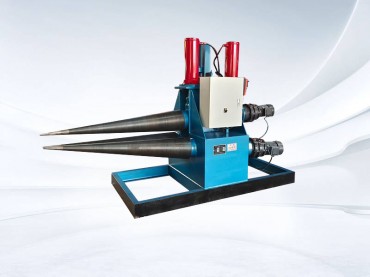
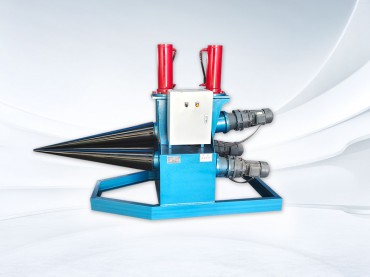
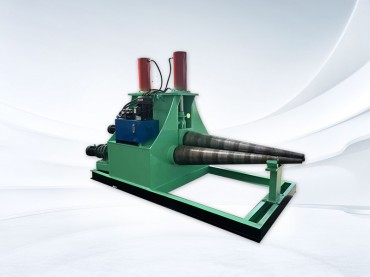
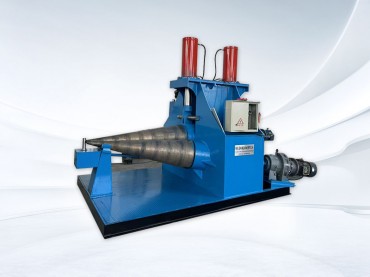
In the vast field of industrial manufacturing, cone rolling machines occupy an important position with their unique functions. Whether it is the precise molding of ventilation ducts, the precise construction of containers, or the unique design of architectural decoration, cone rolling machines play an indispensable role. It is like a magical "stylist" who can cleverly roll ordinary flat materials into conical workpieces to meet diverse production needs. However, for many operators who are new to the cone rolling machine, how to use this equipment correctly has become a major challenge. Don't worry, we will now reveal in detail the usage method of the cone rolling machine for you.
1. Safety check and parameter configuration before starting the cone rolling machine
1. Equipment status confirmation: Check the oil level of the hydraulic system of the cone rolling machine (above 2/3 of the oil window), ensure that the electrical cabinet wiring is not loose, and that the emergency stop button is sensitive. For example, if the hydraulic oil temperature exceeds 70 ℃, the machine needs to be shut down for cooling to avoid damage to the seals.
2. Mold matching installation: Select the corresponding angle of the upper and lower roller molds according to the workpiece taper (such as 20 °), use a torque wrench to tighten the bolts to 50-60N · m, and ensure that the coaxiality between the mold and the equipment spindle is ≤ 0.3mm.
3. Process parameter setting: Input the sheet thickness (adjustable from 2-8mm), material (such as Q345B low-alloy steel), target taper (within the range of 10 ° -25 °), and length (≤ 5.8 meters for maximum 6-meter models) on the control panel, and the system will automatically generate a downforce curve (usually the first downforce accounts for 60% of the sheet thickness and the last 20%).
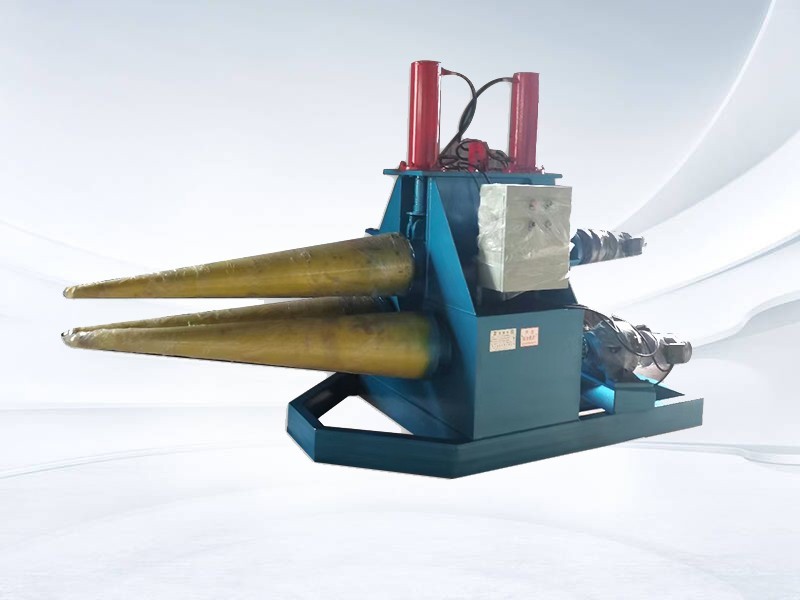
2. Plate positioning and initial forming of cone rolling machine
1. Plate fixing alignment: Place the plate to be processed (width ≤ 1200mm) flat on the feeding platform, fix one end with an electromagnetic suction cup, and adjust the deviation between the center line of the plate and the center line of the lower roller by laser positioning line to ≤ 0.8mm to prevent rolling deviation.
2. Pre pressing to eliminate gaps: Start the hydraulic system and lower the upper roller at a speed of 5mm/s to contact the sheet metal. Apply initial pressure (rated pressure 15%) for 3 seconds to ensure that the sheet metal is fully adhered to the roller and reduce subsequent deformation errors.
3. Segmented test paper: First roll the paper to a length of 0.5 meters, measure the actual taper with a taper ruler, compare it with the target value (allowable deviation ± 1 °), and adjust the side roller pressure (increase or decrease by 5% each time) or the upper roller downward pressure (0.2mm each time) if it exceeds the tolerance.
3. Dynamic Rolling and Quality Monitoring of Cone Rolling Machine
1. Main roller drive control: Start the main motor (speed 8-10r/min), the lower roller drives the sheet metal to rotate, the upper roller gradually applies pressure according to the preset curve, and synchronously opens the cooling system (flow rate ≥ 15L/min) to prevent the material from overheating and causing a decrease in hardness.
2. Real time taper correction: For each roll with a length of 1 meter, use a laser rangefinder to detect the diameters of the large and small ends and calculate the actual taper. If the taper deviation is found to be greater than 0.5 °, immediately pause and correct it by adjusting the inclination angle of the side roller (within ± 2 ° range) or the upper roller pressure.
3. Stress relief treatment: When rolling to the last 0.3 meters, reduce the speed of the lower roller to 3r/min and slowly complete the finishing process to avoid workpiece rebound caused by sudden shutdown.
4. Finished product inspection and equipment maintenance of cone rolling machine
1. Material removal and size verification: After the rolling is completed, the upper roller is lifted and the lower roller is reversed 2 times to loosen the workpiece, which is slowly lifted out with a sling. The measurement error of the finished product length is ≤± 2mm, the taper error is ≤± 0.8 °, and there are no wrinkles or cracks on the surface.
2. Cleaning and maintenance: Remove residual iron filings on the surface of the rollers, wipe the oil stains on the hydraulic station with a dry cloth, replace the filter element once a month, and check the hydraulic oleic acid value quarterly (≤ 0.8mgKOH/g).
3. Data recording: Record the material, parameters, and quality of the batch of workpieces, establish equipment usage records, and provide a basis for subsequent process optimization.
Although the use of a cone rolling machine involves multiple steps and precautions, as long as the operator strictly follows the specifications, prepares before use, masters the operating steps, promptly solves common problems, complies with safety precautions, and performs maintenance, the performance of the cone rolling machine can be fully utilized to produce high-quality conical workpieces. I believe that through today's introduction, you have a clear understanding of how to use the cone rolling machine. Let us use the cone rolling machine as a powerful tool to constantly create new wonders on the path of industrial manufacturing.

 Address:Room 1202, Detaitang Building, No. 118 Huaguang Road, Zhangdian District, Zibo, Shandong
 WhatsApp:+8615653328535
 Wechat: +8615965331535
  E-mail:zs@sdsmachinery.com