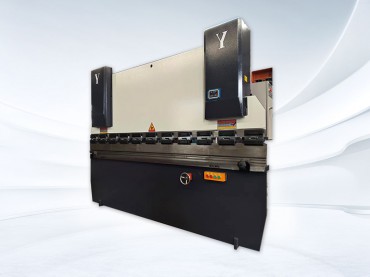
As the manufacturing industry's requirements for productivity, product precision and cost control continue to rise, the field of sheet metal processing has ushered in a huge technological change. From the traditional bending process, which relies on a large number of manual operations, to the more efficient and accurate
automated bending technology conversion. This transformation not only improves production efficiency, but also greatly improves the accuracy and consistency of sheet metal processing, bringing new opportunities for business development.
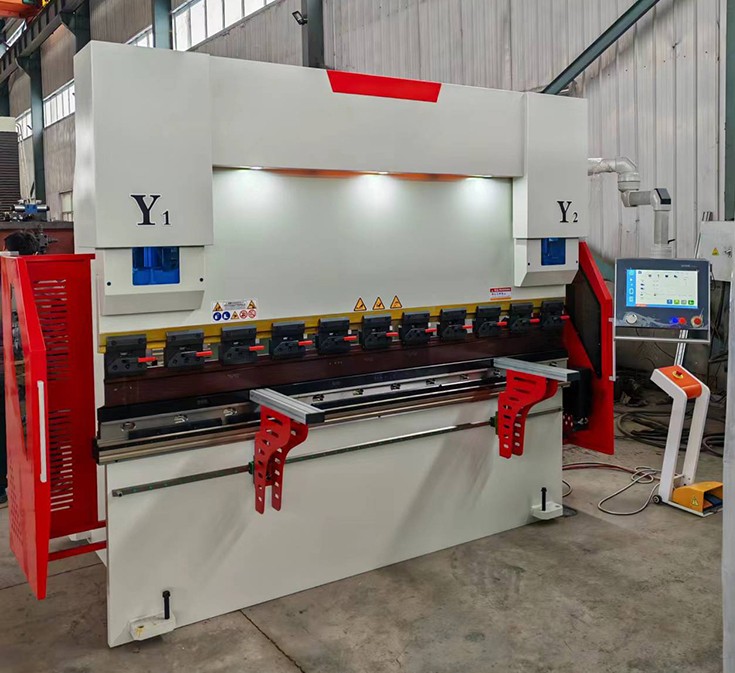
1.Manual Bending Machine
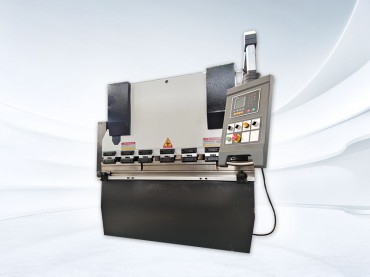
Manual bending machine is a simple operation, the lower price of the bending machine, manual bending machine is mainly characterized by manual operation of the machine to complete the bending, easy to operate, suitable for a single shape, small batch production. Its use is very wide, especially for small workshops, maintenance points and personal DIY applications, can use manual bending machine. Manual bending machine can be metal or plastic sheet bending, can realize a variety of bending shapes, very flexible.
2.Automatic bending machine
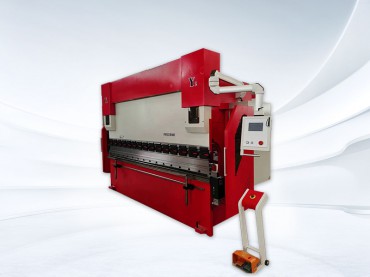
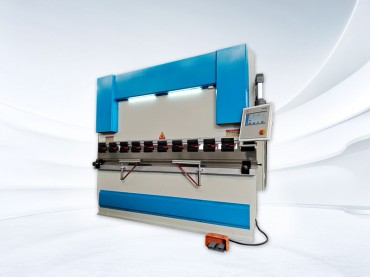
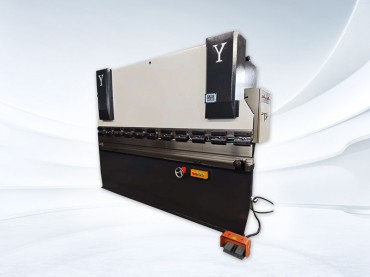
Automatic bending machine is a widely used bending machine, mainly characterized by a high degree of automation and high productivity. Automatic bending machine can realize the continuous bending of long materials, completely without manual intervention, saving labor costs and time costs.
Suitable for mass production, can be widely used in automobile manufacturing, aircraft manufacturing, electronic and electrical appliances, light industry machinery and other industries. Automatic bending machine in the bending process, you can accurately control a variety of parameters, such as bending angle, bending speed, bending force, etc., can achieve a variety of bending shapes.
3. The difference between manual bending and automatic bending
(1) efficiency and production capacity comparison
Automatic bending machine efficiency is significant: automatic bending through the programming to achieve fully automated operation, single-piece processing time can be shortened to 10-15 seconds, while the manual mode takes 30-60 seconds. Batch production, automatic bending machine capacity up to 3-5 times the manual, especially suitable for automotive, home appliances and other standardized parts of large-scale manufacturing.
Manual bending flexibility: manual mode without programming debugging, suitable for single-piece or very small batch production. For example, when processing non-standard sheet metal parts in a maintenance shop, it may be faster to adjust the mold and angle manually.
(2) Differences in precision and consistency
Precise control of automatic bending: CNC system through the servo motor and scale feedback, repeatable positioning accuracy of up to ± 0.1mm, and is not affected by operator fatigue.
Manual bending machine dependent factors: manual operation accuracy depends on manual experience, the error is usually more than ± 0.5mm. Complex curves bending, the need for multiple trial and error, material waste rate is higher than the automatic mode of about 8% -12%.
4. Advantages and disadvantages of manual bending
Advantages:
(1) low cost: the initial investment is low, the cost of equipment is not high, the operating cost is low.
(2) Simple operation: simple operating interface, low technical requirements, even inexperienced operators can quickly get started.
(3) Suitable for small batch production: flexible operation, can quickly adapt to the needs of different products.
Disadvantages:
(1) Lower efficiency: due to the reliance on manual operation, manual bending machine production is slow and relatively inefficient.
(2) Poor accuracy: the limitations of manual operation make the accuracy poor, manual bending often can not guarantee the same accuracy of each bending, prone to error.
(3) labor-intensive: manual bending requires operators to constantly carry, adjust, bend and other labor, especially when dealing with large-size or heavy metal plate, and easy to operate fatigue.
5. Advantages and disadvantages of automated bending
Advantages:
(1) efficient and stable: automated bending system can complete a higher number of tasks in a shorter period of time, and can maintain a constant and stable production efficiency.
(2) high accuracy: through the CNC system control, automated bending can accurately control each bending process to ensure that the product size and angle to maintain consistency, reducing errors due to human factors.
Disadvantages:
(1) high initial investment: the initial purchase and installation costs of automated bending equipment is high, which may be a greater financial burden for small and medium-sized enterprises.
(2) High technical threshold: automated bending equipment requires skilled technicians to operate and maintain. Operators not only need to master basic machine operation, but also need to have a certain degree of programming ability and equipment maintenance skills, increasing the training costs of enterprises.
With the continuous development of automation technology, more and more enterprises tend to adopt automation equipment to enhance productivity and market competitiveness. Choosing the right bending method depends on the enterprise's production scale, budget, and product precision requirements.
If you need a bending machine please contact us, we recommend the right machine and give you a quote.

 Address:Room 1202, Detaitang Building, No. 118 Huaguang Road, Zhangdian District, Zibo, Shandong
 WhatsApp:+8615653328535
 Wechat: +8615965331535
  E-mail:zs@sdsmachinery.com