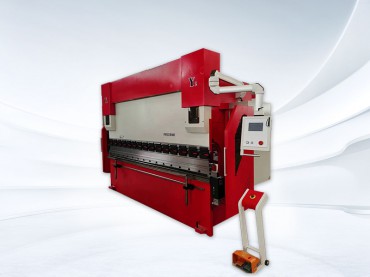
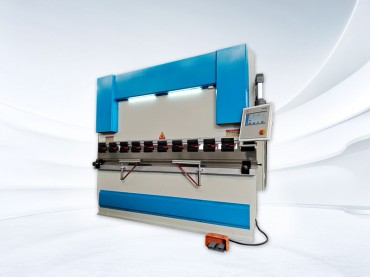
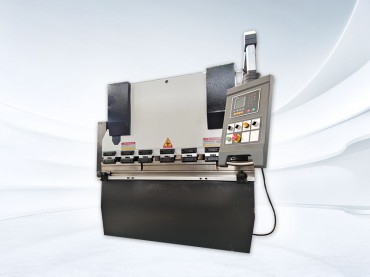
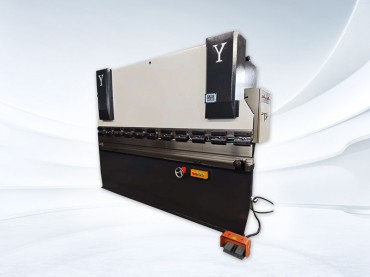
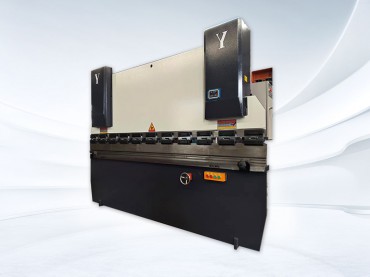
Metal bending is an important process in sheet metal processing, which is widely used in automotive manufacturing, construction, home appliance industry and many other fields. As the most common sheet metal bending equipment, the bending machine has become an important production tool for many manufacturing companies due to its high efficiency and precision. With the development of technology, the working methods and bending methods of bending machines have become more diversified. So what is the best way to bend sheet metal with a bending machine? This post will chat about these issues and some bending tips.
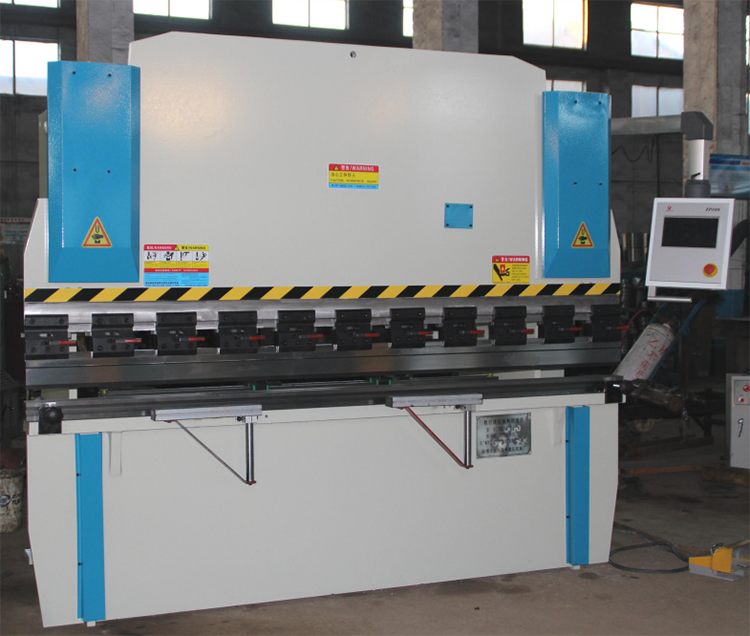
1. The working principle of the bending machine
The bending machine usually consists of a lower die and a punch, the workpiece is placed on the lower die, the punch with a certain pressure on the workpiece, so that the metal plate is bent into the desired angle. When operating a bending machine, the workpiece is subjected to a certain pressure in the die. When the pressure exceeds the yield strength of the metal, the metal undergoes plastic deformation to form the desired angle.
2. How to achieve the best bending results
2.1. Selecting the right mould
In the bending process of sheet metal, selecting the right mould is crucial to the final result. The optimum mould ensures precision and uniformity of bending. Usually, the operator should select the mould according to the thickness, material and design requirements of the sheet metal. Especially when bending thick plates, the strength and precision of the mould are more demanding, and a strong and wear-resistant mould must be selected to prevent damage or deformation of the mould.
In order to ensure that the bending effect is good, the ratio of the radius of the mould to the thickness of the plate should be reasonably selected according to the modulus of elasticity of the material. For softer materials, the radius of the mould can be smaller; for harder materials, a larger radius of the mould is needed to avoid cracks or defects.
2.2. Reasonable adjustment of the gap between the upper and lower moulds
The gap between the upper and lower moulds directly affects the bending effect. The gap is too small, the sheet metal may crack, or can not bend; gap is too large, the bending accuracy is poor. The best gap should be set according to the thickness of the material, in general, the thickness of the material 10 times for the more ideal mould gap. For example, the thickness of 10mm sheet metal, the mould gap should be set to 100mm. by precisely adjusting this parameter, can significantly improve the bending accuracy.
2.3. Control bending angle and pressure
Bending angle and pressure are two key parameters that affect the bending effect. Select the right bending angle, apply the right pressure, in order to make the shape of the metal plate after bending symbol design requirements.
Bending angle: To achieve the desired result, the operator should set the bending angle according to the design drawings. Usually, metal materials will rebound when bending, and high-strength materials are especially obvious. In practice, it is necessary to bend a little more appropriately so that the metal can reach the final angle after rebound.
Apply pressure: According to the thickness and hardness of the plate, adjust the pressure of the bending machine appropriately. Too much pressure, a waste of energy, but also may make the metal plate deformation is excessive, affecting the accuracy; pressure is too small, it may lead to incomplete bending, affecting product quality.
2.4. Optimise the bending sequence and techniques
When dealing with complex or large-size metal plates, a reasonable bending sequence can greatly improve work efficiency and bending quality. It is generally recommended to start bending from the centre of the sheet, and then slowly bend towards the edges. This can reduce the deformation of the plate caused by uneven pressure.
Moreover, for some products with special requirements, the operator should be based on the actual situation, bending several times, gradually pressurised, so that the pressure on the metal plate is uniformly distributed, to avoid unnecessary stress during bending.
3.How to deal with common problems in sheet metal bending
In practice, sheet metal bending often faces a number of challenges, like springback, uneven bending, and material cracking. The following are solutions to these problems:
3.1 Addressing springback
Springback is one of the most common problems in sheet metal bending, especially with high-strength materials. To reduce springback, the operator can solve the problem by increasing the overbend. Overbend means that the bending angle is deliberately adjusted slightly larger during the bending process so that the final target angle is reached after springback.
In addition, the rebound effect can be further optimised by adjusting the radius and clearance of the mould. Through repeated experiments and adjustments, the optimal bending parameters can be found to significantly reduce the rebound phenomenon.
3.2 Solving the problem of uneven bending
Uneven bending is usually caused by inaccurate mould alignment or uneven pressure distribution. The key to solving this problem is to ensure that the bending machine equipment is stable and the mould alignment is accurate. Operators should regularly check the wear and tear of the equipment and moulds, and maintain and calibrate them in time.
3.3 Coping with material cracking
Cracking of sheet metal is usually due to excessive pressure, inappropriate radius of the mould or high tensile strength of the material itself. When encountering this situation, the operator can reduce the pressure appropriately, increase the radius of the mould, or change to a more suitable material to solve the problem. In addition, a number of times slowly pressure, rather than a time with a lot of pressure, can also effectively avoid material cracking.
Bending machine technology is constantly advancing, new methods and optimisation means continue to appear, bringing more choices to the metal processing industry.
If you need a bending machine, please contact us.

 Address:Room 1202, Detaitang Building, No. 118 Huaguang Road, Zhangdian District, Zibo, Shandong
 WhatsApp:+8615653328535
 Wechat: +8615965331535
  E-mail:zs@sdsmachinery.com