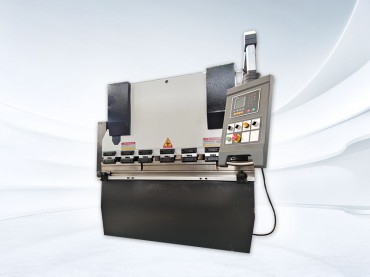
Setting industry quality standards, we have dedicated over a decade to the manufacturing of bending machines. Today, we present the advantages of servo motors in bending machines:
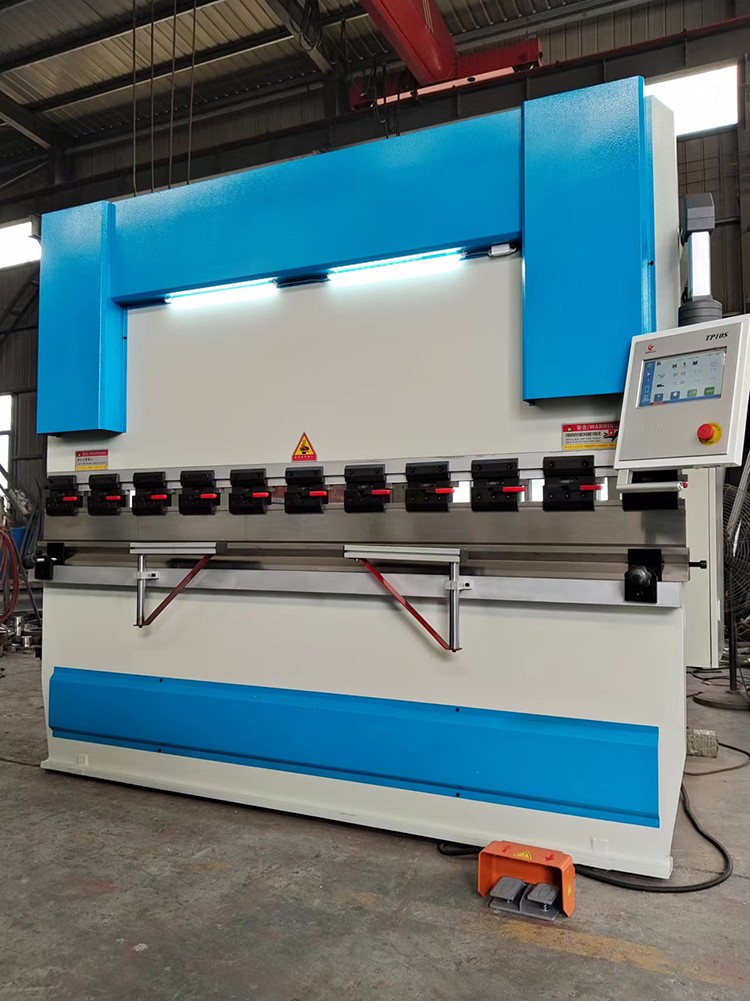
As a core piece of equipment in sheet metal processing, the precision, efficiency, and stability of bending machines directly impact product quality and production efficiency. In recent years, the application of servo motor technology has significantly enhanced the performance of bending machines. Compared to traditional hydraulic or conventional motor drive systems, servo motors offer clear advantages in terms of control precision, energy consumption, response speed, and maintenance costs.
1, High-precision control improves processing quality.
The core advantage of servo motors lies in their precise position and speed control capabilities. Bending processing has extremely strict requirements for angles and dimensions. Traditional hydraulic systems are easily affected by factors such as oil temperature and pressure fluctuations, which can cause errors. Servo motors use closed-loop control and real-time position feedback from encoders to ensure precise slide block movement trajectories, with repeat positioning accuracy of up to ±0.01 mm, effectively reducing product deviations.
Additionally, servo motors enable flexible acceleration and deceleration, preventing material deformation or mold wear caused by mechanical impact. In complex bending processes, such as multi-step bending or processing of irregularly shaped parts, the servo system can precisely adjust the speed and pressure at each stage, ensuring stable forming quality.
2, Energy-efficient and cost-effective
Traditional hydraulic bending machines maintain high energy consumption even during standby or low-speed operation, while servo motors only consume electricity during operation and have minimal energy loss when stationary. Due to the use of direct drive or high-efficiency transmission structures, the energy utilization rate of servo systems can exceed 90%, achieving energy savings of 30%-50% compared to hydraulic systems.
At the same time, servo motors reduce the use of hydraulic oil, avoiding the costs associated with oil leakage, contamination, and regular replacement. Over the long term, lower power consumption and maintenance costs significantly reduce overall production costs.
3, Fast response speed, improving production efficiency
The dynamic response capability of servo motors far exceeds that of traditional drive methods. During the bending process, the slide block needs to start, stop, and change speed frequently. The servo system can adjust the speed in milliseconds, significantly reducing idle time. Especially in high-speed bending mode, servo-driven bending machines can complete more presses per minute, improving production efficiency by more than 20%.
Additionally, servo motors support quick die change and parameter storage functions. When switching between different workpieces, users only need to call up pre-set programs, reducing manual adjustment time and accommodating the flexible production requirements of small batches and multiple varieties.
4, Simplified structure, reduced maintenance difficulty
Hydraulic press brakes rely on complex oil circuits, pump valves, and sealing systems, which have many failure points and high maintenance costs. Servo motor-driven press brakes use mechatronic design to reduce hydraulic components, lowering the risk of leakage and mechanical wear. Due to the simplified structure, daily maintenance only requires regular inspection of the motor, guide rails, and transmission components, greatly reducing downtime.
Servo motors also have self-diagnostic functions that can monitor loads, temperatures, and operating conditions in real time, providing early warnings of potential faults to facilitate preventive maintenance and extend equipment service life.
5, Intelligent integration, suitable for automated production
The modern manufacturing industry has a growing demand for automation and intelligence. Servo motors can be seamlessly integrated with CNC systems to achieve high-precision programming control. Through the coordination of sensors and software, servo bending machines can automatically compensate for material springback and adjust bending force to ensure consistency in batch production.
In automated production lines, servo motors can be integrated with robots, feeders, and other equipment to achieve fully automated material handling and continuous processing, reducing manual intervention and improving the overall efficiency of the production line.
The application of servo motors in bending machines not only improves processing accuracy and efficiency but also reduces energy consumption and maintenance costs, meeting the modern manufacturing industry's demand for intelligent and flexible production. With the continuous optimization of servo technology, the performance of bending machines will further improve in the future, bringing greater benefits to the sheet metal processing industry. For enterprises, choosing a servo-driven bending machine is not only a technological upgrade but also an important measure to enhance competitiveness.
If you are interested in bending machines, please contact us.
 Address:Room 1202, Detaitang Building, No. 118 Huaguang Road, Zhangdian District, Zibo, Shandong
 WhatsApp:+8615653328535
 Wechat: +8615965331535
  E-mail:zs@sdsmachinery.com