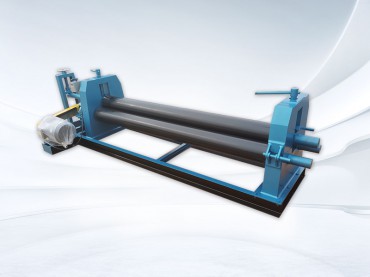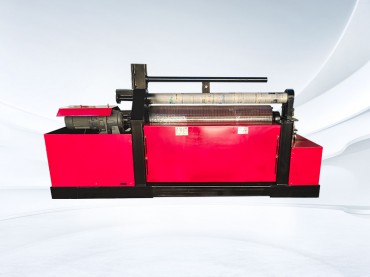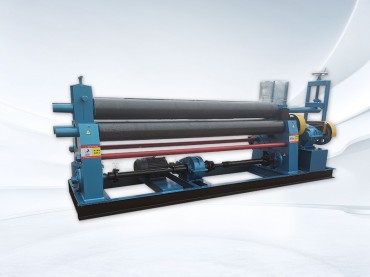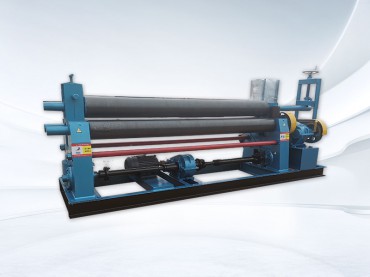
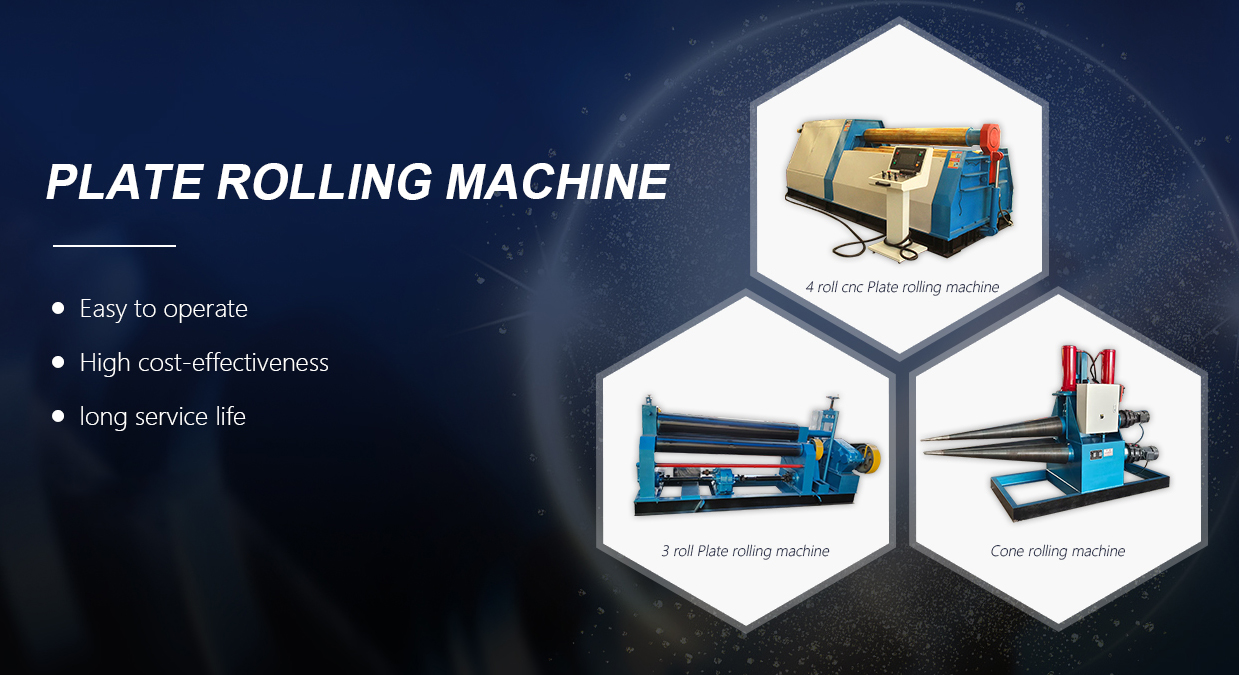
Behind our industry-leading position lies over a decade of dedicated expertise in plate rolling machine manufacturing. Today, we reveal the advantages of four-roll plate rolling machines in precision processing:
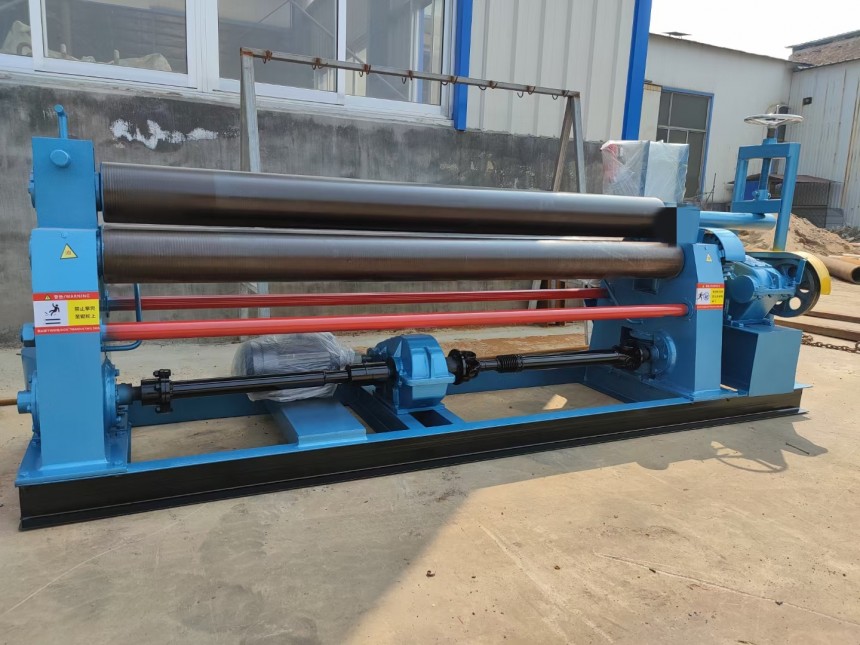
In the field of modern industrial manufacturing, precision forming of metal sheets is a fundamental process for many industries. As a key piece of equipment in sheet metal processing, the four-roll plate rolling machine demonstrates significant advantages in precision processing due to its unique structure and operating principles. This article will analyze the technical characteristics of the four-roll plate rolling machine in precision processing from four aspects: Processing accuracy, operational control, application scope, and finished product quality.
From a mechanical structural perspective, the four-roll plate rolling machine features an upper roll that actively rotates, with adjustable side rolls, combined with a bottom support roll to form a stable four-point load-bearing system. This structure effectively distributes stress during plate deformation, preventing excessive local deformation during the bending process. Compared to three-roll models, the additional support roll significantly enhances the machine's control over the sheet material, particularly benefiting the processing of thin sheet materials. When processing metal sheets with a thickness of 3 millimeters or less, the four-roll structure effectively suppresses surface indentations and scratches, ensuring a smooth surface finish after forming.
In terms of processing precision control, the advantages of the four-rollplate rolling machine are primarily reflected in three aspects. First, precise control of the bending radius is achieved by independently adjusting the positions of the rollers on both sides, enabling precise bending at smaller radii. Second, straightness is ensured through a four-point support system that effectively prevents material deviation during the feeding process. Third, angle consistency is ensured through the coordinated operation of multiple rolls, guaranteeing uniform bending angles along the entire length of long workpieces. These features enable the equipment to meet the stringent dimensional tolerance requirements for components in industries such as aerospace and precision instruments.
In terms of operational performance, four-rollplate rolling machines demonstrate high human-machine coordination. Modern models are generally equipped with CNC systems, allowing operators to preset bending parameters via a human-machine interface, with the system automatically calculating the roll axis displacement trajectory. This automated control not only reduces the difficulty of operation, but more importantly, reduces the impact of human factors on processing accuracy.In semi-automatic mode, the equipment allows operators to fine-tune parameters based on real-time forming conditions. This flexible control method is particularly suitable for small-batch, multi-variety production requirements. At the same time, the symmetrical design of the four-roller structure allows for bidirectional feeding of sheet metal, eliminating the pre-bending process required by traditional models and improving production efficiency.
In terms of material adaptability, the four-roll plate rolling machine demonstrates a wide range of applications. In addition to conventional carbon steel and stainless steel, it offers particular advantages in processing soft metals such as copper alloys and aluminum alloys. Due to the large adjustable range of roll shaft spacing, the same machine can handle both thick structural components and ultra-thin sheets requiring precise forming.This feature reduces the investment costs for companies purchasing specialized equipment. When processing special materials, such as shape memory alloys or composite materials, the progressive bending method of the four-roll structure better protects the internal structure of the material and prevents performance damage caused by sudden stress.
From the perspective of finished product quality, workpieces processed by a four-roll plate rolling machine exhibit two prominent characteristics. First, dimensional stability is superior, as the uniform stress release makes the springback amount after forming easier to predict and control. Second, the retention of mechanical properties is higher, with relatively mild cold work hardening, which is particularly important for workpieces requiring subsequent welding or heat treatment. In mass production, this quality stability directly impacts product qualification rates and consistency, delivering significant economic benefits to enterprises.
It is worth noting that the advantages of four-rollplate rolling machines depend on correct use and maintenance. Operators need to set bending parameters reasonably according to material characteristics and regularly check the parallelism and surface condition of the roll shafts. The focus of equipment maintenance is on the hydraulic system and bearing components. Maintaining the precision of all moving parts is the key to ensuring long-term stable processing.
As the manufacturing industry transitions toward high-quality development, the demand for precision in metal forming continues to rise. Four-roll plate rolling machines, with their high precision and adaptability, are playing an increasingly important role in precision machining. Their applications span various industries, from automobile manufacturing to new energy equipment, and from architectural decoration to electronics and appliances, with their scope of application continuing to expand. In the future, with the deeper integration of intelligent control technology, the performance of four-roll plate rolling machines will further improve, providing more reliable technical support for precision manufacturing.
If you are interested in plate rolling machines, please contact us.
 Address:Room 1202, Detaitang Building, No. 118 Huaguang Road, Zhangdian District, Zibo, Shandong
 WhatsApp:+8615653328535
 Wechat: +8615965331535
  E-mail:zs@sdsmachinery.com