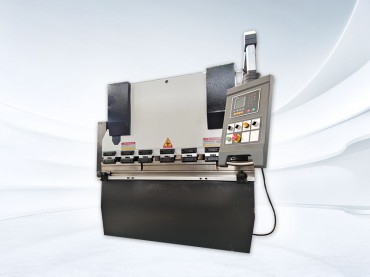
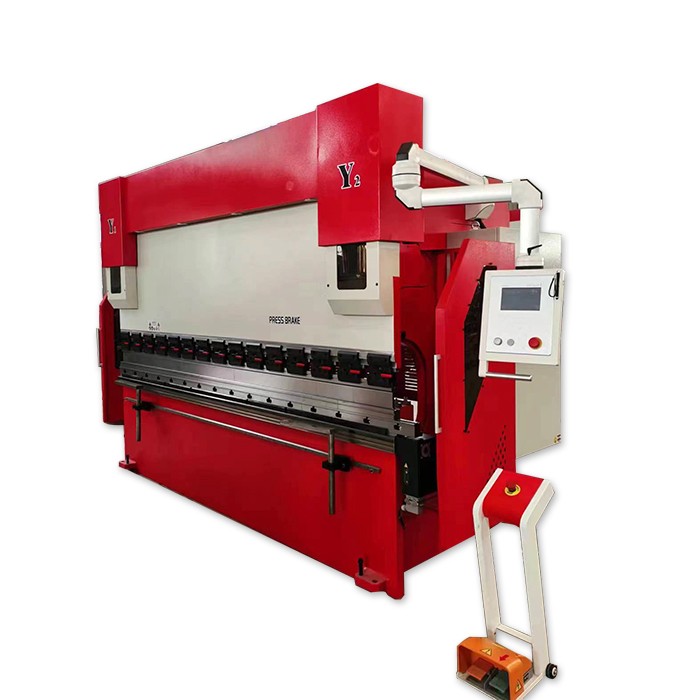
As a professional bending machine manufacturer with over 10 years of development and experience, today we would like to introduce the differences in the processes for bending machine’s aluminum and copper sheets and the corresponding solutions:
Material properties and process differences
Aluminum and copper are two common types of metal sheets that exhibit distinctly different properties during bending processes. Aluminum is lightweight and soft with good ductility, but its surface is prone to scratches; copper, on the other hand, combines excellent conductivity with moderate hardness, but tends to exhibit springback during processing. These fundamental differences directly necessitate adjustments to processing techniques. We are a professional bending machine manufacturer with over 10 years of industry experience. Today, we would like to introduce the process differences and solutions for bending aluminum and copper sheets:
In terms of bending force requirements, copper plates of the same thickness require greater bending pressure than aluminum plates. This is because copper generally has a higher yield strength than aluminum. For example, a 2mm-thick 5052 aluminum alloy may only require 20 tons of pressure to complete a 90-degree bend, while a copper plate of the same thickness may require more than 30 tons of pressure. This difference requires operators to precisely adjust machine parameters according to the type of material.
Springback occurs in both materials, but manifests differently. Aluminum, with its lower elastic modulus, exhibits more noticeable springback after bending. Copper, while exhibiting relatively less springback, experiences significant work hardening, causing springback to gradually increase after multiple bends. This requires technicians to adopt different bending compensation strategies for the two materials.
In terms of surface treatment, aluminum is prone to scratches and indentations during the bending process, especially anodized aluminum sheets. Copper, on the other hand, is mainly susceptible to oxidation and discoloration, especially in areas that are frequently touched by fingers. This difference directly affects mold selection and production environment control.
Special considerations for aluminum sheet bending
The most prominent issue in aluminum plate bending is surface damage protection. Due to the soft nature of aluminum, even the slightest imperfection on the mold can leave marks on its surface. Solutions include using specialized polyurethane molds or steel molds that have undergone special polishing treatment. For decorative aluminum plates with extremely high requirements, it may even be necessary to apply a protective film to the mold contact surface.
Different processes should be adopted for different series of aluminum alloys. Series 1 pure aluminum has excellent ductility but low strength, so excessive deformation must be prevented during bending. Series 6 aluminum alloys such as 6061-T6 may crack during bending, so it is recommended to pre-anneal them or use a large radius design. Process parameter optimization should follow the basic principles of “low pressure, slow speed, and large radius.”
Special attention should also be paid to the shaping of aluminum plates after bending. Since aluminum has a relatively low degree of work hardening, multiple corrections may cause material fatigue. It is recommended to calculate the springback amount accurately and aim for one-time forming to reduce the number of corrections. For complex shapes, a segmented bending process can be used to allow sufficient time for the material to release stress.
Technical considerations for copper sheet bending
The greatest challenge in copper sheet bending is springback control. Unlike aluminum, copper exhibits nonlinear springback characteristics, rendering conventional compensation methods ineffective. Advanced solutions include using CNC bending machines with angle compensation functionality or employing finite element analysis software to pre-simulate springback behavior. Post-bending shaping of aluminum sheets also requires special attention. Due to aluminum's relatively low degree of work hardening, multiple corrections may lead to material fatigue. It is recommended to precisely calculate springback quantities to achieve one-time forming and reduce the number of corrections. For complex shapes, segmented bending processes can be adopted to allow sufficient stress release time for the material.
Process parameters need to be adjusted for different copper alloys. When bending pure copper, orange peel effects are likely to occur, so the mold finish should be improved. For brass, attention should be paid to the relationship between the bending direction and the rolling direction to avoid cracks. For thick copper plates, preheating can effectively reduce the difficulty of bending, but the temperature must be controlled precisely to avoid affecting the material properties.
The electrical conductivity of copper is often overlooked during the bending process. Induced currents may be generated when bending large copper plates, which can affect the electronic systems of the equipment. Solutions include optimizing equipment grounding and implementing electromagnetic shielding measures. In addition, copper shavings tend to adhere to the mold, so a regular cleaning schedule should be established to maintain the cleanliness of the mold's working surface.
Comprehensive solution
Optimizing the mold system configuration is the basis for solving the bending differences between aluminum and copper. It is recommended to equip a dedicated mold set: use mirror-polished molds with sharp edges for aluminum materials, and slightly rounded, durable molds for copper materials. The mold material should also be differentiated: Cr12MoV steel molds are suitable for aluminum materials, while hard alloy molds are more suitable for copper materials.
The establishment of a process parameter database can greatly improve efficiency. The optimal bending parameters for aluminum/copper plates of different grades and thicknesses are entered into the system, including pressure values, speed curves, and holding time. Operators only need to retrieve the corresponding formula, greatly reducing trial and error costs. This accumulation of data is particularly beneficial for small and medium batch production of multiple varieties.
Environmental control is equally important. The aluminum plate processing area should be kept highly clean to prevent hard particles from causing surface damage; the copper plate processing area should control humidity to slow down the oxidation process. It is best to operate the two materials in separate areas to avoid cross-contamination. For precision parts, it is recommended to process them in a constant temperature and humidity environment.
Staff training is key to implementing the process. Operators must master the ability to “adjust parameters based on material observation.” Through experience-based methods such as observing the surface condition of the material and listening to the bending sound, they can make real-time micro-adjustments to the process. Visual tools such as an “aluminum/copper process difference comparison table” should be established to help employees quickly grasp the key points.
While the bending processes for aluminum and copper sheets may appear similar at first glance, there are numerous subtle yet significant differences between them. Understanding the underlying material science principles behind these differences and translating them into specific process strategies is key to achieving high-quality bending. As new materials continue to emerge, bending processes must also evolve, but the fundamental principle of “adapting techniques to materials” remains unchanged. Through systematic solutions, it is entirely possible to achieve efficient and high-quality processing of both aluminum and copper sheets on the same equipment, meeting diverse production requirements.
If you are interested in bending machines, please contact us.
 Address:Room 1202, Detaitang Building, No. 118 Huaguang Road, Zhangdian District, Zibo, Shandong
 WhatsApp:+8615653328535
 Wechat: +8615965331535
  E-mail:zs@sdsmachinery.com