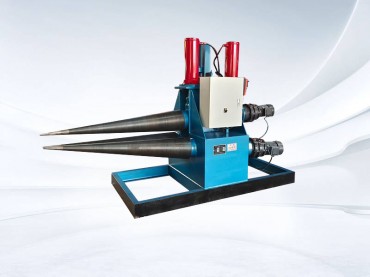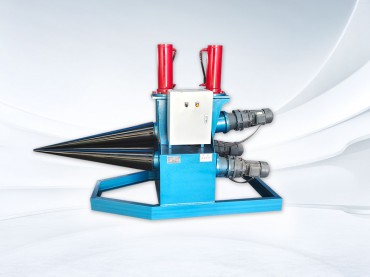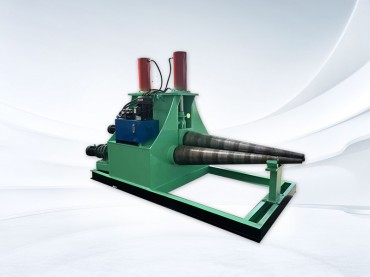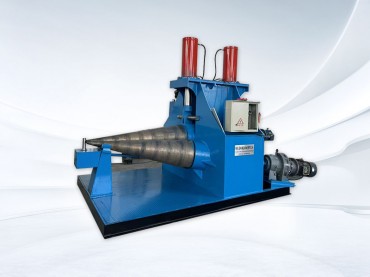
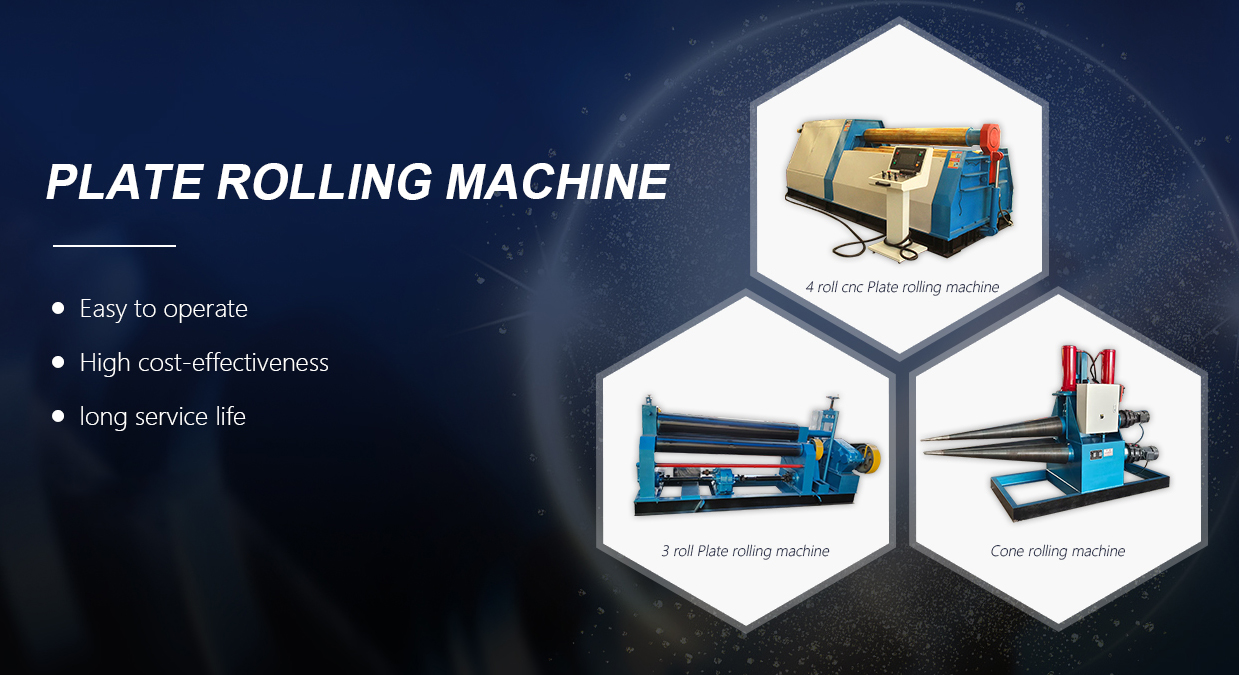
As the metalworking industry continues to evolve, an increasing number of enterprises are focusing on forming equipment characterized by high efficiency, high precision, and advanced automation. In the manufacturing of pressure vessels, ventilation equipment, chemical machinery, conical storage tanks, and pipe fittings, conical forming has emerged as one of the most critical processing techniques. Traditional manual processing methods are not only inefficient but also struggle to guarantee the precision of the finished product; consequently, hydraulic cone rolling machines have gradually become essential equipment within the modern metalworking industry.
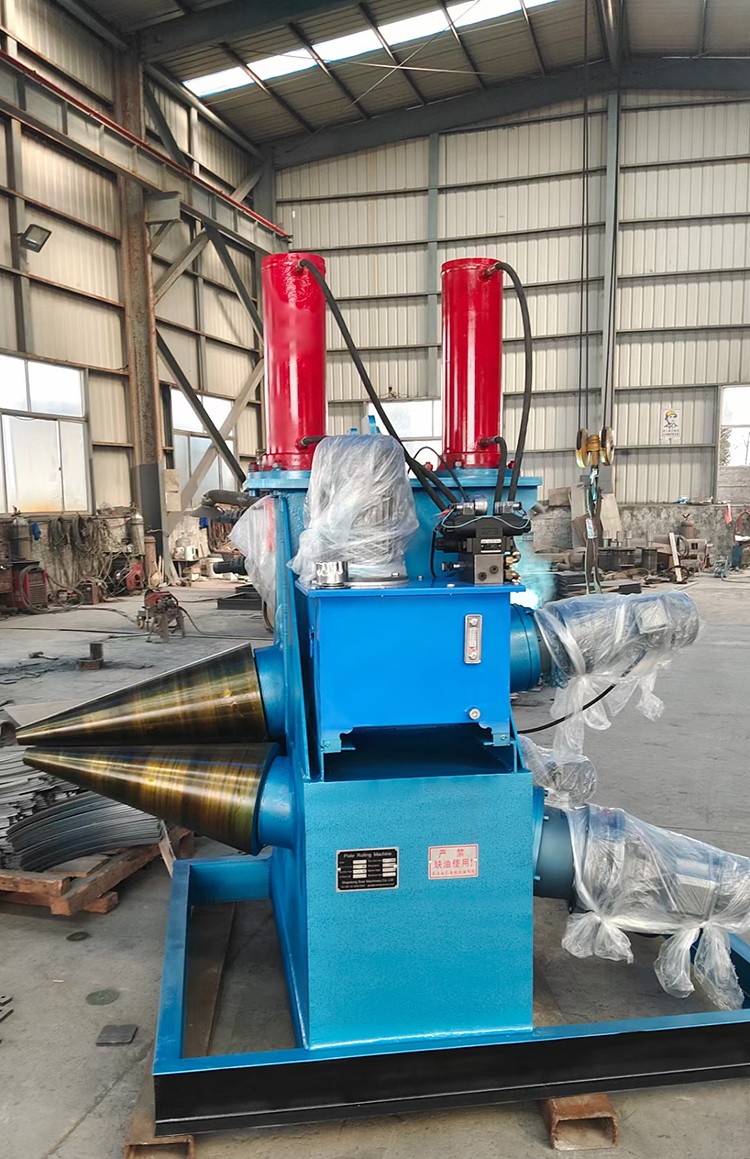
A hydraulic cone rolling machine is a piece of equipment that utilizes a hydraulic system to drive the movement of roller shafts, thereby processing metal plates into conical workpieces through a continuous rolling process. Its core structure typically comprises a machine frame system, upper and lower roller assemblies, a hydraulic drive system, an electrical control system, and adjustment and positioning mechanisms. By applying pressure and rotational motion between the rollers, the machine induces gradual plastic deformation in the metal plate, ultimately forming the desired conical shape. Hydraulic cone rolling machines are capable of processing not only standard cones but—depending on specific process requirements—also eccentric cones, variable-diameter cones, and cones with specialized angles; as a result, they enjoy a very broad scope of application within modern manufacturing.
One of the most distinctive features of a hydraulic cone rolling machine is its reliance on a hydraulic system for power output.
Compared to traditional mechanical transmission methods, hydraulic systems provide a significantly more stable and consistent pressure output. During the rolling process, the forces applied to the metal plate are distributed more uniformly, effectively mitigating issues related to uneven material deformation.
The advantages of hydraulic drive systems become particularly pronounced when processing thick plates or high-strength metals.
Key benefits include: higher output torque, smoother operation, more precise pressure regulation, and suitability for prolonged, continuous operation. In the context of manufacturing large-scale conical workpieces, stability directly determines product quality—an area in which hydraulic cone rolling machines demonstrate a distinct advantage.
In the metal conical forming process, processing precision is a critical concern for manufacturing enterprises.
Traditional equipment—often hindered by unstable pressure or limited adjustment precision—is prone to defects such as conical angle errors, deviations in roundness, uneven seams, and localized deformation. In contrast, hydraulic cone rolling machines utilize a hydraulic synchronization control system to achieve highly precise roller adjustments. The equipment is capable of automatically adjusting pressure based on the plate thickness and the required rolling angle, thereby ensuring the overall forming quality of the workpiece. This advantage is particularly crucial for high-precision products such as pressure vessels, ductwork equipment, and chemical process cones.
Hydraulic cone rolling machines possess strong adaptability to various materials.
They are capable of processing not only standard carbon steel plates but also stainless steel, aluminum, galvanized steel, copper, and high-strength alloy plates. Different materials exhibit distinct variations in hardness, ductility, and springback characteristics; the hydraulic system allows for flexible adjustment of rolling pressure to suit the specific properties of each material.
This capability enables hydraulic cone rolling machines to meet the demands of a wider range of industries, thereby increasing equipment utilization rates. For manufacturing enterprises, a single machine capable of handling multiple materials undoubtedly helps reduce equipment procurement costs.
Hydraulic cone rolling machines are capable of forming not only standard circular cones but also eccentric cones, multi-segment cones, large-diameter cones, shallow-angle cones, and variable-diameter transition pieces.
This versatility leads to their widespread application in pressure vessel manufacturing, the ventilation and ductwork industry, environmental protection equipment manufacturing, the petrochemical sector, and the power generation equipment industry. Particularly in the fabrication of large-scale industrial equipment, where many structural components require cone-forming processes, hydraulic cone rolling machines are well-equipped to meet these complex processing requirements.
Hydraulic cone rolling machines offer distinct advantages in terms of production efficiency. Traditional manual rolling methods are not only slow but also require repeated adjustments of the workpiece. In contrast, hydraulic cone rolling machines enable continuous rolling, significantly reducing the time required for auxiliary operations.
Their efficiency advantages are primarily reflected in rapid material loading, short setup times, continuous and stable rolling performance, and high forming speeds. For companies engaged in the mass production of cones, an increase in production efficiency translates directly into stronger market competitiveness.
This is particularly critical in large-scale engineering projects, where delivery lead times are paramount; high-efficiency equipment enables enterprises to fulfill orders more rapidly.
Traditional cone processing methods often rely heavily on manual operation—a practice that entails not only high physical exertion but also inherent safety risks. By utilizing an automated hydraulic system, hydraulic cone rolling machines effectively minimize the need for manual intervention.
Operators are required to perform only a few tasks—such as setting parameters, positioning the metal plate, and inspecting the workpiece—while the machine executes the primary rolling process. This approach not only reduces physical strain on the workforce but also enhances workplace safety. For manufacturing enterprises engaged in long-term production, this contributes significantly to an improved working environment. 8. Energy-Saving and Environmental Advantages
As industrial energy-saving requirements continue to rise, the issue of equipment energy consumption is receiving increasing attention.
Modern hydraulic cone rolling machines feature continuous optimization of their hydraulic systems. Through the use of energy-efficient hydraulic pumps, intelligent pressure control, and low-loss hydraulic circuits, they effectively reduce energy consumption. Simultaneously, equipment operation has become more stable and quieter, making it more environmentally friendly within the production setting. Amidst the trend toward "green manufacturing," energy conservation and environmental protection have emerged as critical metrics for equipment competitiveness.
The structural design of hydraulic cone rolling machines is relatively mature, making their maintenance and management significantly more convenient.
Modern equipment typically employs a modular design: the hydraulic system is independent, the electrical system is distinct, and wear parts are easily replaceable. This approach not only reduces the complexity of maintenance tasks but also minimizes downtime. For manufacturing enterprises, stable equipment operation is paramount, and the convenience of maintenance serves as an effective guarantee for production continuity.
As the demands of industrial manufacturing continue to evolve and upgrade, the application scope of hydraulic cone rolling machines is steadily expanding. Currently, they are primarily utilized in the following sectors:
(1) Pressure Vessel Industry: Used for the fabrication of conical heads and diameter-reducing sections.
(2) Ventilation Equipment Industry: Used for the manufacturing of conical air ducts and dust removal equipment components.
(3) Petrochemical Industry: Used for processing storage tanks and pipeline connection components.
(4) Environmental Protection Equipment Industry: Used for the manufacturing of dust collectors and waste gas treatment equipment.
(5) Electric Power Equipment Industry: Used for processing large-scale conical metal structures.
Driven by the continuous advancement of intelligent manufacturing technologies, hydraulic cone rolling machines are poised to evolve in the following directions:
(1) CNC and Intelligent Integration: Achieving automatic parameter optimization and remote control capabilities through intelligent systems.
(2) High-Precision Capabilities: Enhancing rolling precision to meet the rigorous demands of high-end manufacturing.
(3) Integration into Automated Production Lines: Forming fully automated production lines through seamless integration with welding and cutting equipment.
(4) Energy Efficiency and Environmental Friendliness: Further reducing energy consumption and enhancing capabilities for green manufacturing.
(5) Multi-functionality: Integrating multiple functions—such as cylindrical rolling, conical rolling, and leveling—into a single machine.
Overall, thanks to their stable hydraulic drive systems, high-precision processing capabilities, broad material adaptability, and advanced levels of automation, hydraulic cone rolling machines have established themselves as indispensable equipment for the modern forming of conical metal structures. Compared to traditional processing methods, hydraulic cone-rolling machines not only enhance production efficiency and product quality but also reduce labor intensity and overall production costs. With the continuous advancement of intelligent manufacturing and industrial automation, hydraulic cone-rolling machines are poised to play an increasingly vital role in fields such as pressure vessels, environmental protection equipment, petrochemicals, and large-scale steel structure fabrication, thereby becoming a core piece of essential equipment within the modern metalworking industry.
 Address:Room 1202, Detaitang Building, No. 118 Huaguang Road, Zhangdian District, Zibo, Shandong
 WhatsApp:+8615653328535
 Wechat: +8615965331535
  E-mail:zs@sdsmachinery.com