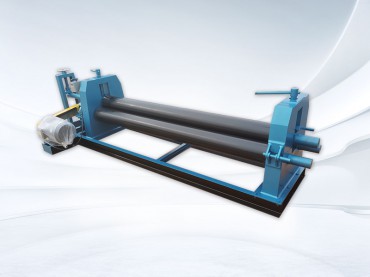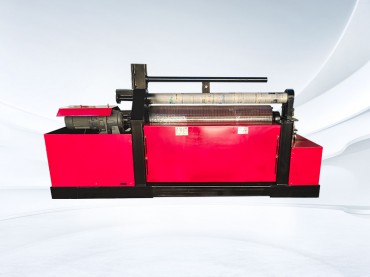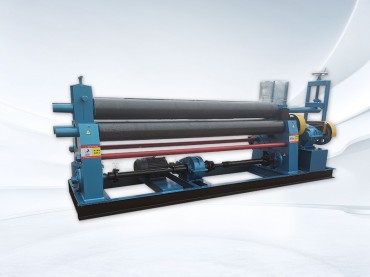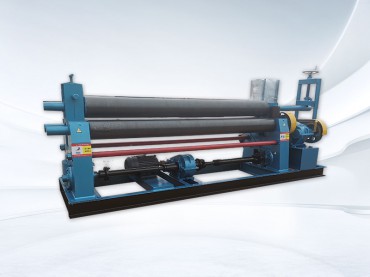
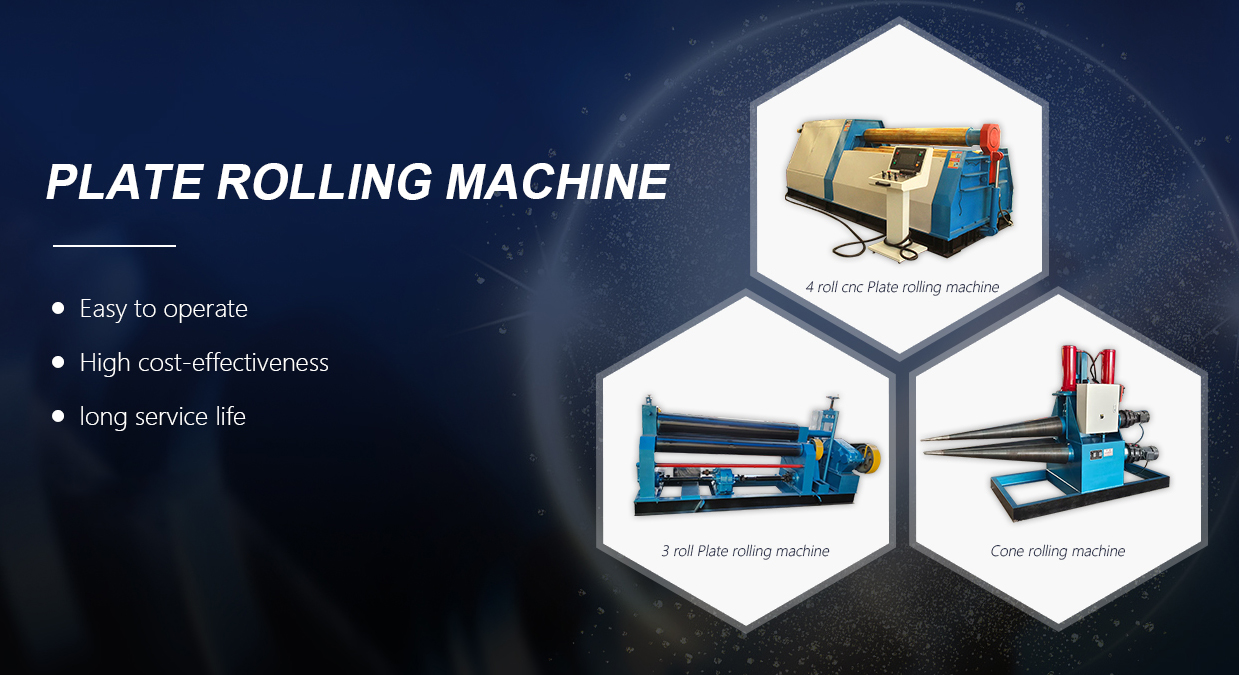
In fields such as metal structure manufacturing, pressure vessel industries, ductwork fabrication, automotive production, mechanical equipment casings, and shipbuilding engineering, plate rolling machines are indispensable forming equipment. Their primary function is to roll metal plates into circular, curved, or conical shapes, making them a core machine in plate metal processing. For beginners, mastering the correct operation of a plate rolling machine not only affects the quality of workpiece processing but also directly impacts operational safety and equipment longevity.
A plate rolling machine primarily consists of an upper roll, a lower roll (or side roll), a drive system, a hydraulic or mechanical clamping system, and an electrical control system. During operation, the plate metal undergoes continuous plastic deformation under pressure between multiple rollers, gradually forming into arcs or circles with the desired curvature.
A key characteristic of the rolling process is that it achieves stable curvature not through a single press, but through multiple stages of gradual pressure application and repeated rolling.
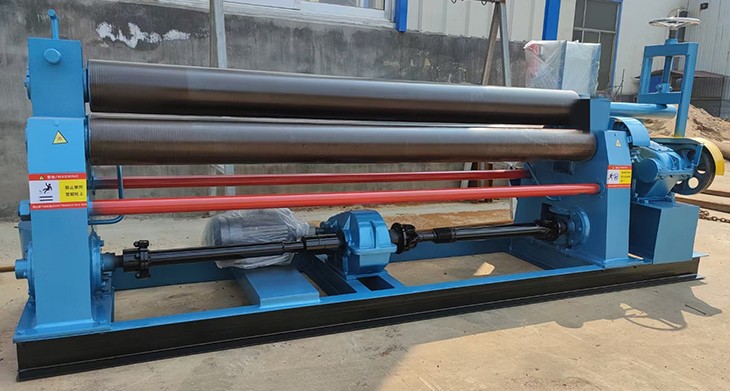
Before formal use, ensure the equipment is in normal condition:
- Verify power supply, hydraulic lines, and lubrication system are functioning correctly;
- Ensure roller surfaces are free of oil residue, metal shavings, or scratches to prevent plate damage;
- Set appropriate clamping force and rolling parameters based on plate thickness, material, and width;
- Wear required protective gear; sleeves must not be loose, and accessories like scarves or necklaces are strictly prohibited to avoid entanglement.
Slowly feed the metal plate between the rollers to position it correctly. Do not apply excessive pressure immediately; instead, perform “pre-bending.”
The purpose of pre-bending is to reduce the straight edge length at both ends of the plate, resulting in a more complete and aesthetically pleasing formed cylinder. The initial pre-bend should be performed slowly, gradually increasing pressure according to material thickness until a smooth transition of curvature is achieved.
When rolling begins, the plate moves slowly driven by the lower or side rollers, gradually bending.
Key considerations during this stage:
- Avoid attempting to achieve the final shape in one step; instead, perform multiple light presses to form it.
- As the curvature increases, progressively raise the clamping force of the upper roller.
- Reduce the operating speed near the final closure to prevent sudden deformation or misalignment.
After forming, uneven curvature may appear in certain areas. Repeat rolling with light pressure to achieve more uniform roundness. Multiple fine adjustments are typically required; beginners should avoid rushing.
Beginners must strictly adhere to these principles when operating plate rolling machines:
(1) Never insert hands or tools between the rollers.All cleaning or adjustments must be performed only after the equipment has completely stopped.
(2) Securely clamp the plate metal. Never start the machine before proper clamping, as this may cause the plate to slip, eject, or even cause injury.
(3) Reduce speed when rolling thick plates to prevent sudden pressure causing plate fracture or abnormal equipment stress.
(4) For long workpieces, assign personnel to support both ends to prevent dangerous sudden drops.
(5) Beginners must operate under experienced personnel supervision; unauthorized independent use is prohibited.
(1) Excessively long straight edges at both ends after rolling.This results from insufficient pre-bending. Increase the intensity and number of pre-bending at both ends before formal rolling to ensure adequate plastic deformation of the plate edges.
(2) Uneven formed roundness, with the cylinder's middle differing from its ends Caused primarily by uneven pressure application or improper clamping sequence.Improve by repeatedly performing light rounding adjustments, gradually refining the curvature until uniformity is achieved.
(3) plate slippage or feeding difficulties during rolling.This is often caused by insufficient clamping force or an excessively slippery plate surface.Appropriately increase the upper roller clamping force while ensuring correct feeding direction.
(4) Surface scratches or indentations on the plate.Typically caused by unclean roller surfaces or hard particles on the rollers.Regularly clean and even polish the rollers.
While plate rolling machines appear simple to operate, achieving precise, safe, and efficient rolling requires operators to possess solid operational awareness, meticulous execution habits, and continuously accumulated practical experience. For beginners, following standard procedures, adhering to safety protocols, and practicing under the guidance of experienced personnel will enable rapid mastery of plate rolling skills, paving the way to becoming proficient plate metal workers.
 Address:Room 1202, Detaitang Building, No. 118 Huaguang Road, Zhangdian District, Zibo, Shandong
 WhatsApp:+8615653328535
 Wechat: +8615965331535
  E-mail:zs@sdsmachinery.com