
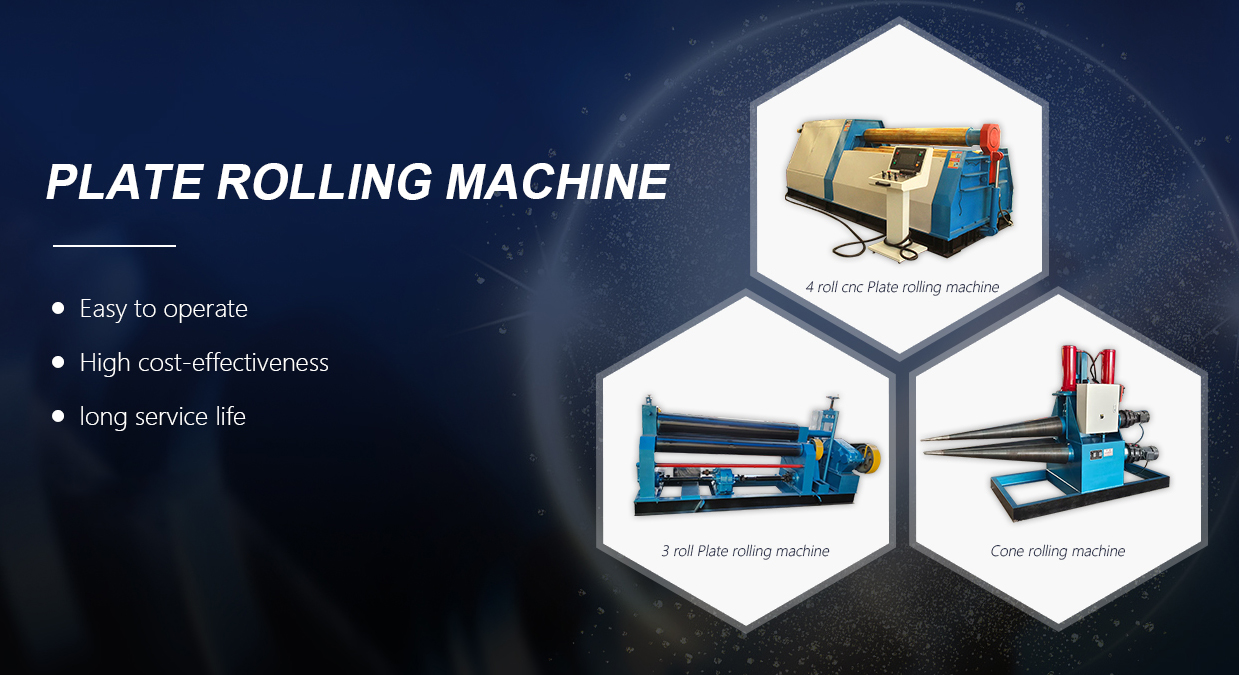
Punching machines, also known as press-type presses, play a vital role in national production. Compared with traditional machining methods, the spunching process can produce products that are difficult to reach by machining by virtue of its material saving, efficient use of energy and easy operation.
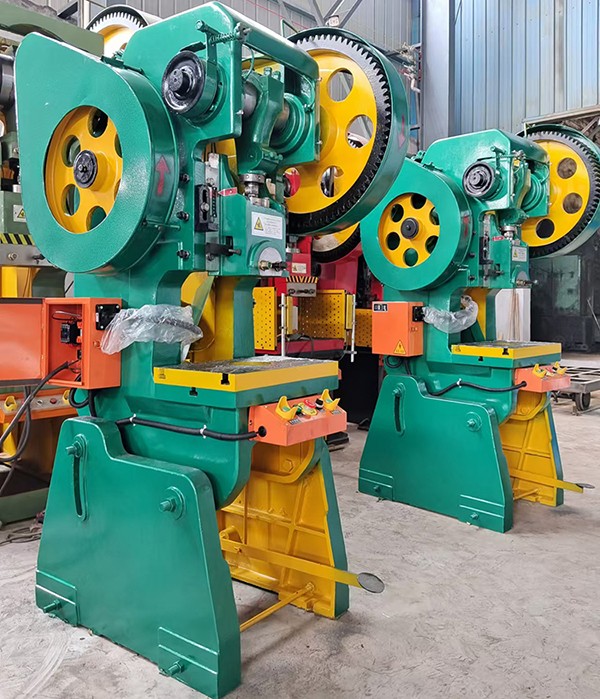
The frame of the punching machine combines high rigidity and high precision, and is heat-treated to ensure stability and even load distribution, thus ensuring the stability of the equipment.
The key components of the punch press, such as crankshafts, gears and drive shafts, are hardened and heat-treated and finely ground. These components have excellent wear resistance, ensuring stable long-term performance of the equipment, thus meeting the requirements of high-precision use.
Excellent, safe and reliable handling performance. The press utilizes an innovative brake design that is quite different from conventional methods. The combination of clutch and brake demonstrates extremely high sensitivity, supplemented by the duplex electromagnetic control valve and overload protection device commonly adopted by top international equipment, which together ensure the accuracy and safety of the press ram in high-speed movement.
Production is automated, labor-saving and efficient. The press can be seamlessly connected with a variety of automatic feeding equipment, equipped with feeding error detection, pre-cutting and pre-breaking functions, realizing a fully automated production process, reducing costs and significantly improving production efficiency.
The slider adjustment mechanism of the press supports both manual and electric adjustment, which is easy to operate, safe and reliable, with quick adjustment speed and high accuracy up to 0.1mm. The press integrates the cutting-edge technologies and design concepts from Japan and Taiwan, and has the characteristics of low noise and low energy consumption, and realizes the environmental protection goal of no pollution.
Punching machine can complete dozens to hundreds of stamping per minute (specific data vary by model, for example, ordinary mechanical punching machine up to 200 times/minute, high-speed precision punching machine up to 1500 times/minute, refer to the “Stamping Process Manual”). This speed far exceeds the manual or traditional mechanical processing, especially suitable for mass production, such as automotive parts, electrical enclosures.
Punching machines are molded through die control, and tolerances can be controlled to within ±0.01mm (source: ISO 9001 stamping industry standard), ensuring highly consistent product dimensions. For example, the press molding of metal bezels for smartphones must rely on the precision of the press.
The cost of processing a single part is only 1/5-1/10 of traditional cutting (according to the American Society for Precision Manufacturing's 2022 report). Molds can be reused to amortize the cost in the long run, which is suitable for large-scale production.
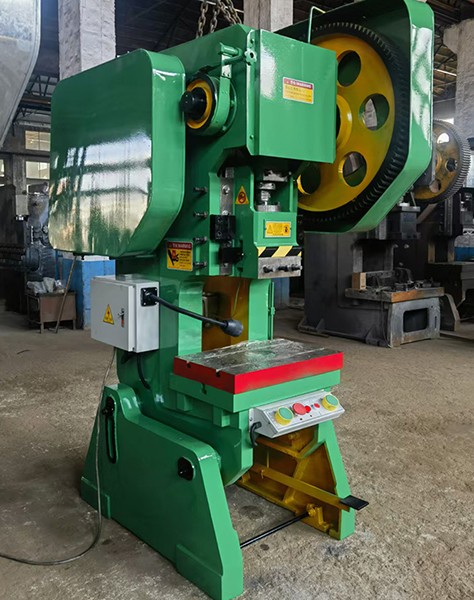
- Punching: such as processing of heat dissipation holes for power distribution boxes.
- Bending: for sheet metal parts molding, angle error ≤ 0.5 °.
- Drawing: deep drawing process for stainless steel cups.
Modern punching machines can handle plastics, composite materials, etc., such as batch punching and cutting of PVC insulating gaskets.
(1) Punching machine and drilling machine: compared with drilling machine, punching machine processing is faster and can process smaller holes.
(2) Punching machine and milling machine: compared with milling machine, punching machine processing faster, lower cost, and can do deeper stamping.
(3) Punching machine vs laser cutting: Compared with laser cutting, punching machine can better handle some metal materials that are difficult to process.
In a word, as a common mechanical stamping equipment, punching machine has high processing efficiency, low cost, easy operation and good stability, so it is widely used in various industries. If you are interested in punching machine, please contact us, we will recommend the right machine and quote for you.
 Address:Room 1202, Detaitang Building, No. 118 Huaguang Road, Zhangdian District, Zibo, Shandong
 WhatsApp:+8615653328535
 Wechat: +8615965331535
  E-mail:zs@sdsmachinery.com


