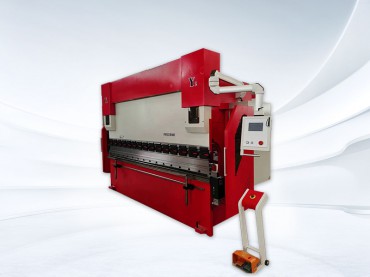
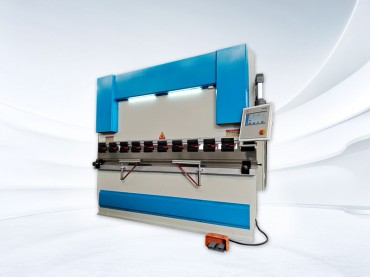
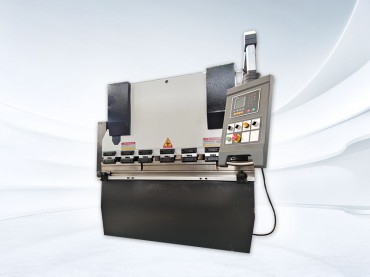
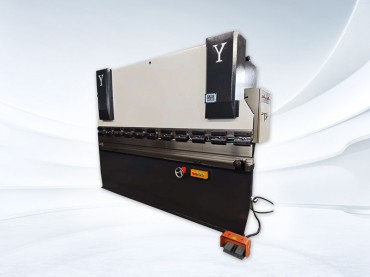
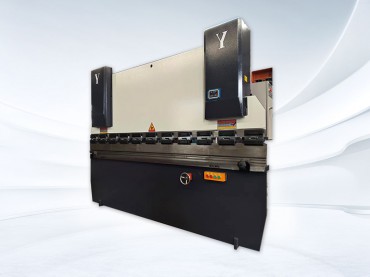
As a professional
bending machine manufacturer with over 10 years of industry experience, we understand that proper maintenance and operation of your bending machine is essential for optimal performance and longevity. Here, we'd like to share some basic tips and best practices for bending machine maintenance and operation to help keep your equipment running smoothly and efficiently. Whether you are a novice or an experienced operator, these may help you increase productivity and reduce downtime.
Bending machines are indispensable tools in many industries, forming and processing metals and other materials with precision and efficiency. It plays a key role in the production of all types of products in areas such as fabrication, building construction, and manufacturing. Therefore, regular maintenance and proper use of the bending machine is a necessary prerequisite to ensure its performance and longevity.
1.the importance of bending machine maintenance:
(1)Extend service life: through normal lubrication, cleaning and calibration, can significantly extend the life cycle of the equipment, reduce maintenance costs and the risk of unexpected downtime.
(2)Prevent failure: regular inspection and preventive maintenance helps to identify potential problems in a timely manner, to avoid minor problems evolve into major equipment damage.
(3)Improve performance: Good maintenance can keep the equipment in the best working condition, to ensure a continuous and stable output of accurate bending results.
(4)Ensure safety: well-maintained machine operation is safer, can minimize the risk of operator injury or accidents.
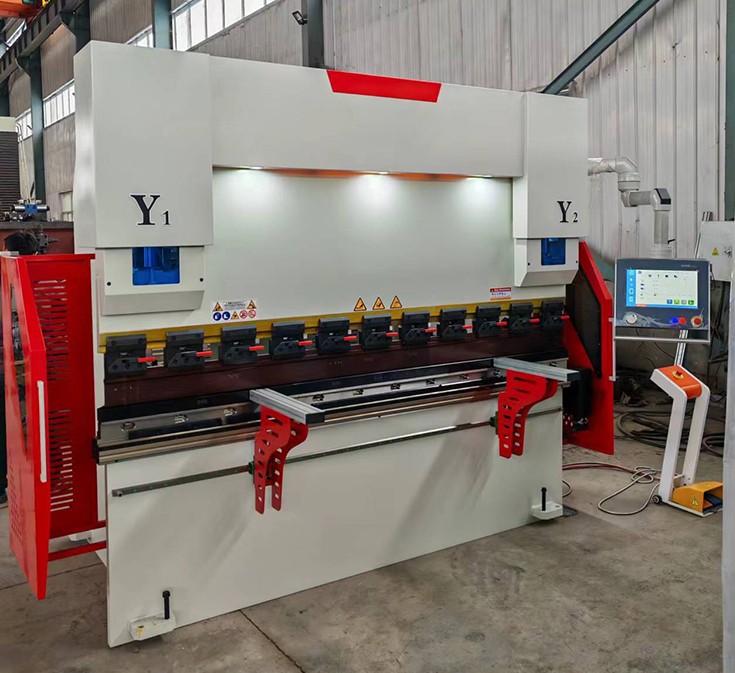
2.Practical Maintenance Tips:
(1)Check before use:
- Fully lubricate the parts according to the instruction manual;
- Check whether the limit devices and safety guards are intact and effective;
- Check whether the circuit link and grounding are good;
- Ensure that there is no loosening of the bolts and fasteners;
- Ensure that there are no abnormalities such as abnormal noise, debris and bad contact.
(2)Maintenance after use
- Cut off the power supply and turn off the equipment safely;
- Clean the surface of the machine and the working area, remove all metal chips and waste materials;
- Tidy up the working environment to ensure that the next use of good conditions.
(3)Hydraulic system maintenance
- Check the hydraulic oil level every week, if it is insufficient, replenish it in time to below the liquid level window;
- Replace the hydraulic oil after the new machine runs for about 2000 hours, and then replace it once every 4000-6000 hours;
- Be sure to thoroughly clean the inside of the oil tank when changing the oil.
- The system oil temperature should be between 35℃ and 60℃, and should not exceed 70℃, too high will cause deterioration of oil quality or damage to accessories.
(4)Filtration system maintenance
- Replace or thoroughly clean the filter at every oil change;
- If the filter alarms or the oil is found to be seriously contaminated, it should be replaced immediately;
- The air filter on the oil tank should be checked and cleaned every 3 months and replaced once a year.
(5)Hydraulic components inspection
- Clean the hydraulic components every month to prevent dirt from entering the system, do not use corrosive cleaners.
- After 1 month of use of the new machine, check whether the oil pipe is deformed, if there is any abnormality should be replaced immediately;
- After 2 months of use, should be re-tightened so connecting parts, and must be in the shutdown, no pressure.
3.the efficient use of skills
(1)Material preparation: before processing to ensure that the surface of the plate is clean, flat, no rust and impurities, in order to prevent deformation or precision errors in the bending process.
(2)Correct selection of molds and tools: according to the type of material to be processed, thickness and the required angle, select the appropriate upper and lower molds. Wrong selection may lead to mold damage or substandard workpiece quality.
(3)Precise positioning of workpiece : Make sure the workpiece is placed smoothly and aligned accurately on the table. If necessary, use positioning block or fixture to improve repeatability and operation efficiency.
(4)Reasonable setting of control parameters: Skillfully and correctly set the bending angle, radius, speed, pressure and other key parameters to adapt to different processing needs.
(5)Real-time monitoring of the operation process: in the bending process, the operator needs to pay attention to the operating status of the equipment at all times, and should immediately stop the machine for inspection when abnormal noise, vibration, processing deviation, etc. are found to avoid the expansion of the problem.
Through the scientific preventive maintenance system, not only can effectively reduce unplanned downtime and maintenance costs, but also to ensure that every processing is stable and reliable, and continue to create value for customers. An enterprise that pays attention to details and equipment maintenance is more likely to win customers' trust and market recognition.

 Address:Room 1202, Detaitang Building, No. 118 Huaguang Road, Zhangdian District, Zibo, Shandong
 WhatsApp:+8615653328535
 Wechat: +8615965331535
  E-mail:zs@sdsmachinery.com