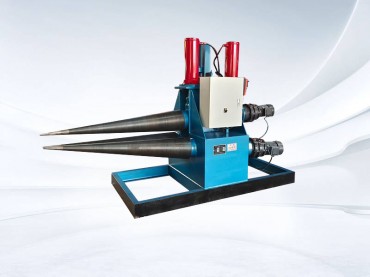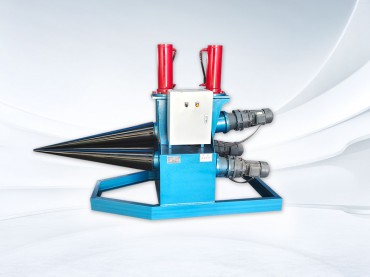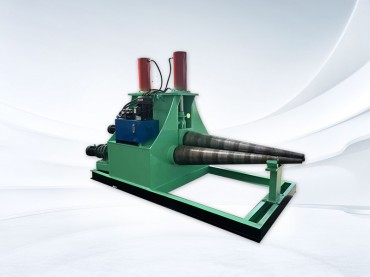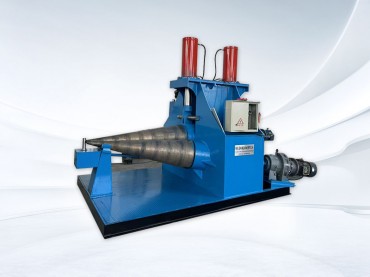
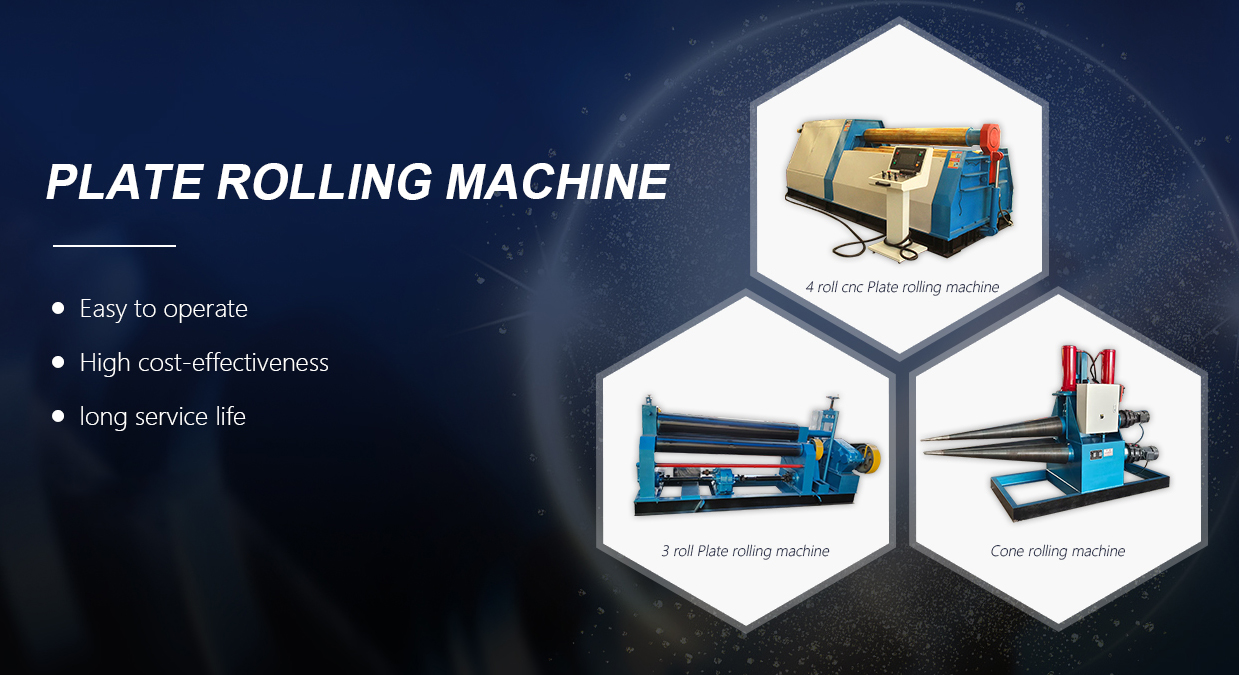
With the continuous upgrading of the manufacturing industry, hydraulic cone rolling machines, as core equipment for tapering metal sheets, are increasingly widely used in petrochemical, pressure vessel, boiler manufacturing, and wind turbine tower industries. For beginners new to this equipment, mastering the correct operating methods and safety regulations is crucial. hydraulic cone rolling machines use a hydraulic system to drive rollers, employing differential adjustment and independent pressurization to roll metal sheets into conical structures with a specific taper.
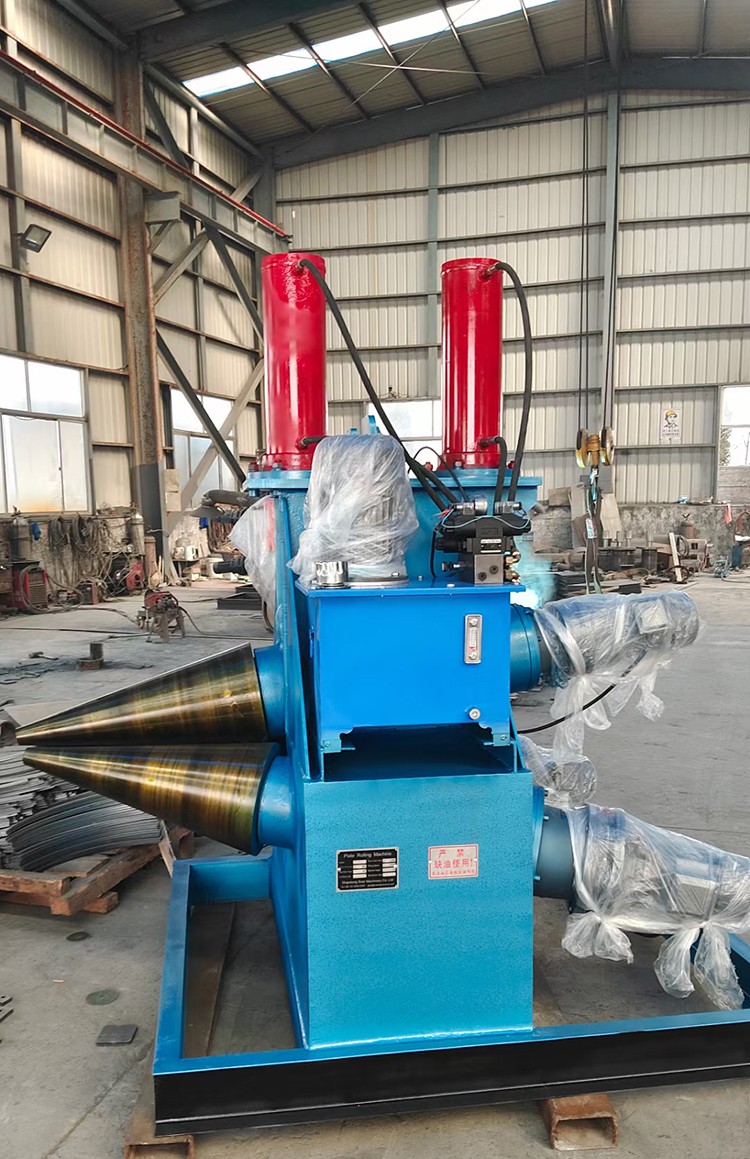
A hydraulic cone rolling machine is a specialized piece of equipment that uses a hydraulic system to drive the movement of work rollers, causing the metal sheet to undergo gradual plastic deformation, thereby processing it into conical or cylindrical workpieces. It is a specialized forming device developed from ordinary plate rolling machines. By adjusting the positions of the upper and lower work rollers and the different pressures of the side rollers, different rolling radii are achieved at the two ends of the sheet, thus forming a conical structure.
Modern hydraulic cone rolling machines typically consist of a hydraulic system, a main drive system, work rollers, side rollers, a CNC control system, an electrical control system, and safety protection devices. Compared to traditional mechanical plate rolling equipment, hydraulic drive has advantages such as stable operation, precise pressure control, strong processing capacity, and wide applicability, thus becoming the mainstream equipment in the current market.
The hydraulic cone rolling machine must be managed by designated personnel. Operators must be trained, familiar with the structure, performance, and usage of the equipment, and can only operate it after obtaining approval from the responsible manager. Untrained personnel are strictly prohibited from operating the equipment without authorization.
Before starting the machine, carefully check the following items:
- Whether the hydraulic station oil level is sufficient, and whether there are any leaks in the oil circuit and joints;
- Whether there are any cracks, pits, rust, or debris attached to the roller surface;
- Whether the electrical control system is normal, and whether the emergency stop button and safety protection devices are intact;
- Whether all fasteners are loose, and whether the transmission components operate smoothly.
The metal plate to be rolled must be flat and free from severe dents or warping. The edges of the plate should be free of obvious burrs to avoid scratching the roller surface during the rolling process. Simultaneously, according to process requirements, the bending start line and symmetry center line should be marked on the plate.
Based on parameters such as the diameter of the large and small ends of the cone, the cone length, and the plate thickness, the roller position should be set reasonably. Modern CNC equipment allows direct input of parameters such as the small end diameter, large end diameter, cone length, and plate thickness on the human-machine interface, and the system automatically calculates the lower roller tilt angle.
(1) Installing and Positioning the Plate.Align the small or large end of the plate with the lower roller and place it in the set position according to process requirements. Key points include:
- The plate must be aligned with the positioning line;
- Prevent slippage or offset;
- Place the plate correctly according to the rolling direction.
Some equipment is equipped with a centering device to help the operator align the plate centerline with the roller axis.
(2) Adjusting the Side Roller to Set the Taper.The hydraulic cone rolling machine forms the taper by independently adjusting the side rollers. The key points of operation are:
- Increase the downward pressure on the small end side;
- Decrease the downward pressure on the large end side;
- Gradually adjust to achieve a uniform taper.
The accuracy of the taper setting directly determines the final forming quality of the workpiece. The key to rolling the cone is that the linear speeds of the large and small ends are basically the same. Since the linear speed of the upper roller is the same, the entry speed of the large end needs to be appropriately increased.
(3) Pre-bending (end pre-bending) The two ends of the sheet cannot be fully formed during natural rolling, resulting in "straight edges," which need to be eliminated through pre-bending. During operation, start the equipment at low speed and use the upper roller to apply downward pressure for pre-bending, strictly controlling the downward pressure to avoid excessive deformation. Usually, rolling about 1/3 turn at each end is sufficient to eliminate the straight edges.
(4) Progressive rolling forming Start the main drive and control the side rollers to apply pressure gradually in segments. Adjust the pressure in segments according to the taper requirements to maintain a stable rolling speed. Throughout the rolling process, continuously observe the deformation of the sheet to prevent wrinkles or cracks. If any abnormality is found, the roller position or pressure should be manually adjusted immediately.
(5) Forming Correction and Precision Inspection After the cone is basically formed, roundness correction, taper fine-tuning, and joint alignment are performed. Use the matching taper template to check the curvature. If there is a deviation, fine-tune the lower roller height. The template can only be used to check the roundness of the cylinder section after the equipment has been completely stopped.
(6) Unloading and Finishing After the workpiece reaches the expected shape and size, stop rolling. Gradually release the pressure to prevent the workpiece from springing back and deforming. Use auxiliary tools to remove the workpiece to avoid damaging the equipment or the workpiece. After the operation is completed, the power supply should be cut off and the power box locked.
(1) Personal Protection Operators must wear protective gloves, safety shoes, and goggles to prevent injury from flying metal fragments. It is strictly forbidden to operate the equipment while wearing loose clothing or with long hair to prevent being caught in moving parts.
(2) No Limb Contact During operation, it is strictly forbidden to place hands or feet on the rollers, transmission parts, or workpieces. The safest and most reasonable position to operate the tapered roller is to stand on either side of the equipment, avoiding direct contact with the machine. Touching the machine while it is operating is strictly prohibited.
(3) Overloading is strictly prohibited. Operation must strictly adhere to the equipment's rated parameters—rolling plate thickness not exceeding 20mm, maximum length not exceeding 2500mm, and material yield strength less than 250MPa. Side roller pressure should be adjusted gradually to avoid applying excessive pressure at once, which could lead to material breakage or equipment damage.
(4) Operating Procedures. When the main drive is not stopped, operations such as raising or lowering the upper roller or tilting and resetting the bearing are prohibited. The tilting beam must not be opened while the workpiece is still being rolled between the upper and lower working rollers. If irregular noise, impact, or other abnormalities are detected during operation, the machine should be stopped immediately for inspection. When rolling thicker, larger diameter cylinders or workpieces with high material strength, the upper roller should be lowered slightly, and the roll should be rolled multiple times to form the final product.
(5) Multi-person Collaboration. When multiple people are working together, a designated person must provide unified command. The machine must not be started without a command. All personnel must coordinate with each other and obey the instructions of the person in charge of rolling the plate.
(6) Equipment Grounding and Lighting.The equipment should be securely grounded, and lighting should use safe voltage to avoid wiring errors. The installation site should be far from severe vibrations and bumps, ensuring it is sturdy, well-ventilated, rainproof, moisture-proof, and dustproof.
(1) Lubrication Maintenance: Lubricate all oil cups and manual lubrication points according to the equipment lubrication diagram.
(2) Cleaning Maintenance: Keep the roller surface and surrounding area clean, and promptly remove oil stains and debris. Do not pile workpieces and debris haphazardly in the work area; ensure the site is clean after work is completed.
(3) Regular Inspection: Regularly check the working status of hydraulic valves and pumps, including valve opening and closing status, and whether the pump pressure and flow rate are normal. Clean the oil tank each time the oil is changed. Check the oil level in the tank weekly; add hydraulic oil if the oil level is below the oil window.
(4) Post-Operation Management: After the plate rolling is completed, perform equipment maintenance and shut off the power promptly. Check for objects around the equipment that may affect ventilation and heat dissipation.
Hydraulic cone rolling machines are crucial equipment in the metalworking field, and their operation requires both solid theoretical knowledge and rich practical experience. For beginners, starting with thorough pre-operation preparation, strictly following standard procedures step by step, and always prioritizing safety are the best ways to quickly master equipment operation. This article aims to provide practical operating guidance for beginners, helping you take a solid first step in the metalworking industry.
 Address:Room 1202, Detaitang Building, No. 118 Huaguang Road, Zhangdian District, Zibo, Shandong
 WhatsApp:+8615653328535
 Wechat: +8615965331535
  E-mail:zs@sdsmachinery.com