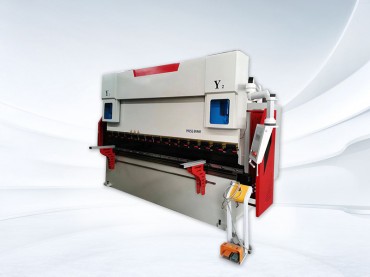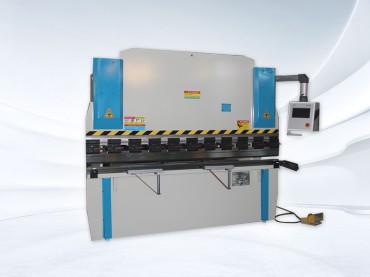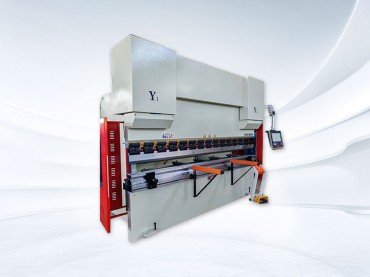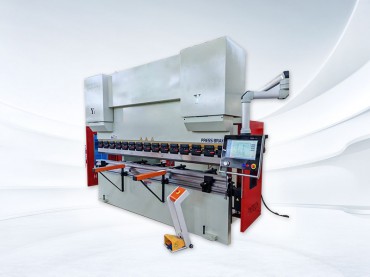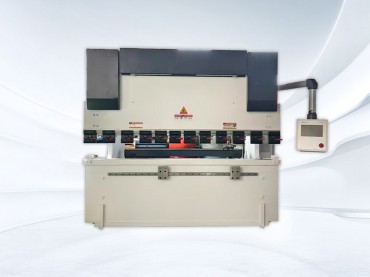
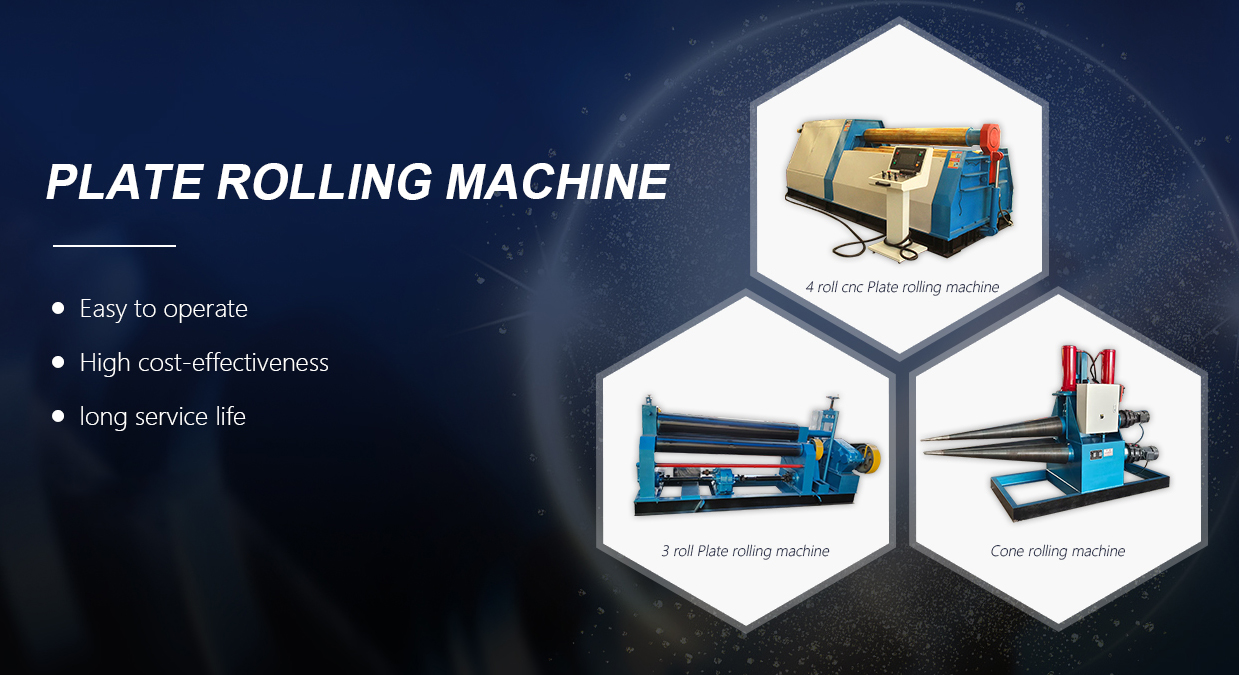
In the modern metalworking industry, CNC press brakes have become core equipment for sheet metal forming, finding widespread application in sectors such as architectural steel structures, automotive manufacturing, home appliance casings, electrical cabinet production, and machinery manufacturing. With the advancement of smart manufacturing and automation technologies, an increasing number of enterprises are adopting CNC press brakes to enhance processing precision and production efficiency. However, a frequently asked question during procurement and usage is: Are CNC press brakes difficult to operate? In reality, there is no absolute answer; it depends on the equipment's level of automation, the operator's experience, and the company's training system. This article provides an in-depth analysis from various perspectives, including operating principles, the learning process, system functions, and practical industry applications.
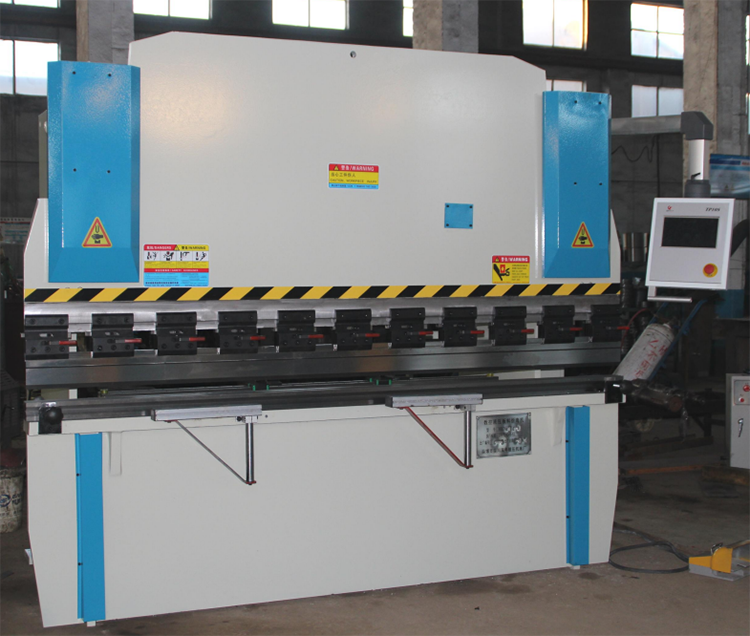
A CNC press brake is a machine that uses a Computer Numerical Control (CNC) system to control the movement of the ram (or slide), thereby precisely bending and forming metal sheets.
Its basic operating method involves applying pressure to the metal sheet through the closing of upper and lower dies, causing plastic deformation at a set angle. Compared to traditional manual or standard hydraulic press brakes, the core advantages of CNC press brakes include digital control of angles and positions, high repeatability, a high degree of automation, and the ability to store multiple processing programs; consequently, they are widely used in high-precision sheet metal processing.
To understand the difficulty of operation, one must first grasp the basic operational logic.
The core systems of a CNC press brake include the CNC control system, hydraulic system, backgauge system, tooling system, and ram drive mechanism. Operators input processing parameters—such as bending angle, sheet thickness, material type, and bending length—and the system automatically calculates the required pressure and stroke, controlling the ram to execute the action.
Throughout this process, the operator acts primarily as a "parameter inputter" and "process monitor" rather than a manual operator in the traditional sense.
From a modern industrial perspective, CNC press brakes are not considered "difficult-to-operate equipment," though they do impose certain technical requirements on the operator.
At the beginner stage, operators need to familiarize themselves with the CNC system interface, including program input methods, bending parameter settings, tool selection logic, and backgauge position adjustments. While this stage requires some time for adaptation, the overall logic is straightforward.
Once operators are familiar with the equipment, they need to gain a deeper understanding of the bending process itself—such as material springback characteristics, variations in bending force for different material thicknesses, the difference between tool angles and final formed angles, and the design of multi-bend sequences. This stage involves accumulating process-related expertise, yet it remains within the scope of systematic learning.
Advanced operators not only operate the equipment but also optimize production efficiency—for example, by reducing the number of bends, optimizing program paths, improving repeatability, lowering scrap rates, and managing rapid tool changes and batch production. This stage leans more towards the role of a technical engineer.
Ease of use varies significantly across different brands and systems:
- Basic systems: Simple functionality, suitable for beginners.
- High-end systems: Powerful functionality, but require a learning period.
- Graphical systems: Intuitive operation, easier to master.
Modern CNC press brakes generally utilize graphical interfaces, significantly lowering the barrier to entry for operators.
Higher levels of automation simplify operation. Features such as automatic angle compensation, automatic backgauge adjustment, automatic force calculation, and program storage/recall reduce the need for manual calculations and enhance operational stability.
Experience is a core factor influencing operation difficulty. Experienced operators can quickly assess factors such as material springback, the need for pressure adjustments, tool compatibility, and deformation risks, whereas novices must rely on system prompts and learning.
Despite the initial learning curve, CNC press brakes offer distinct advantages in practical application:
(1) Standardized Operation: Programmed control minimizes human error and improves consistency.
(2) Higher Precision: Controlling angles and positions via the CNC system enables high-precision bending.
(3) Higher efficiency: Processing programs can be stored, eliminating the need for reconfiguration during repeat production runs.
(4) High adaptability: Suitable for processing metal sheets of varying thicknesses and materials.
Driven by industrial upgrading, CNC press brakes have become core equipment in sheet metal processing. They are widely used across sectors such as steel structure construction, electrical control cabinets, automotive components, home appliance casings, and industrial equipment manufacturing; their stability and level of automation directly impact production efficiency and product quality.
Overall, the CNC press brake is not difficult to operate; rather, it is a piece of modern industrial equipment characterized by a distinct learning curve.While beginners require some time to familiarize themselves with system operations and process logic, the workflow becomes highly standardized and intelligent once the basics are mastered—often making operation simpler than that of traditional equipment. As CNC technology continues to advance, the barrier to entry for operating these machines will lower further, enabling more enterprises to rapidly achieve high-precision, high-efficiency sheet metal production.
 Address:Room 1202, Detaitang Building, No. 118 Huaguang Road, Zhangdian District, Zibo, Shandong
 WhatsApp:+8615653328535
 Wechat: +8615965331535
  E-mail:zs@sdsmachinery.com