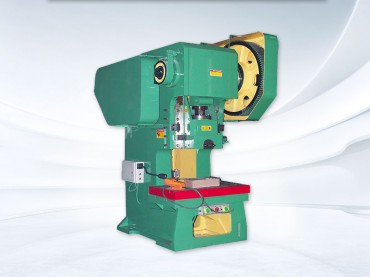
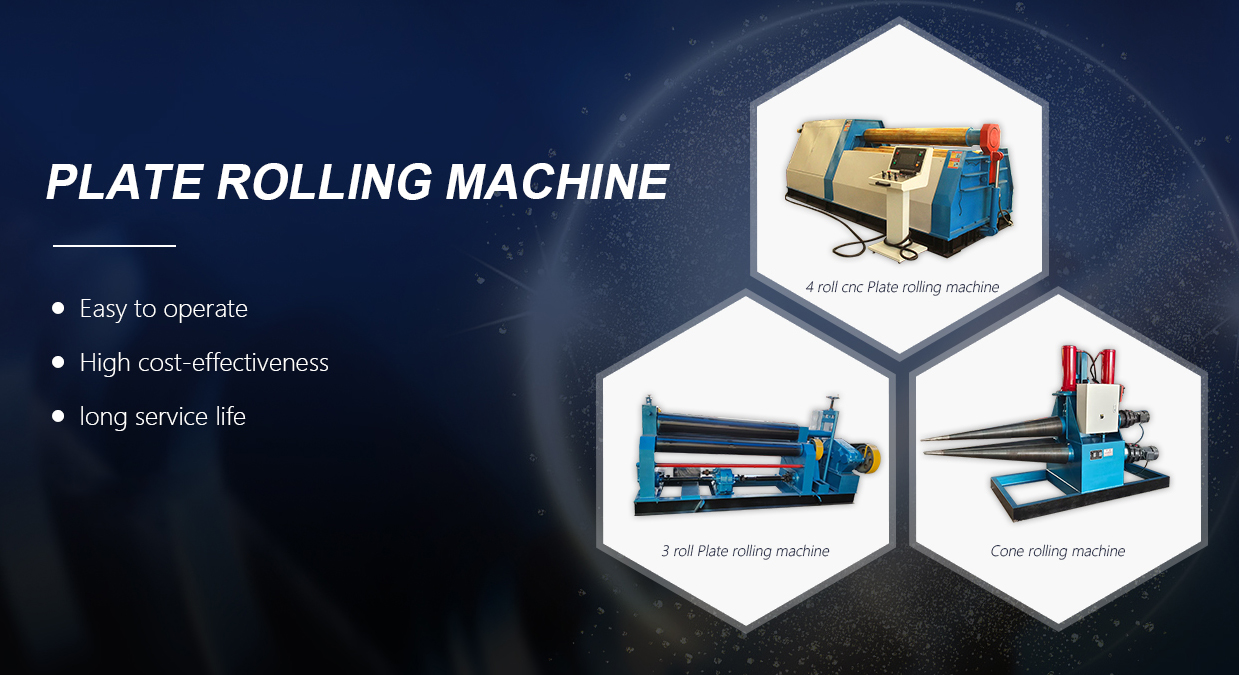
In modern metal processing and manufacturing, mechanical presses are extremely important forming equipment, widely used in stamping, cutting, forming, stretching, and mass production of metal parts. Whether in automobile manufacturing, home appliance production, or hardware processing, the efficient operation of mechanical presses is indispensable. With the continuous improvement of industrial automation, mechanical presses are evolving from traditional mechanical drives towards high precision, high speed, and intelligence. Understanding the working principle of mechanical presses not only helps improve production efficiency but also allows for better equipment selection and maintenance management.
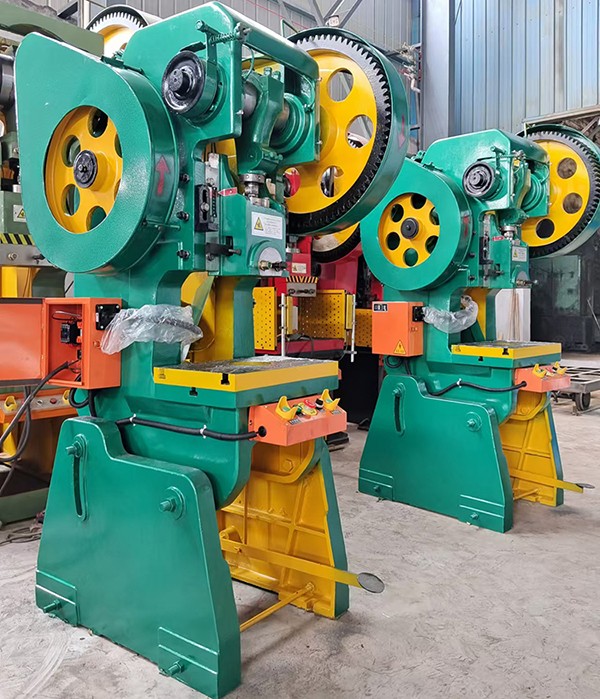
A mechanical press is a pressure processing device that uses a mechanical transmission system to convert rotary motion into linear reciprocating motion, thereby applying pressure to metal materials to achieve punching, blanking, bending, or forming.
Its core function is to apply a huge impact force to metal sheets in a very short time through the cooperation of the die and the punch, causing the material to undergo plastic deformation or separation.
Compared with hydraulic punch presses, mechanical presses have the advantages of: high stamping speed, high production efficiency, good repeatability, and suitability for mass production. Therefore, they occupy an important position in continuous stamping production lines.
(1) Machine Body (Frame): The machine body is the basic structure of the punch press. It is usually made of cast iron or welded steel plate, possessing high rigidity and impact resistance, and is used to withstand the enormous pressure generated during the punching process.
(2) Flywheel System: The flywheel is the "power storage device" of the mechanical press. It is driven by a motor to rotate, storing energy and releasing it at the moment of punching.
(3) Crankshaft Mechanism: The crankshaft is the core transmission component of the mechanical press, converting the rotational motion of the flywheel into the vertical linear motion of the slide block.
(4) Connecting Rod and Slide Block: The connecting rod connects the crankshaft and the slide block, enabling the slide block to move up and down in the guide rail to realize the punching action.
(5) Die System: The die consists of an upper die and a lower die, and is the key part that directly contacts the material and completes the stamping process.
(6) Clutch and Brake: Used to control the start and stop of the punch press, ensuring safe and precise operation of the equipment.
After the equipment starts, the motor begins to work, driving the flywheel to rotate at high speed via belt or gears. The flywheel's main function at this stage is to "store energy," similar to a power battery.
When the operator initiates the stamping command, the clutch engages, and the flywheel's energy is transferred to the crankshaft system. At this point, the press enters its working state.
The crankshaft mechanism is the "conversion core" of the mechanical press. During crankshaft rotation, the eccentric structure converts circular motion into reciprocating linear motion. During this process, the speed of the slider changes continuously with the crankshaft angle, reaching its minimum at the bottom dead center, thus achieving maximum impact force output.
The slider moves downward, driving the upper die to quickly press against the workpiece. When the upper die contacts the lower die, the metal material undergoes shearing (punching, blanking), plastic deformation (bending, stretching), and separation (cutting) under the enormous stamping pressure.
After the crankshaft continues to rotate past the bottom dead center, the slide returns upward under the action of the connecting rod, while the braking system prepares for the next stamping cycle.
The mechanical stamping press can repeat the above actions at a very high frequency, achieving continuous and efficient industrial production.
Relying on the flywheel energy storage mechanism, mechanical stamping presses can achieve tens or even hundreds of stamping cycles per minute, making them very suitable for mass production.
Maximum energy is released instantaneously at the bottom dead center, concentrating the stamping force and ensuring stable forming results.
Due to the mature mechanical structure and low maintenance costs, it is suitable for long-term continuous operation.
With reasonable mold design and equipment calibration, mechanical stamping presses can achieve stable repeatability and positioning accuracy.
(1) Automotive Manufacturing Industry: Used for producing stamped parts such as body parts, brackets, and connectors.
(2) Home appliance industry: Used for processing the outer shell and internal metal structural parts of refrigerators, air conditioners, and washing machines.
(3) Hardware processing industry: Produces metal sheets, hinges, fasteners, and various small stamped parts.
(4) Electrical industry: Used for processing the outer shell, metal panels, and conductive structural parts of electrical appliances.
(5) Building metal parts: Includes the mass production of brackets, connectors, metal fasteners, etc.
- mechanical press: High speed, suitable for mass production
- Hydraulic punch press: Stable pressure, suitable for large-tonnage forming
mechanical presses are more suited to "high-speed production lines," while hydraulic punch presses are more suitable for "deep drawing and complex forming."
With the development of intelligent manufacturing, mechanical presses are undergoing upgrades and transformations:
(1) Integration of automated production lines: Punch presses are linked with feeding systems and robotic arms to achieve unmanned production.
(2) Application of CNC control technology: Higher precision control is achieved through PLC and CNC systems.
(3) High-speed and high-precision stamping: Equipment is developing towards higher speeds and greater stability.
(4) Energy saving and safety upgrades: Flywheel energy optimization design and safety monitoring systems are gradually becoming widespread.
As a crucial foundational equipment in modern industrial manufacturing, mechanical stamping presses achieve efficient and stable metal forming through the classic mechanical structure of flywheel energy storage, crankshaft conversion, and slide block stamping. Against the backdrop of the continuous development of industries such as automobile manufacturing, home appliance production, and hardware processing, mechanical stamping presses still hold an irreplaceable and important position. With the continuous integration of automation and intelligent technologies, future mechanical stamping presses will further evolve towards higher efficiency, higher precision, and intelligent production, providing stronger productivity support for global manufacturing.
 Address:Room 1202, Detaitang Building, No. 118 Huaguang Road, Zhangdian District, Zibo, Shandong
 WhatsApp:+8615653328535
 Wechat: +8615965331535
  E-mail:zs@sdsmachinery.com