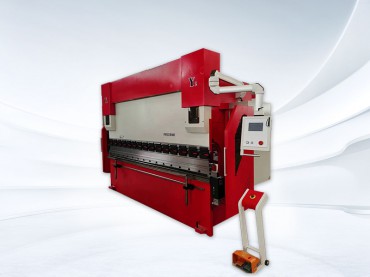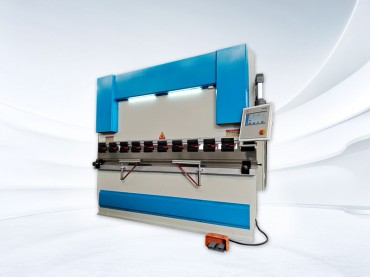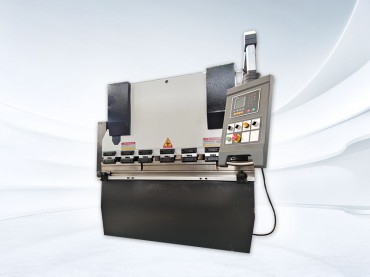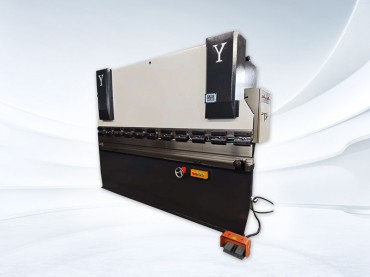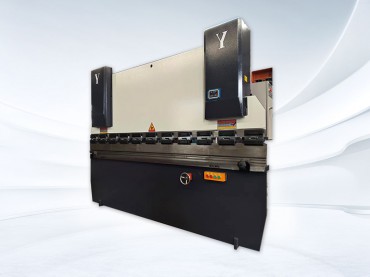
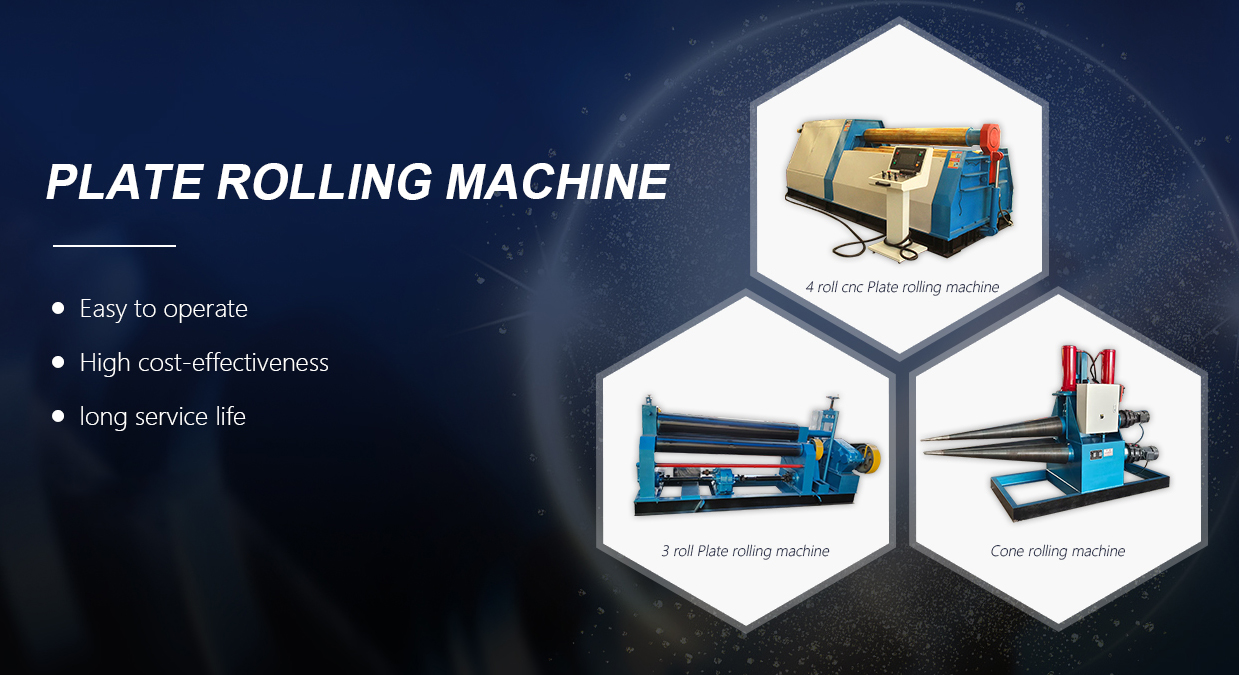
With the rapid development of the manufacturing industry, metal sheet processing technology has continuously advanced. As a crucial piece of equipment in the sheet metal sector, the bending machine is widely used in industries such as machinery manufacturing, the automotive industry, shipbuilding, power equipment, construction, aerospace, and home appliance production. Whether producing simple metal components or complex precision parts, the bending process is indispensable. In actual production, different materials, thicknesses, and processing requirements necessitate the use of various types of bending equipment. Therefore, understanding the types and characteristics of bending machines is vital for equipment selection and the enhancement of production efficiency.
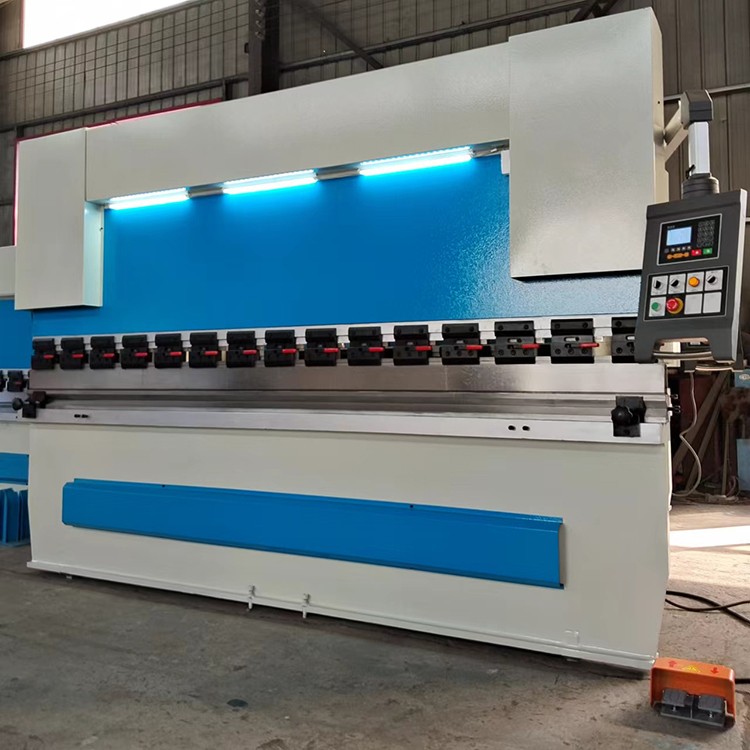
A bending machine is a piece of processing equipment that uses pressure to induce plastic deformation in metal sheets, thereby forming them into desired angles and shapes.
Its basic operating principle involves applying pressure between an upper die and a lower die, causing the sheet metal to bend under the influence of the tooling. Common products include electrical cabinets, metal chassis, architectural components, ventilation ducts, automotive parts, stainless steel products, and steel structural fittings. With the advancement of industrial automation, bending machines have gradually evolved from traditional mechanical equipment toward intelligent systems.
The mechanical bending machine was the earliest type of bending equipment to appear. It relies primarily on a flywheel, crankshaft, and connecting rod mechanism to generate the mechanical power required for bending operations.
An electric motor drives a flywheel to rotate at high speed. A clutch engages to drive the movement of the crankshaft. The crankshaft then uses the connecting rod mechanism to push the ram (or slide) up and down, ultimately achieving the bending of the sheet metal.
Mechanical bending machines feature a relatively simple structure, low manufacturing costs, ease of maintenance, high operating speeds, and high production efficiency; consequently, they were widely used in early industrial production.
The primary advantages of mechanical bending machines include:
- High production speed: Due to efficient mechanical transmission, the processing cycle time is short, making them suitable for mass production.
- Low energy consumption: The simple mechanical structure results in minimal power loss and relatively low operating costs.
- Economical pricing: They are an attractive option for small enterprises with limited budgets.
Mechanical bending machines have certain drawbacks: they lack adjustment flexibility, offer lower bending precision, have limited safety features, and cannot handle the processing of complex workpieces; consequently, their scope of application is gradually shrinking.
Hydraulic bending machines are currently among the most widely used bending devices. They utilize a hydraulic system to drive a cylinder and generate the pressure required to perform the bending process.
A hydraulic pump generates high-pressure hydraulic fluid. This fluid enters the cylinder, driving the piston to move the ram (slide). Pressure is then applied to the sheet metal via the upper and lower dies to complete the bend.
Hydraulic bending machines primarily consist of: the machine frame, hydraulic system, cylinder, electrical control system, backgauge assembly, and tooling system.
- High Bending Force: The hydraulic system can generate immense pressure.
Suitable for: Processing thick steel plates, stainless steel sheets, and high-strength metal plates.
- High Precision: The hydraulic system operates smoothly, allowing for effective control of bending angles and improved product consistency.
Capable of processing everything from thin sheets to thick plates, meeting the needs of various industries.
The equipment is easy to adjust, and operators can quickly master its use.
Steel structure manufacturing, power equipment, construction machinery, shipbuilding, the construction industry, etc.
Currently, the majority of sheet metal processing enterprises worldwide use hydraulic bending machines as their primary production equipment.
The CNC (Computer Numerical Control) bending machine represents a significant achievement in the evolution of modern bending technology. It is an intelligent machine developed by integrating a CNC system with a hydraulic bending machine.
The CNC system controls parameters—such as ram stroke, backgauge position, bending angle, and processing sequence—through programmed instructions to achieve automated bending. Operators simply input the required parameters to process complex workpieces.
CNC bending machines primarily consist of: a CNC control system, hydraulic drive system, servo motors, optical scale feedback system, automatic compensation device, and precision tooling system.
- High-Precision Processing: The CNC system enables precise position control. Bending precision can typically reach ±0.1 mm or even higher.
- High level of automation: Automatically performs positioning, bending, and compensation, thereby reducing human error.
- Increased production efficiency: Continuous processing is possible once the program is set, making it particularly suitable for batch production.
- Suitable for complex products: Capable of multi-angle bending, multi-stage bending, and bending of irregularly shaped workpieces to meet high-end manufacturing requirements.
Industries such as automotive manufacturing, aerospace, precision machinery, new energy equipment, communication equipment, and high-end sheet metal processing. It has become a vital piece of equipment in modern intelligent manufacturing.
Mechanical bending machines are better suited for the mass production of simple products. Hydraulic bending machines meet most standard sheet metal processing needs. CNC bending machines are ideal for high-precision, high-efficiency processing of complex workpieces. With industrial upgrading, the market share of CNC bending machines is steadily increasing; however, hydraulic bending machines remain the most widely used type of equipment.
(1) Sheet thickness: Standard hydraulic equipment is suitable for thin sheets, whereas thick sheets require machines with higher tonnage.
(2) Processing precision: CNC bending machines are recommended if the product requires high precision.
(3) Production volume: Automated equipment is suitable for mass production, while standard hydraulic bending machines are appropriate for small-batch orders.
(4) Investment budget: Mechanical bending machines have the lowest price; hydraulic bending machines offer a good balance of cost and performance; CNC bending machines require a relatively higher investment.
As essential equipment in modern sheet metal processing, bending machines play a pivotal role in the manufacturing industry. The three mainstream types currently on the market are mechanical, hydraulic, and CNC bending machines. Mechanical bending machines are characterized by low costs and high speeds; hydraulic bending machines balance efficiency with stability and are currently the most widely used type; CNC bending machines, with their advantages of high precision, high automation, and intelligent capabilities, represent the future direction of development.
For enterprises, selecting the appropriate type of bending machine not only improves processing efficiency and product quality but also reduces production costs and enhances market competitiveness. With the continuous advancement of industrial manufacturing technology, bending machines will play an increasingly important role in the future metal processing industry.
 Address:Room 1202, Detaitang Building, No. 118 Huaguang Road, Zhangdian District, Zibo, Shandong
 WhatsApp:+8615653328535
 Wechat: +8615965331535
  E-mail:zs@sdsmachinery.com