In the modern metal processing industry,
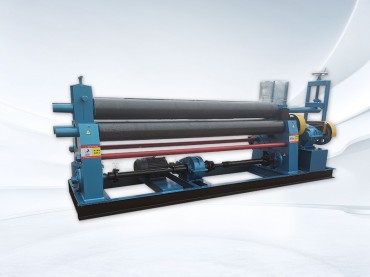
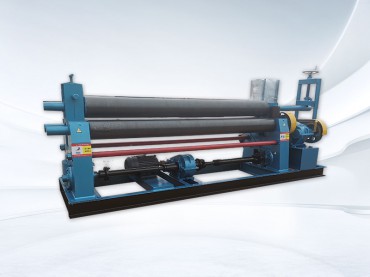
plate rolling machine is an indispensable equipment. Its use of work rolls to make the plate bending and forming equipment, can be formed cylindrical parts, tapered parts and other different shapes of parts. The working principle of the coiler is to make the working roll move through the action of hydraulic pressure, mechanical force and other external forces, so as to make the plate bending or coiling and forming. According to the rotary movement of the work rolls of different shapes and the change of position, oval parts, curved parts, cylindrical parts and other parts can be processed, which are widely used in the shipbuilding, chemical, energy and other industries. As a professional manufacturer of plate rolling machine with 10 years of industry experience, we now introduce you to the three main types of plate rolling machine and their advantages and disadvantages, and hope to help you.
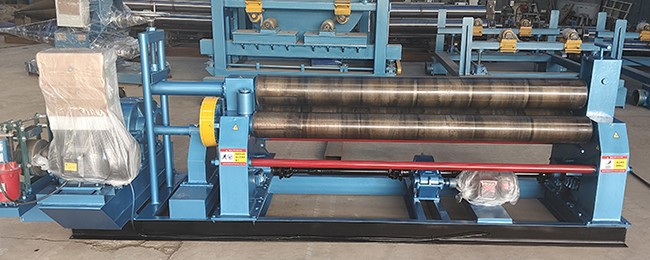
1.The main classification of plate rolling machine
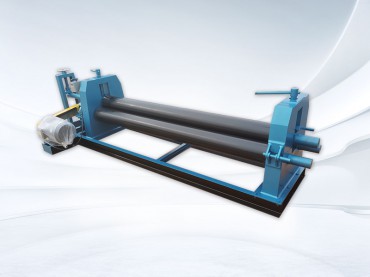
(1) mechanical plate rolling machine
Mechanical plate rolling machine through gears, worm gears and other mechanical transmission structure to drive the roller rotation, to achieve the bending of the plate, which is the earliest and is still widely used in a type of plate rolling machine.
Advantages: relatively simple structure, low manufacturing cost; cost-effective, suitable for small and medium-sized enterprises for small batch production.
Disadvantages: low precision, adjust the parameters rely on artificial experience; processing efficiency is not high, the roll time is relatively long, can not realize the complex curve molding; the operation process requires manual loading and unloading, the operator's high experience requirements, greater safety risks.
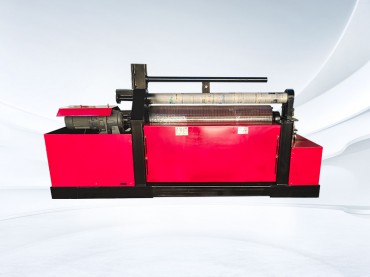
(2) Hydraulic plate rolling machine
Hydraulic coiler utilizes a hydraulic system to drive the rollers, which can uniformly apply greater pressure and more precise control, and is one of the mainstream equipment in the modern manufacturing industry.
Advantages: higher degree of automation to meet the high demand for processing needs; can process thicker plates, the maximum thickness of up to 100mm; hydraulic drive smooth, uniform pressure distribution, higher roundness; equipped with automatic unloading protection system, good security;;
Disadvantages: higher cost, equipment, the initial investment is larger; maintenance is complex, the hydraulic system needs to be maintained on a regular basis, there is a risk of leakage, which may lead to environmental pollution or equipment failure; more stringent environmental conditions, may lead to environmental pollution or equipment failure ; more stringent requirements for environmental conditions, in the case of large changes in environmental humidity and temperature, may affect the normal operation and service life of the coiler.
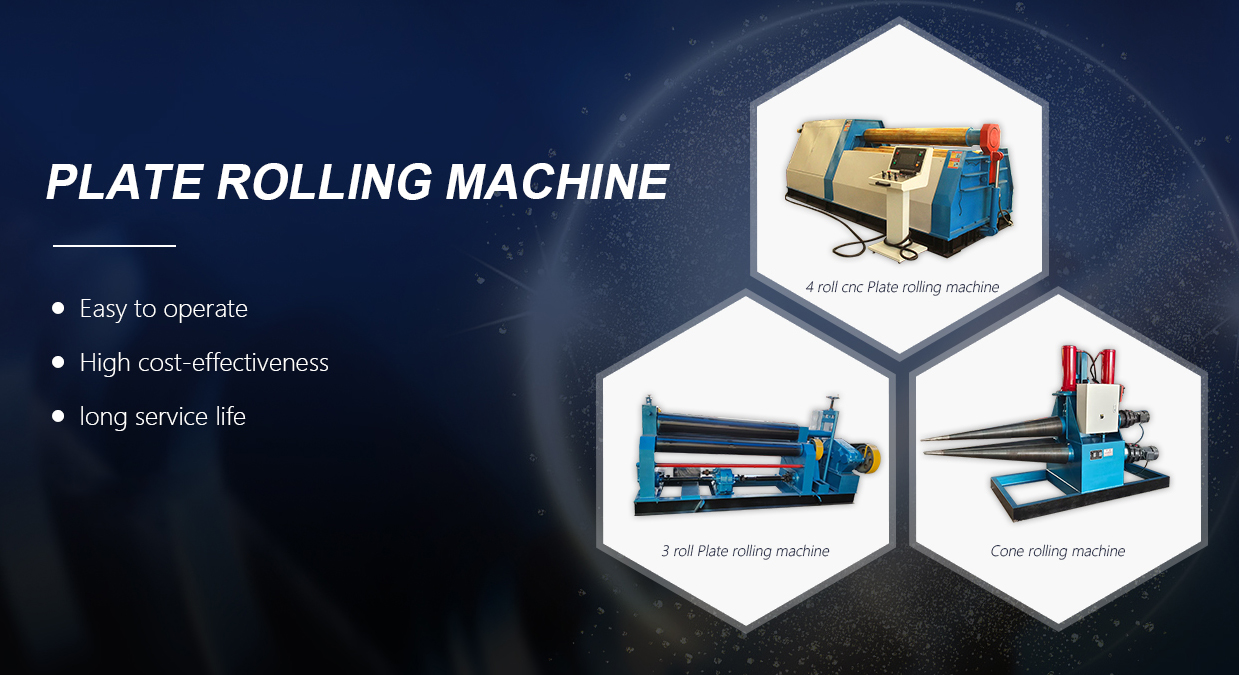
(3) CNC Plate Rolling Machine
CNC Plate Rolling Machine is a product of intelligent upgrading, it is a metal plate forming equipment driven by CNC system, which supports pre-set parameters to realize automated programming and high-precision control, and the error can be controlled within ± 0.1mm. It is mainly used to roll steel plates, stainless steel and other materials into circular or cylindrical workpieces.
Advantages: high degree of automation, reducing labor input and improving production efficiency; high precision, ensuring the dimensional accuracy and shape accuracy of the product through programming control; flexibility, can handle a variety of different specifications and thickness of the material; high efficiency and energy saving, due to its high efficiency of the processing capacity and the design of the energy recovery system, it can ensure the quality of the product at the same time to reduce the consumption of energy; easy maintenance, the equipment's Convenient maintenance, the structural design and modular components of the equipment make maintenance easier, reducing maintenance costs and time.
Disadvantages: Higher equipment costs, large initial investment; strong technical dependence, requiring specialized personnel to operate and maintain; large space requirements, the need to reserve enough operating space, suitable for high-precision mass production of industrial areas.
Different types of plate rolling machines have their own advantages and disadvantages, the choice of suitable equipment to improve production efficiency, reduce costs and ensure product quality is crucial. If you are interested in plate rolling machine, please contact us, we will recommend the right machine and quote for you.

 Address:Room 1202, Detaitang Building, No. 118 Huaguang Road, Zhangdian District, Zibo, Shandong
 WhatsApp:+8615653328535
 Wechat: +8615965331535
  E-mail:zs@sdsmachinery.com