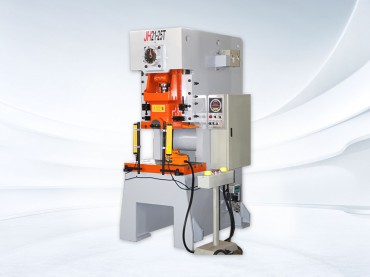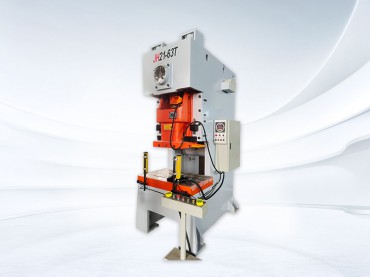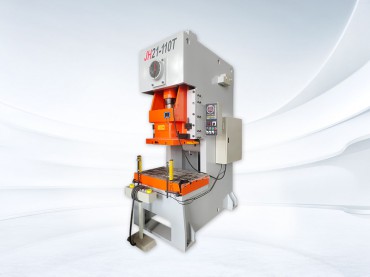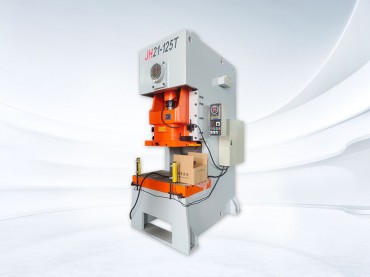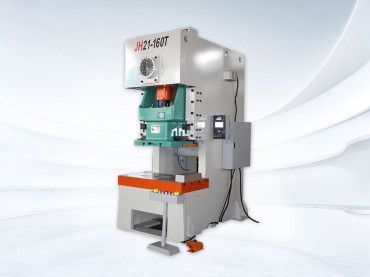
We are a professional punching machine manufacturer with over 10 years of industry experience. Today, we would like to introduce you to specific applications of punching machines:
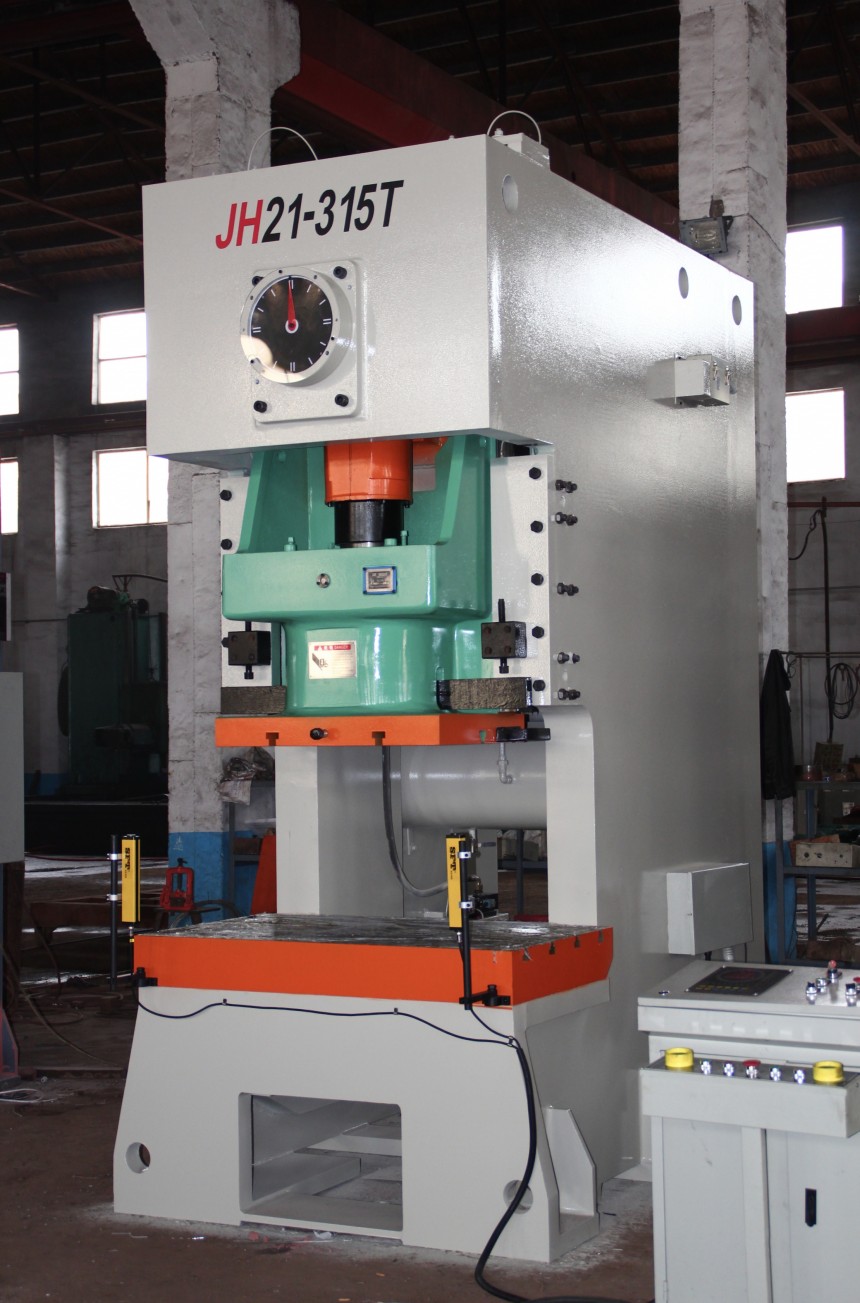
Punching machine is a kind of mechanical equipment using pressure to process metal or other materials, widely used in modern industrial production. Its working principle is to drive the crankshaft linkage mechanism through the electric motor, so that the slider to do up and down reciprocating motion, so as to drive the mould to complete the punching, bending, stretching and other processing procedures. Punching machine has the characteristics of high efficiency, stable precision, easy operation, etc., and occupies an important position in the manufacturing industry.
In the field of automobile manufacturing, presses play an irreplaceable role. The car body consists of hundreds of metal stamping parts, most of which are processed and shaped by punching machines. Doors, bonnets, boot lids and other large covering parts need to be completed through multiple stamping processes. Punching machines are able to quickly produce sheet metal parts with accurate dimensions to meet the needs of mass production of automobiles. Modern automotive production lines are usually equipped with a continuous stamping line consisting of multiple large presses, which can produce more than ten workpieces per minute. In addition to body parts, structural parts such as chassis parts and seat frames also rely on presses for processing.
The production of household appliances is also inseparable from press technology. The shells of refrigerators and washing machines, the metal panels of air conditioners, the cavities of microwave ovens and other parts need to be stamped. These products require high surface quality, and the press with precision moulds can ensure that the workpiece is free of scratches and deformation. Stretch moulding of rice cooker liners is a typical application of presses, where metal sheets are processed into complex three-dimensional shapes through multiple processes. Metal parts in small home appliances, such as the mesh cover of electric fan and the base of electric kettle, are also processed by punching machine.
The electronics industry has a continuously growing demand for precision stamped parts. Most of the metal centre frames, SIM card holders, battery covers and other parts in mobile phones are produced by high-speed precision presses. These parts are small in size and high in precision, and some of them need to reach micron-level tolerances. Connector terminals are another typical product processed by presses, and their production imposes strict requirements on mould life and stability. The metal casing of notebook computers, heat sinks and other components also rely on the stamping process. With the trend towards thinner and lighter electronic products, higher requirements are placed on the accuracy control capability of punching machines.
Hardware industry is the traditional application field of punching machine. Daily-use hardware such as door locks, hinges, handles and other products need to be shaped by punching, bending and other processes. Metal parts such as spanners and pliers in tool products are also manufactured by stamping process. Small products such as hinges and pins in architectural hardware are suitable for mass production with presses. Although these products have relatively simple structures, they have clear requirements for dimensional consistency and surface finish.
The demand for processing special materials in the aerospace sector has driven the development of press technology. Components such as aircraft skins and wing ribs need to be formed using large tonnage presses. The stamping of materials such as titanium alloys and high-strength aluminium alloys requires precise control of temperature and pressure parameters. Components such as fuel storage tanks and structural supports in spacecraft often need to be completed through a multi-pass progressive forming process. These applications place extremely high demands on the rigidity, precision and stability of the equipment.
In packaging container manufacturing, presses are used to produce metal cans, caps and other products. The body of cans for food cans is formed in one go through a multi-station stamping line, which can produce hundreds of pieces per minute. The pull ring of easy-open cans is a typical representative of precision stamping, and the machining accuracy of its fracture groove directly affects the usage performance. Stamping and forming of cosmetic metal packaging box has strict requirements on surface quality, which requires special lubrication process.
Mould manufacturing is closely related to press technology. The quality of stamping moulds directly affects the accuracy of the workpiece and production efficiency. Modern mould processing adopts high-precision grinding machine and EDM machine tool manufacturing, and the life span can be more than one million times. Mould materials are mostly selected tool steel or carbide, after heat treatment to obtain the necessary hardness and toughness. The mould design needs to consider factors such as material flow and rebound compensation, which are crucial for the optimisation of the stamping process.
With the development of industrial automation, the degree of intelligence of punching machine is increasing. The automatic feeding device and robotic pick-up system have greatly improved the production efficiency. The application of numerical control technology enables punching machines to quickly adjust parameters and adapt to the processing needs of different products. The introduction of online inspection system realises real-time quality monitoring. These technological advances make punching machines play a greater role in flexible manufacturing systems.
Punch press technology continues to evolve. The application of servo drive technology improves energy utilisation and control accuracy. The emergence of new materials continues to expand the scope of application of stamping processes. Advances in simulation software make process optimisation more efficient. In the future, punching machines will develop in the direction of higher efficiency, precision and intelligence, providing more powerful processing capability for the manufacturing industry.
If you are interested in punching machine, please contact us.
 Address:Room 1202, Detaitang Building, No. 118 Huaguang Road, Zhangdian District, Zibo, Shandong
 WhatsApp:+8615653328535
 Wechat: +8615965331535
  E-mail:zs@sdsmachinery.com